
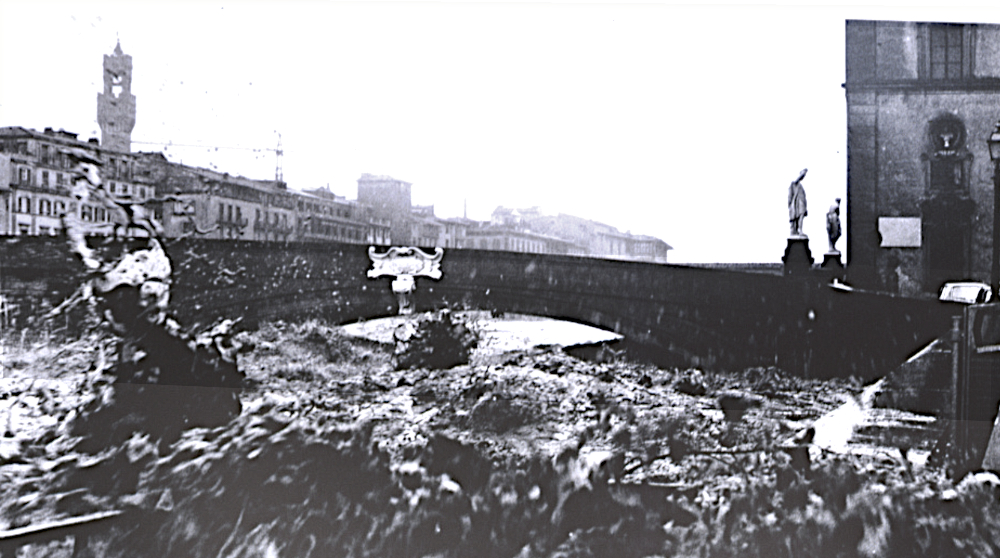
Sixty years ago this month, the River Arno burst its banks and catastrophically flooded Florence. Angela M Sims recalls the events of 4 November, 1966, and the salvage operation that followed. The ground-breaking work of art experts and young European ‘mud angels’ in rescuing and restoring the city’s terribly damaged treasures pioneered conservation methods used to this day.
“After every war, someone has to clean up.” The End and The Beginning, Wislawa Szymborska
Florence, Italy. The birthplace of the Renaissance. The home of Michelangelo, Machiavelli, and the Medici. The highlight of the Victorian Grand Tour. The jewel in the artistic crown of Europe. And yet, still at the mercy of Mother Nature.
Today, tourists flock to the historic centre, camera or phone in hand, to tick off each must-see treasure: Botticelli’s Birth of Venus, Brunelleschi’s cupola on the Duomo, Michelangelo’s David. But if it were not for a group of determined youngsters and passionate experts, so much of what we enjoy today would have been lost.

Through the centre of the city runs the River Arno, which stretches 150 miles from the Tuscan Apennines to the Ligurian Sea at Pisa. The poet Dante Alighieri called it ‘a cursed and unfortunate ditch’, and over the centuries, the people of Florence have had cause to agree with him.
While the river has flooded on many occasions, several are recorded as devastating floods with significant loss of life, the earliest being in 1177, and the latest in 1966. This most recent flood is said to be the most destructive in terms of loss of life, buildings, art, and books.
After days of heavy rain, on the night of 4 November, 1966, the river burst its banks and invaded the city. The people of Florence woke to an alien landscape. Uprooted trees, overturned cars, personal possessions; all were mixed with incalculable quantities of muddy water and fuel oil. Roads into and out of the city were impassable, and there were no electricity, water, or communication channels. It’s hard to imagine the isolation the people of this great city must have felt. Indeed, it would have been hard to recognise the city at all.
In Piazza del Duomo, where the Cathedral of Santa Maria del Fiore stands, the water levels reached three metres. One source recalls a green car wedged between the cathedral and Giotto’s campanile. Thousands of shops were ruined, their metal shutters providing little protection against the force of the water.
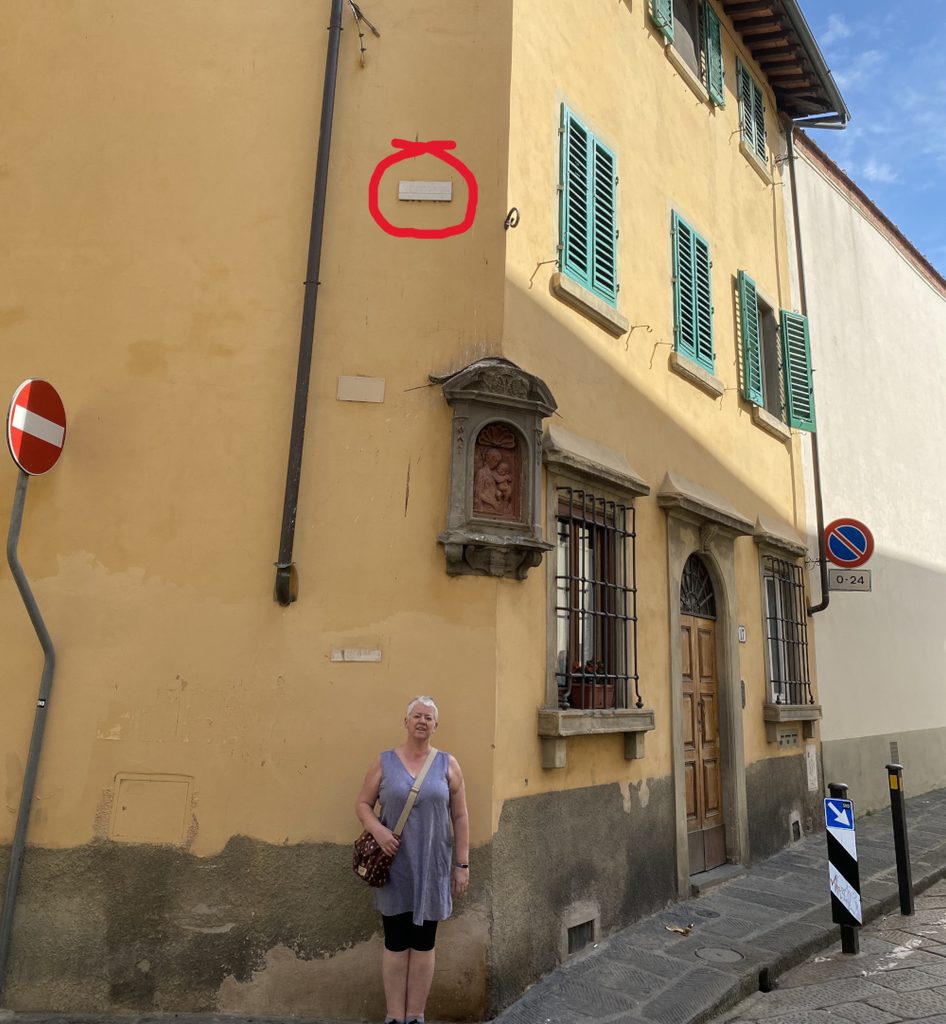
In the poorer district of Santa Croce, the levels reached over six metres and suffered the harshest consequences of the deluge, with the heaviest loss of life and homes being in this area.
Those who lost their lives were mostly elderly and infirm, living on lower levels and unable to leave their homes, and drivers who had been taken unawares by the speed and ferocity of the flood. While final figures vary, in the region of 70,000 families were left homeless, and it is somewhat miraculous that the death toll was under 40.
Eventually, the water receded, leaving the city to survey the scene of damage and destruction that remained. It soon became clear that, as well as the effect on the infrastructure of the city and its people, the flood had damaged many of its priceless treasures, the artworks and the books that brought people from around the world to study and to stand in awe.
The Biblioteca Nazionale stands on the edge of the Arno in the Santa Croce district, which had been hardest hit. The library held hundreds of thousands of historic books, journals and other works, many of which were stored in the basement and suffered serious damage. Museums and churches, all holding priceless works of art, had been inundated, and the urgency needed to save as much as possible soon became apparent.
In the 1960s Europe had seen an increase in young travellers, eager to experience all that the European countries and cultures could offer. It was these young travellers who flocked to Florence to help.
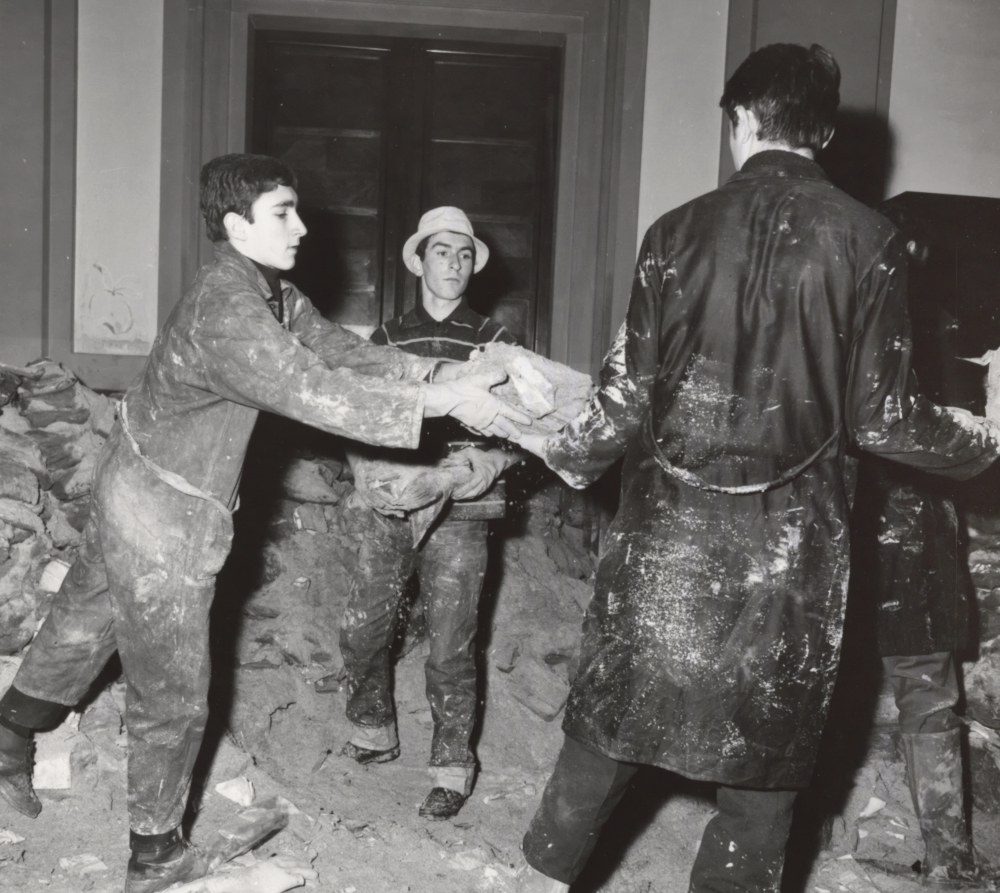
They formed human chains to bring sodden books from the basement of the Biblioteca; they cleaned mud from every church; they took food and water to those trapped at home; they carried paintings from mud-soaked galleries. They filled the hostels and even slept in empty train carriages. These rescuers became known as Angeli di Fango, or Mud Angels, and even today are held in highest, even heroic, regard.
The film director and native of Florence Franco Zeffirelli was nearby, filming The Taming of the Shrew (1967), starring Richard Burton. Horrified by what had happened to his home town, he filmed his only documentary, Florence: Days of Destruction and persuaded Burton to narrate it. It was released within a month of the flood and was reported to have raised over $20 million for the restoration funds.
Even Pablo Picasso auctioned one of his paintings (Recumbent Woman Reading) and donated the $105,000 fee to the cause.
Around the world, national committees were created to co-ordinate the rescue and recovery of important artefacts. Committees such as the US Committee to Rescue Italian Art (CRIA) and the UK Italian Art & Archives Rescue Fund (IAARF) provided valuable support.
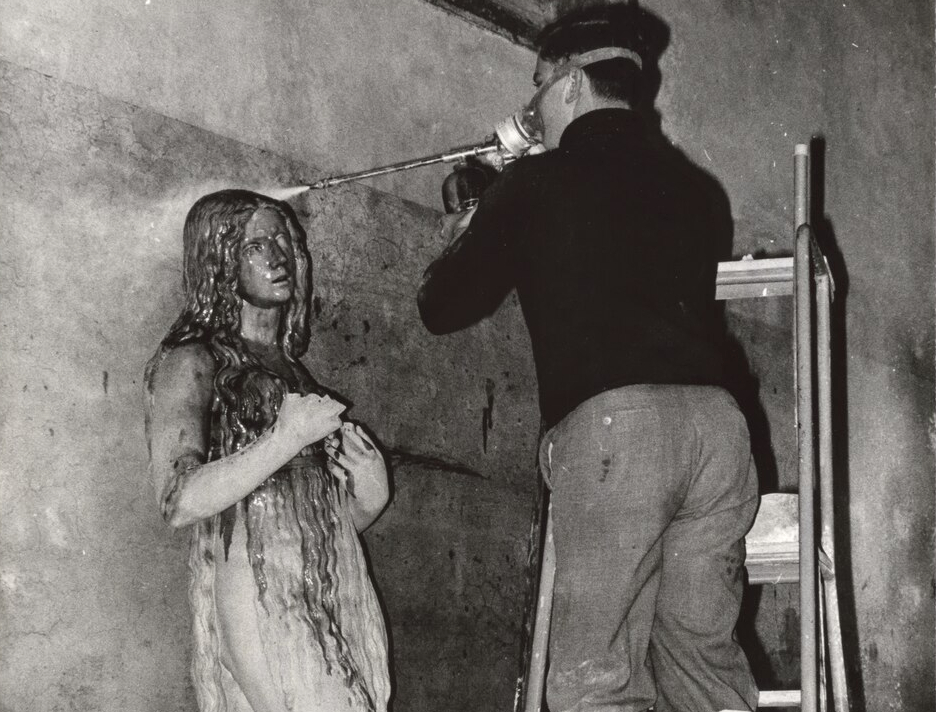
While many artworks were irretrievably lost or irreparably damaged, such as Cimabue’s 12th-century Crucifix, the worldwide support by leading conservationists saved thousands of pieces, and conservation practices took great strides in innovation, leading to practices that are still used today.
November 2026 marks the 60th anniversary of the flood, and events are planned to “honour the victims of the…flood…, celebrate the international solidarity that helped rescue Florence’s artistic heritage and promote greater awareness of environmental risks and disaster prevention.”
Having visited Florence when the heavy autumn rains cause the river to rise, having felt the palpable unease of the Florentine people as they look nervously at the water levels, and having seen the flood markers throughout the city, it feels right that this event is commemorated and shared with all who value humanity, history and art.
Perhaps greater awareness will help avoid the dire consequences Florence suffered on that dark November night.
Angela M Sims is a writer of “compelling and extensively researched” historical fiction. Now retired, she spent 27 years in clinical cardiology and 15 years as a university lecturer, but her keen interest in the art and history of the Italian Renaissance sowed the seed for her first book, The Rose of Florence in 2023, followed by Hiding the Flame in 2025. She is currently working on her third book, which is set in Florence at the time of the 1966 flood. She lives in Cardiff, visiting Florence whenever she can.
angelamsims.co.uk
Instagram
Facebook
You may also like to read these Historia features:
The truth about nuns in 16th-century Florence by DV Bishop
Rebuilding St Peter’s in Renaissance Rome by Richard Kurti
How WWI veterans saved Britain’s treasures in WWII by Caroline Shenton
And in stark contrast, Book theft in Nazi-occupied Paris by Chris Lloyd
Or browse our art history category
Images:
- The Arno river bursting its banks: Balthazar Korab collection LC-DIG-ds-10632, Library of Congress (no known restrictions on publication)
- Carmine square after the flood: Ricce for Wikimedia (public domain)
- Angela beneath the flood line in Santa Croce district: author’s own photo
- Three mud angels rescuing rare books in in the National Library (trimmed, lightened), November 1966: Dominique Roger, UNESCO Archives PHOTO0000001412 on Wikimedia (CC BY-SA 3.0 IGO)
- A restorer on a stepladder cleans Fiorentino’s statue La Maddalena in the Bargello (cropped), November 1966: Dominique Roger, UNESCO Archives PHOTO0000001412 on Wikimedia (CC BY-SA 3.0 IGO)


