

The Windermere Children (BBC 2, 27 January, 2020) follows the true story of a group of children, recently freed from concentration camps who, in 1945, were brought to Windermere for four months of rehabilitation under the auspices of child psychologist Oscar Friedmann (Thomas Kretschmann) and philanthropist Leonard Montefiore (Tim McInnerny).
Made to be transmitted on Holocaust Memorial Day, this is an entirely appropriate use of drama to evoke an event, not as news but in terms of individual experience. In the course of research for this article I discovered the the German word for memorial is Denkmal, which might be loosely translated as ‘just think’ or ‘think once’. This film does indeed make us think. Whereas news footage can be blotted out, a human story better inhabits the mind.
The film documents the children’s transition from an environment of the most vindictive cruelty that one can imagine to one of kind, caring and considered support. The complexities which derive from this extreme contrast provide the film with its drama.
Visually it never leaves the calming beauty of the Lake District, but the horrors of the holocaust are obliquely indicated with great impact. From the sound montage of actual recollections which begins the film to the references from the children, we are made aware of the atrocities both witnessed and suffered.
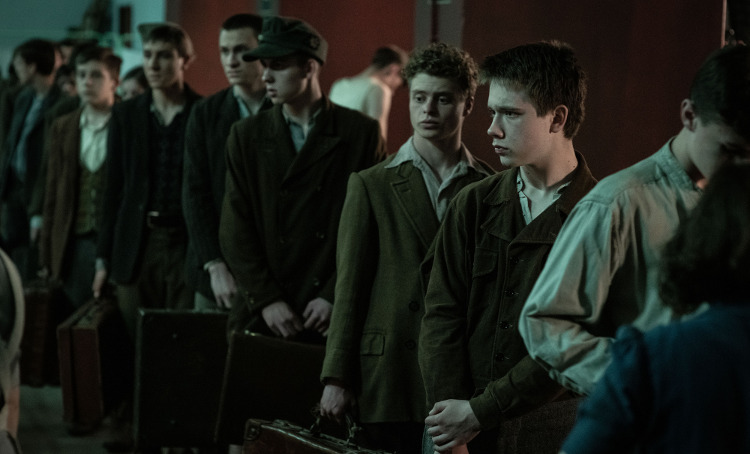
People often describe such things as unimaginable; but in fact we can imagine them. What is much harder is to imagine our own reactions were we to have been there.
Most memorable is the remark by one of the boys that he has only survived because he was strong enough to take the bread from someone who was too weak to eat it. When we later learn that the children have been stealing quite a lot of things in the camp and its surroundings, this provides a useful context.
When they first arrive, the refugees’ lives are filled with night terrors and a mistrust of all people. Unsurprisingly, their world is dominated by the hope for contact with other members of their family. When, one day, a large box of letter arrives from the Red Cross department dedicated to searching for missing persons, most of those hopes are dashed.

Together with the joyous release of the children into the Cumbrian countryside comes uneasy contact with locals. The unthinking racism of kids doing straight arm salutes is well put down by Dr. Friedmann. The resentful incomprehension of the lady who points out that ‘we all suffered in the war’ provides an uncomfortable moment.
A kind of resolution for it occurs when one of the boys steals her dog (apparently because he wants a pet). The resulting grudging exchange of the words ‘sorry’ and ‘thank you’ turns out to be one of the most telling scenes.
The film culminates in a football match, refugees versus locals, in which the children’s lack (with one exception) of footballing talent is amply compensated for by survivors’ toughness. So much so that coach Jock Lawrence (Iain Glen) has to step in to encourage moderation.
At the end of the film we meet five of the refugees who have been portrayed. It turns out, pleasingly, that they have all led fulfilled and, so far as one can tell, happy lives.
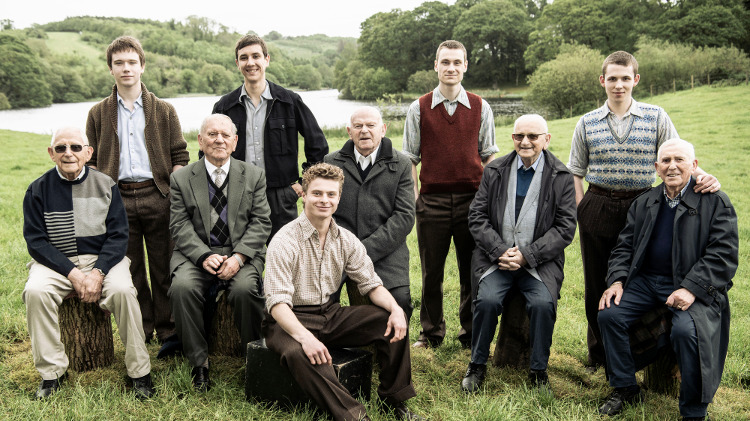
The Windermere Children deservedly takes its place in the vital body of commemoration of the horrors of that time. It reminds us also that the sliding scale between cruelty and kindness – between selfish isolation and inclusive tolerance – is always present.
If there is a purpose in the study of history and its representation in books and films surely it must be something which enhances our understanding of those aspects of our natures and helps us to push in the right direction.
Denkmal.
James Burge writes books about the Middle Ages and makes promotional videos for writers.
He is a regular reviewer for Historia, most recently of The Crown and of Charles I: Downfall of a King.
Images: all courtesy of BBC Pictures.


