
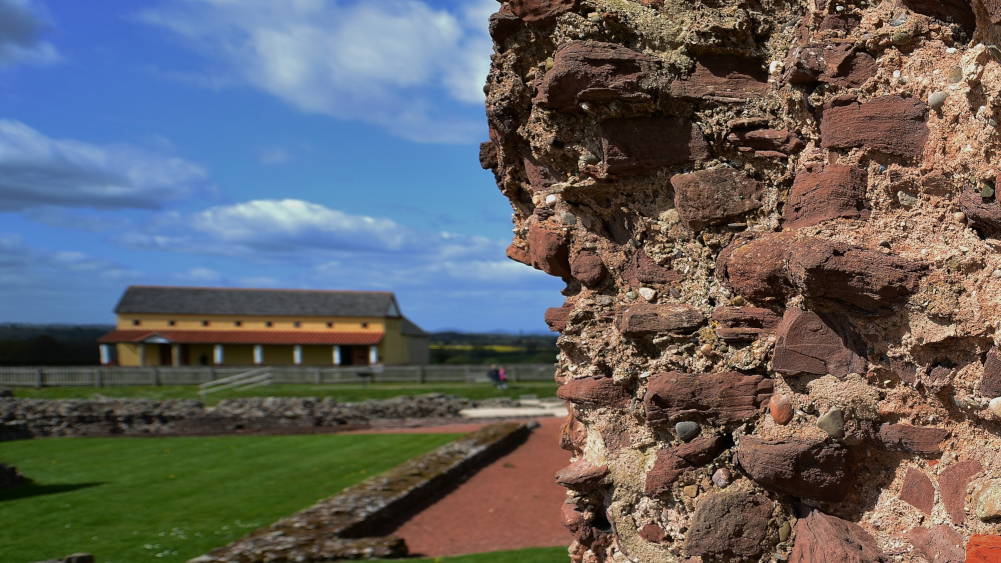
Three writers of Roman historical fiction reveal how seemingly minor research discoveries inspired their stories.
Sit any three historical fiction authors around the table and ask them about their research and you’ll be there for a week. Narrow it down to the specific ‘minor discovery’ that changed the course of the narrative and you might get that down to a few hours.
For Historia, three authors – Jacquie Rogers (UK), Daniel Colter (USA) and Alistair Forrest (Channel Islands) – shared their stories. What emerged proves that finding rare facts and combining them with a vivid imagination is the secret of great storytelling.
From a valuable silver mirror found in a ditch, to an unfulfilled vengeance mission against Mark Antony, via a story about a misfit legion just begging to be expanded upon, the three authors reveal what stoked that imagination…
Jacquie Rogers – Reflections in a mirror
In my case, a small research find not only inspired a story, it launched a whole new series.
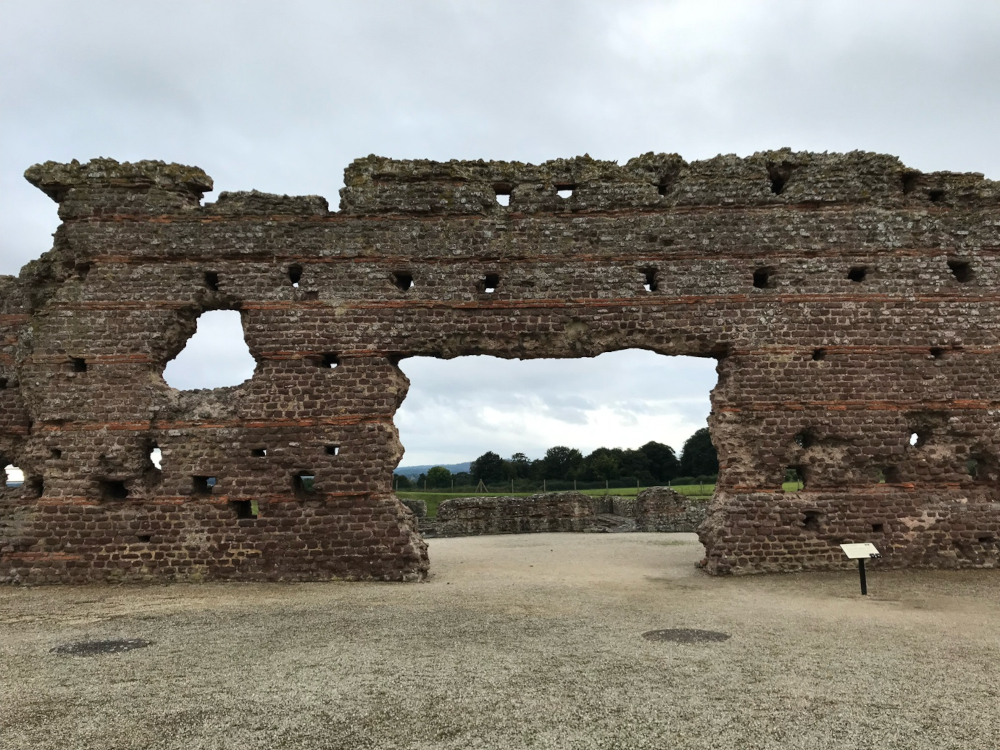
When my first Roman Britain mystery, The Governor’s Man, was originally published, my husband treated me to a gourmet weekend in Shropshire. Who would say no to that? To walk off the indulgent meals, we visited the nearby Roman city of Viroconium Cornoviorum. Now known as Wroxeter Roman City, this most north-westerly of Roman cities was the fourth largest in Britannia after London, St Albans and Cirencester.
Wroxeter was abandoned after the Roman period, reverting to farmland. This was lucky, as it preserved the city layout in remarkable condition. Only the strikingly obvious bathhouse and gymnasium were explored by the Victorians, not always skilfully nor respectfully.
More recent non-intrusive geophysics and aerial photography have revealed magnificent public buildings, as well as the complete layout of the city: streets, homes, markets, businesses and temples. My go-to archaeological source was Dr Roger White’s all-encompassing Wroxeter Hinterland Project report.
So, exciting for me and other Romanophiles. But not very personal. Not yet.
After wandering the extensive and muddy fields hiding most of the city (or preserving it, depending how you view it) we mooched into the little on-site museum in search of actual artefacts. Objects owned by real Romans.
“You want to see the silver mirror, do you?” the English Heritage curator casually mentioned. “It’s up the road, in Shrewsbury Museum.”
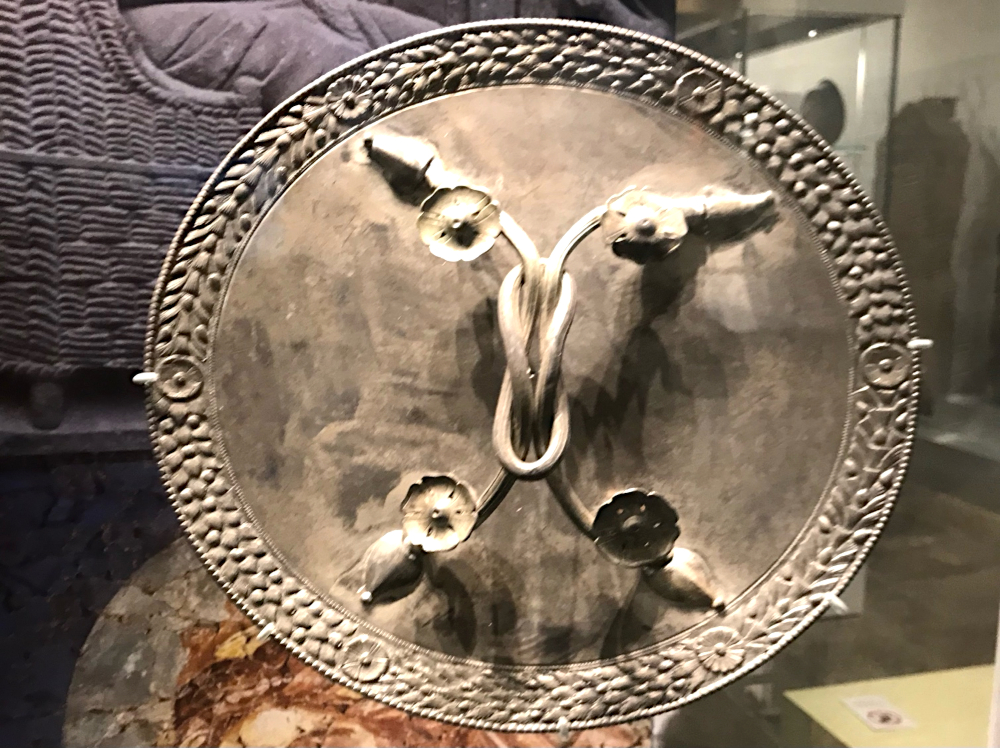
She meant the fabled 3rd-century Wroxeter Roman mirror. It’s the undoubted star of the show, being both exceptionally rare and magnificently crafted. Made of solid silver (probably in the Rhineland), and so heavy the owner’s maid would have needed both hands to hold it up for her mistress to do her makeup. It was found by archaeologists in a most unlikely place, too – not in a grand villa or a luxurious townhouse but lying in the gutter of the Wroxeter forum.
Well, as soon as I saw that gorgeous mirror, I was off and running. Under what possible circumstances could such a prestigious item end up here, at the muddy fringes of the Roman world? More importantly, how did it come to be lost in the public marketplace, disappearing for 1,800 years?
If you want my answer to this delicious conundrum, all will be revealed in The Silver Mirror, the debut novel of my new Otto Cornelius mysteries, coming in 2027.
Daniel Colter – The obscure slave legion
Research into the Great Illyrian Revolt found surprisingly few details for such a momentous event. Historical sources were Cassius Dio, writing 190 years after the revolt, and Velleius Paterculus, an officer who fought in the Illyrian Revolt. Dio proved useful, even though scholars critique his work as vague, skewed, and rife with errors.
But within that sparse, messy history lay hidden treasures.
Germanicus Julius Caesar, just 21 in AD7, cobbled together a legion from conscripts, criminals, and freedmen (Cassius Dio, Book 55). Freeing and arming slaves was unprecedented, a sure sign the empire was on its back heel, and this desperation was the initial kernel of inspiration for The Eagle and the Serpent.
Dio, in frustrating brevity, noted that Germanicus “conquered in battle and harassed the Mazaei.” (Cassius Dio, Book 55). This line is his entire entry for the campaign of AD8. I had envisioned intricate schemes, backroom betrayals, and the like. But Dio’s line erased all that and, in its place, I pencilled in other intriguing ideas — namely, how did Germanicus, a neophyte to war, so quickly conquer a tribe of battle-hardened rebels?
By figuring it out as he went along (which coincidentally is the same way I write a story).
Threads unspooled in my head — a general with little concept of strategy; conscripts and criminals playing at legionaries, run in circles by a ghostly enemy; then swimming a river under a moonlit sky, all to fight one desperate battle.
But Dio wasn’t done. He also described the siege of Splonum with teasing brevity. Just four sentences. Germanicus was floundering, the story goes, and unable to take the fortress by assault or artillery. Then a German horseman threw a rock at the wall, probably in a fit of boredom or frustration, and that one rock caused an entire section of wall to collapse. A horseman with a rock-breaking fastball has a mythical feel, I said to myself.
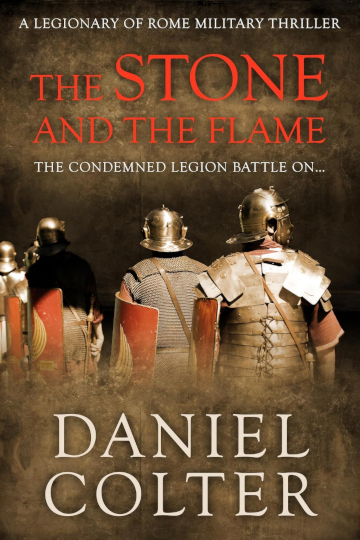
So what likely happened at Splonum? The answer to that mystery will be revealed in The Stone and the Flame, which publishes on November 13, 2026.
Alistair Forrest – Chasing down Mark Antony

The thing about history is that there’s always someone who knows more about it than you. This can be difficult if you’re trying to weave a gripping story around a well-documented period of history, but every so often you find a hidden gem.
I wanted to expand on Marcus Agrippa’s advances in Roman naval technology, which featured in an earlier novel, so I was reading up on the Battle of Actium – the 31BC naval clash between Antony and Cleopatra’s hulking ships and Octavian and Agrippa’s more manoeuvrable fleet.
I found my protagonist Eurycles when reading Lee Fratantuono’s The Battle of Actium. Specifically, a reference from Plutarch (Parallel Lives/Antony 67). Just a couple of sentences about a man named Eurycles who was so enraged over the murder of his father that he decked out his ship at his own expense and went to war against Mark Antony.
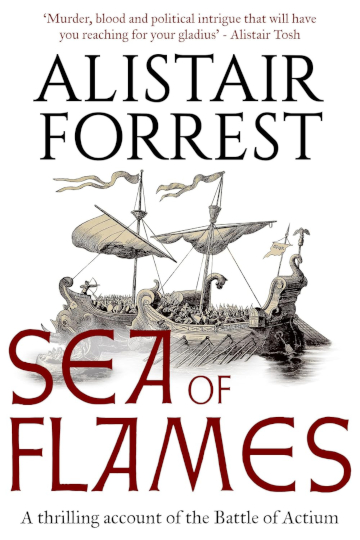
Plutarch has Eurycles pursuing Antony after the general had fled the battle on Cleopatra’s ship, announcing at the climax: “I am Eurycles the son of Lachares, whom the fortune of Caesar enables to avenge the death of his father.”
Although Eurycles did have a subsequent career, that was the only reference to his involvement at Actium. I started writing Sea of Flames. Blank canvas, pretty much. Bent on revenge, he decked out his trading ship and teamed up with Octavian, with a crucial influence on the outcome of the Battle of Actium.
It’s got Antony and Cleopatra; love interest involving Queen Cleo’s handmaiden; Strabo; spying; defections; torture; an unlikely hero in a cabin boy nicknamed Ratboy; and a steersman who doesn’t wear clothes. All from a couple of lines in Plutarch.
As it happens, the same sort of revelation has applied to every one of my novels so far – from sojourning six years on the site of the Battle of Munda, or discovering the ‘real’ Goliath, or a friend telling me about the ‘Caesar Cypher’.
Then there’s what I’ve found grubbing around in Alderney archaeological sites when the lead archaeologist told me it was highly likely that J Caesar set foot on the island. But that’s the next story in a new series, The Britannia Conspiracy, to be launched this autumn.
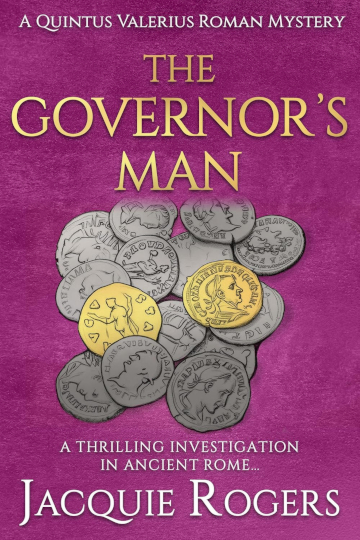
The Governor’s Man by Jacquie Rogers is published in a new edition on 4 September. Read more about this book.
Jacquie moved on from careers in advertising and academia, to traipse round fields of Roman rubble and write twisty Romano-British mysteries.
Substack
Daniel worked as an archaeologist until life nudged him in a new direction. Now he writes military-themed thrillers. Most of his days are spent on the third instalment in the Legionary of Rome military thrillers.
Facebook
Alistair is a journalist, editor and author of historical fiction. He has worked for several UK newspapers, edited magazines in the travel, photographic and natural products sectors, and headed a PR company.
Substack
Linktree
Have a look at these related Historia features:
Human trafficking or slave trading? A Roman industry and
How Roman was Roman Britain?, both by Jacquie Rogers
Agrippa, Augustus’ friend and fixer by Lindsay Powell
I’m Spartacus! Slave revolts in Rome and
Why the Roman Empire grew so big by Harry Sidebottom
Vanity project or lasting legacy – was Hadrian’s Wall worth all the effort? by Douglas Jackson
Gladiator sweat and leech hair dye; how to survive in Ancient Rome by LJ Trafford
Serendipity: the historian’s secret weapon by Eric Lee
Serious play: the fiction-writer’s balancing act by Jem Poster
Images:
- Wroxeter Roman City: Viroconium; ‘The Old Work’ (cropped): Michael Garlick for Geograph (CC BY-SA 2.0)
- The remaining wall of the Baths Basilica at Wroxeter: J Rogers
- Wroxeter Roman mirror: J Rogers
- Roman marble relief depicting the naval battle at Actium, collection of the Dukes of Cardona in Cordoba (cropped): Mark Landon for Wikimedia (CC BY 4.0)


