
Historians and writers need to be open to chance discoveries, says Eric Lee. Serendipity can be a researcher’s secret weapon, as he found while working on his latest book.
When doing research for a work of history or a historical novel, we know (or should know) how to locate and use primary sources, where to find all the main secondary sources, and how to judge the value of works we use. But we sometimes neglect the role of serendipity in our work.
In the case of my most recent book, The August Uprising, 1924: The Georgian Anti-Soviet Revolt and the Birth of Democratic Socialism, the main idea for the book came about through chance.
Having written a couple of other books about the history of the small South Caucasian republic of Georgia in the 20th century, I knew that my next book was going to be about the 1924 uprising. It was an interesting subject for me, but what could make it interesting for, and relevant to, people today — especially those who don’t live in Georgia? This is where serendipity came in.

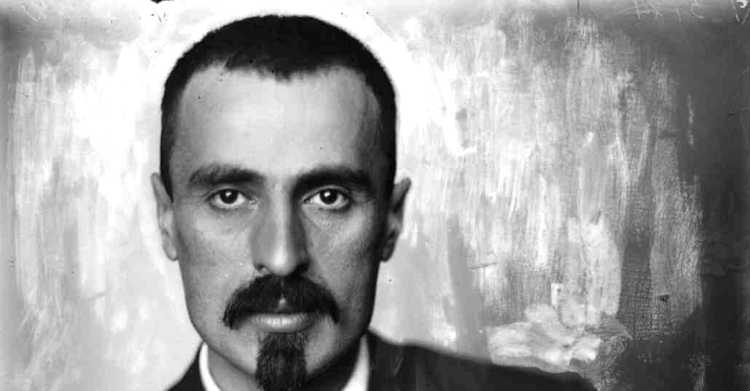
Many years ago, I acquired a book on the life of the Georgian Social Democrat Irakli Tsereteli. It sat on my shelf for a long time before I turned to it while writing an earlier book on Georgia’s three years as an independent, democratic republic under Social Democratic rule. My research took me up through the Soviet invasion in 1921, which brought Georgia back under Russian rule, and beyond.
That biography of Tsereteli was written by a Dutch historian, WH Roobol, who mentioned in passing that following that 1924 uprising, the leadership of Europe’s Social Democratic and Labour parties (including the British Labour Party) met to discuss their reaction to the event.
Everyone was shocked at the brutality of the Soviets, who killed hostages and carried out late-night massacres in the country’s capital, Tiflis, where mass graves were dug. Many of the horrors were instigated by a young officer in the Cheka named Lavrentiy Beria, who went on to head Stalin’s secret police.
I learned that Karl Kautsky, who had been revered for decades as the great interpreter of the writings of Marx and Engels, had volunteered to draft a statement for the parties to adopt. By this time Kautsky, who had visited Georgia in 1920, was the leading opponent of the Russian Bolsheviks on the European Left.

His opposition to Lenin and his party went back to the very first days following the Bolshevik seizure of power. The critical books Kautsky wrote about the Soviets were answered by full-length books by Lenin, Trotsky and other Bolshevik leaders.
The resolution Kautsky drafted in 1924 set the tone for Social Democratic parties for decades to come.
Discovering this small episode meant for me a change in direction. Instead of just telling the story of the failed uprising, interesting though that was, I discovered something much more important. The 1924 uprising in Georgia turned out to be a pivotal moment that contributed to the permanent split between the Socialist and Communist movements.
A second serendipitous moment happened for me in the labyrinth of the London Library. Not only are nearly all the library’s hundreds of thousands of books available to browse, but one can also take them home. It is an invaluable resource for historians.
I was looking for key moments in the history of the growing division between Socialist and Communist parties in the early 1920s. Kautsky’s books were important, as were the writings of other Socialists and also anarchists.

But I also learned that two years before the Georgian uprising there was a final attempt by the international organisations of left-wing parties to meet and resolve differences so that they could work together again.
I discovered that there had been a meeting in the Reichstag in Berlin in 1922, attended by leading figures in Socialist and Communist parties. Among them was Ramsay MacDonald, who would soon become Britain’s first Labour prime minister. It turned out that the protocol of the meeting had been published and the library had it.
To my astonishment, Georgia — not human rights violations in Soviet Russia nor the suppression of the famous Kronstadt revolt a year earlier — was at the heart of the debates. The 1921 Soviet invasion of little Georgia played an outsize role in causing Socialists and Communists from across Europe to part ways.
I had no idea that the pamphlet existed, and had not seen it cited anywhere. But there it was, on the library shelf, inviting me to dive in and learn its secrets. What was discussed at that meeting in Berlin in 1922 set the stage for the ultimate split that created two huge left-wing Internationals that were rapidly drifting apart.
And finally, in 2022 I was able to spend a full month in the Georgian capital Tbilisi as a resident in the Writers’ House. What I did not plan, and did not know about, was that the Writers’ House at that time had just completed work on a Museum of the Repressed Writers.

The museum had not yet opened to the public. But the director invited me to go through the materials on display, giving me access to original texts prepared by a wonderful group of young researchers into 20th-century Georgian history.
I knew that the 1924 uprising was bloodily suppressed — that was central to the story that I was telling — but I did not know the extent to which it resulted in the killings of so many talented writers and poets. The Museum of the Repressed Writers, discovered by chance, gave me their stories in detail.
We as historians and writers need to be open to such chance encounters, be they passing remarks in books that may otherwise be unrelated to our subjects, or serendipitous finds on dusty library shelves, or even museums and archives whose existence we may not have been aware of.
This is true both as we start planning our books and during the course of our research. The final product is rarely what we thought it was going to be, and by being open to new evidence and new ideas that might pop up in the most unexpected places, we create better, more interesting books.
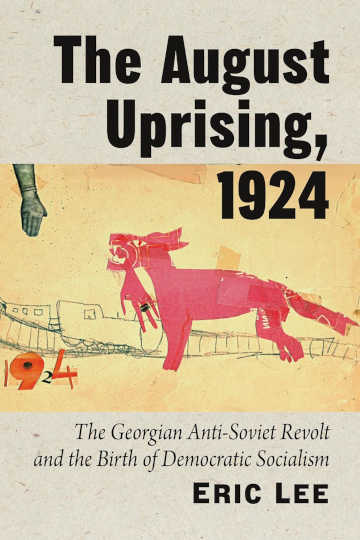
The August Uprising, 1924: The Georgian Anti-Soviet Revolt and the Birth of Democratic Socialism by Eric Lee was published on 9 October, 2025.
Find out more about this book.
Eric, a fellow of the Royal Historical Society, is the author of three books on 20th-century Georgia. He is currently writing a book about the young Stalin’s relationship with the Tsarist police entitled Mole: Stalin and the Okhrana.
Eric has written about the Georgian Democratic Republic for us in The Georgian Experiment.
More of Eric’s writing in Historia:
Writing popular history: Three lessons learned
At the National Archives in Kew, the past comes alive
Down the rabbit hole – to kill Hitler
Some other related features:
Top ten books about the Russian Revolution by Carol McGrath
Russian Revolution: Hope, Tragedy, Myths by Jason Hewitt
Paris, 1919: a fragile peace by Flora Johnston
The long legacy of the First World War by Alan Bardos
Tito: prisoner, partisan, president by Hilary Green
Another piece on serendipity and the USSR: Imagining Olga Gray, a beautiful spy by Rachel Hore
Fifty years of fake news; the cover-up of the Katyn Massacre by Carolyn Kirby
And, on a different topic, Vikings in Georgia: history or myth? by Simon Turney
Images:
- Irakli Tsereteli, Minister of the Provisional Government, Georgia, 1917: Presidential Library of Russia via Wikimedia (public domain)
- 11th Army of the Red Army enters Tbilisi, Georgia, 25 February, 1921: Wikimedia (public domain)
- Karl Kautsky, 1910s: Wikimedia (public domain)
- Kakutsa Cholokashvili, commander of the largest rebel unit operating in eastern Georgia in 1924: Wikimedia (public domain)
- The Writers’ House, Georgia: Hundnase for Wikimedia (CC BY-SA 4.0)


