
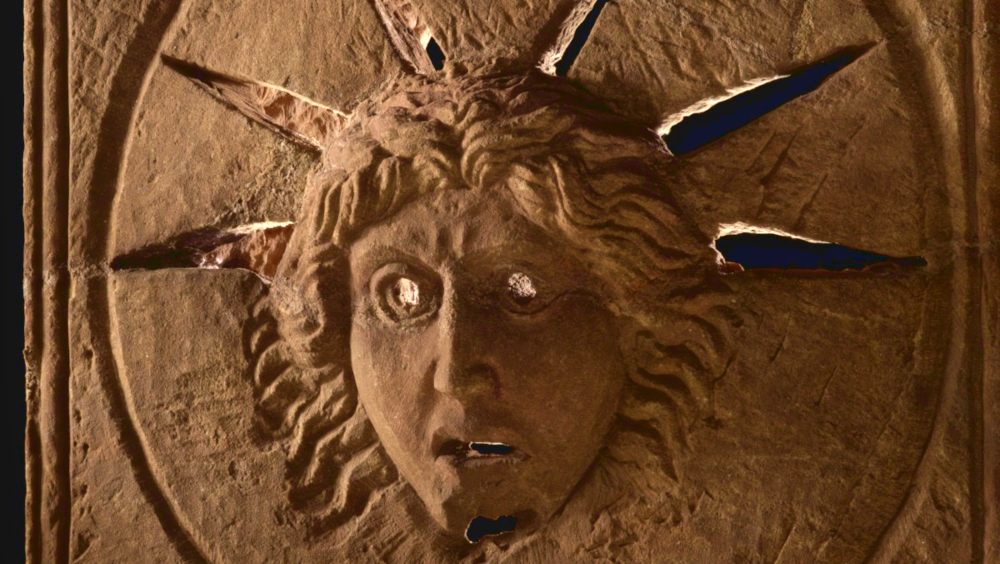
The Roman Scotland: Life on the Edge of Empire exhibition at the National Museum of Scotland aims to use artefacts discovered at the Antonine Wall to understand the relationship between the locals and Romans at the time of Antoninus Pius’ invasion of around AD142. Douglas Jackson reviews this “incredible” new exhibition.
My first real contact with the Romans in Scotland was in the balmy summer of 1971 on a grass-tufted slope overlooked by a narrow cleft in the Cheviot Hills. I was 15, just out of school, and the future was a blank page when I was offered a temporary labouring job turning turf to restore a Roman marching camp that had been mistakenly ploughed up by the Forestry Commission.
In the evenings I’d look up at that cleft in the hills and wonder what it was like for the natives the first time a Roman legion marched over the border. Now an incredible new exhibition at the National Museums of Scotland (NMS) in Edinburgh has gone a long way to answering my question.
Roman Scotland: Life on the Edge of Empire is the brainchild of Dr Fraser Hunter, Principal Curator of Prehistory and Roman Archaeology at the NMS, and a man who lives and breathes the minutiae of Roman Scotland.
His latest research, centred on artefacts discovered at the Antonine Wall fort at Inveresk, near Musselburgh, and on display here for the first time, has provided a new perspective on Antoninus Pius’ invasion of what’s now southern Scotland.
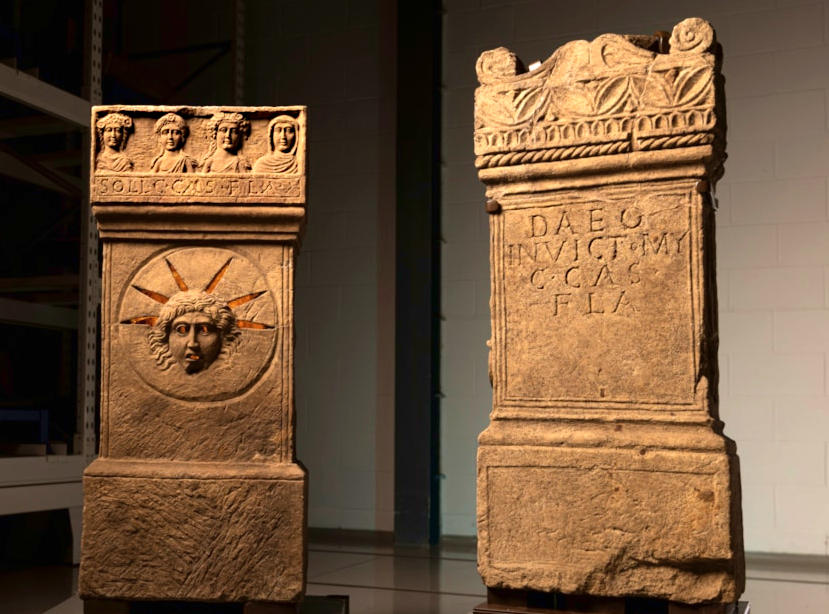
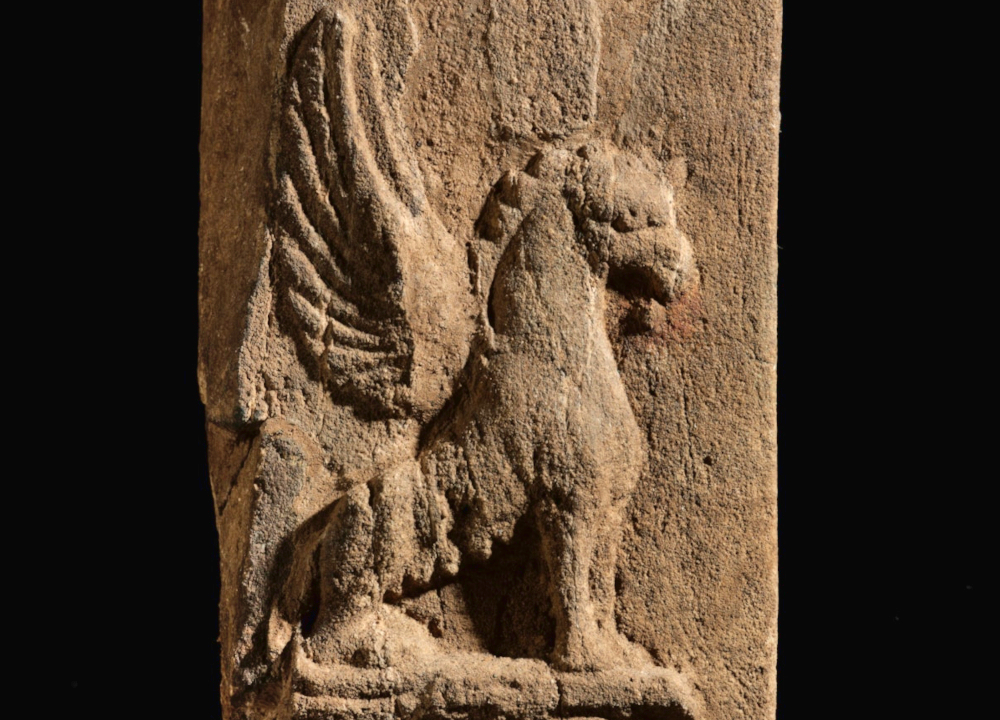
The centrepieces of the exhibition are two spectacular altars discovered in 2010 during excavations for a new cricket pavilion at Inveresk. The dig uncovered what turned out to be a temple and the altars were dedicated to the eastern god, Mithras, and the sun god, Sol, which were often worshipped in tandem.
“The Inveresk finds are not just significant in Scottish or UK terms,” Dr Hunter explained. “In a way, they put Scotland on the international map. These stunning altars really bring the beliefs of the Roman frontier to life. The cult of Mithras represented the triumph of good over evil and gave soldiers a sense that there was a purpose to their world and a life after death.’“
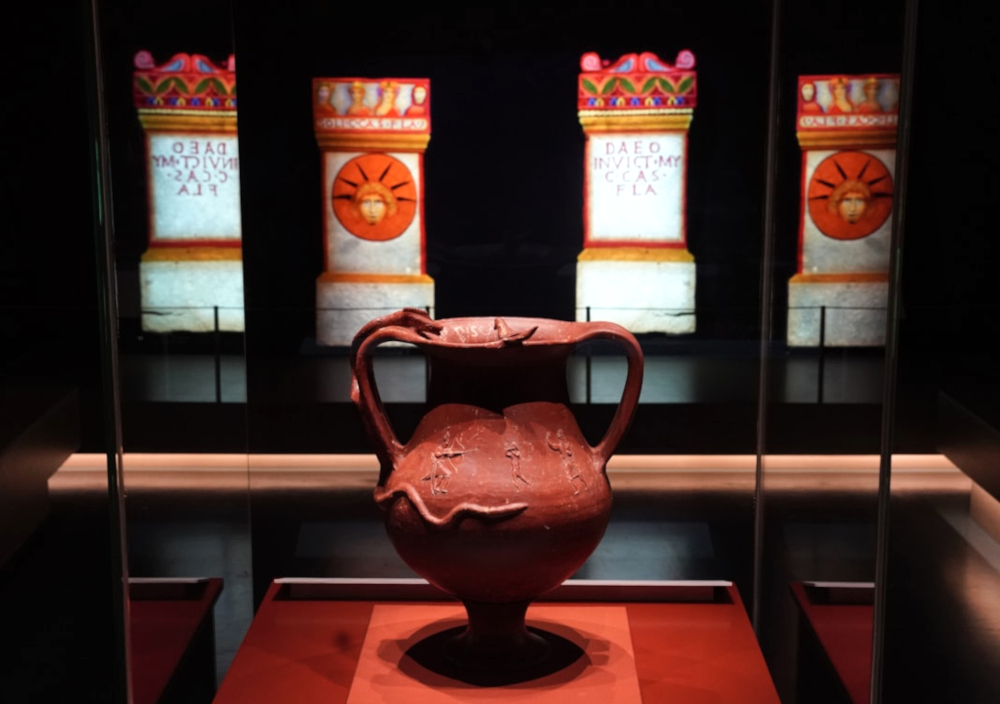
The exhibition represents years of effort and scholarship, painstaking restoration, the gathering together of a unique collection of artefacts and includes a stunning piece of theatre that takes the breath away. As well as the Inveresk discoveries, Dr Hunter has brought together objects from all over Scotland and the Roman world to tell a story which changes the way we look at the Romans in Scotland.
The Inveresk Mithraeum is believed to be the northernmost of its kind, unique to Scotland and one of only three known examples in the UK. When it was abandoned, the altars were placed face down and they were in several pieces when they were found.
Dr Hunter believes the prolonged restoration process gave the museum the opportunity to study them in the kind of detail that would otherwise been impossible.
‘It allowed us to see the mistakes the sculptors made, the way they worked, and how they intended to include a seventh ray in the altar that had to be abandoned because of the damage it might have caused. We were able to identify the paint pigments that have allowed us to recreate the altars exactly as they would have been.’
The two altars, which are carved from local stone, were dedicated to the gods by Gaius Cassius Flavianus, an important Roman officer based at Inveresk.
The fort, near what is now St Michael’s Church, was built during the Roman invasion of southern Scotland by the legions of the Emperor Antoninus Pius around AD142. It served as a coastal defence and supply hub for the garrisons along the Antonine Wall.
Dr Hunter says: “Flavianus was a centurion, and we know that he was part of the Twentieth Legion Valeria Victrix. They were one of three legions which built the Antonine Wall. Certain characteristics in the way the dedication is carved link it to distance slabs marking the legion’s progress. He would have been a Roman citizen, possibly Inveresk’s commander, but more likely in charge of a detachment of legionaries which built the fort.”
The altar to Sol in particular is an incredible piece of craftsmanship and testament to the status, wealth and devotion of the man who commissioned it. It’s also evidence of the skill of the craftsmen who accompanied the Roman army on campaign.
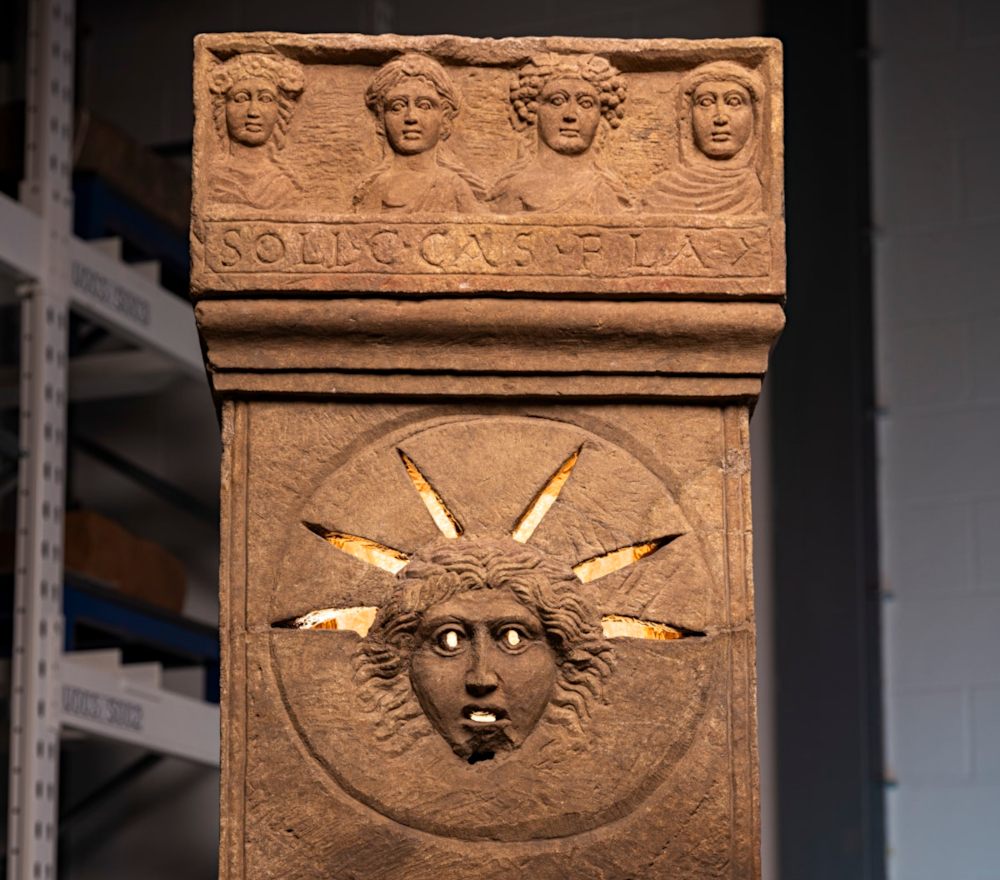
Carved from a single block of sandstone and a metre and a quarter in height, the rear of the altar has been painstakingly hollowed out to create a recess to hold a light source for the sun god’s glaring mask and crown of sunrays. Above the mask, the artist has carved four intricately detailed female faces representing the four seasons, each with a unique style of dress and hair style.
Flavianus’s gifts would have been the focal point of mysterious ceremonies in the mithraeum temple, attended by up to 40 initiates.
The secretive cult of Mithras had its origins in the east, either in India or Persia, and was particularly popular among Roman soldiers and officers who formed a secret brotherhood and would have considered themselves an elite among their contemporaries.
Curating the exhibition has given Dr Hunter a unique opportunity to look at the Antonine invasion of Scotland and its aftermath with fresh eyes.
“As we discover more about what was happening at the time, it’s become clear that, far from a mere political move, Antoninus Pius’ campaign was a reaction to turmoil on the frontier. We can see that in the bloody scenes in the distance slabs, the coins struck to celebrate victories and the fact that Pius received the title Imperator for his military successes in Britain.”
He says that one of his main priorities when he set out was to understand the broader context of the relationship between the locals and Romans in this “existential moment in our history”. There is no doubt that with this exhibition he has taken a giant step towards achieving that aim.

The Barbarian by Douglas Jackson is his most recent Roman-era novel. It was published on 8 June, 2023. His latest book is Blood Enemy, published on 9 July, 2026, the fourth in his Warsaw Quartet.
Doug is the author of 21 novels, including the acclaimed nine-book Valerius Verrens series set in the 1st-century Roman Empire.
The Roman Scotland: Life on the Edge of Empire exhibition at the National Museum of Scotland runs from Saturday, 14 November, 2026 to Sunday, 18 April, 2027.
You may enjoy reading Doug’s Historia feature Vanity project or lasting legacy – was Hadrian’s Wall worth all the effort?
Other relevant features include:
How Roman was Roman Britain? by Jacquie Rogers
Agricola’s victories in Britain by Simon Turney
Why the Roman Empire grew so big by Harry Sidebottom
And for an insight into how authors of Roman-era fiction use research, look at How small discoveries have big impacts on stories by Jacquie Rogers
For a review of an earlier exhibition, read Legion: life in the Roman army by Lindsay Powell
Images:
- Altar to Sol, Inveresk (detail): © National Museums Scotland
- The Roman altars (left: Sol, right: Mithras) at the National Museums Collection Centre, Edinburgh, photo © Duncan McGlynn: © 2026 National Museums Scotland
- Altar to Mithras, Inveresk: © 2026 National Museums Scotland
- Vessel and reconstructions of the altars, photo © Stewart Attwood: © 2026 National Museums Scotland
- Roman altar with Sol and the four seasons, © Duncan McGlynn: © 2026 National Museums Scotland


