
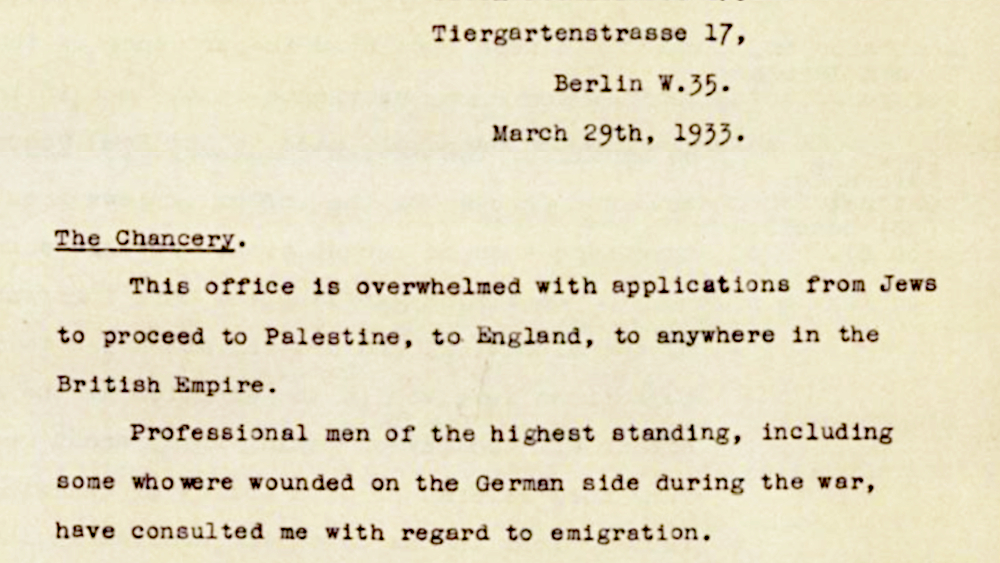
Flora Johnston found a remarkable story of spies and secrecy behind the front of the British passport office in Berlin in the 1930s while researching her family history. There, the chief officer, Frank Foley, ran a dangerous operation to help Jews and others escape the Nazis. She tells Historia how it helped inspire her new novel.
Passport control: it’s a pretty mundane sounding government department. Bureaucrats, visas, typists, application forms…. Yet between the wars the international network of British passport control offices provided cover for an intricate web of spies and agents, hidden in plain sight in capital cities around the world.
The idea emerged after the First World War. The Secret Intelligence Service (SIS, later known as MI6) established the passport control network not only to scrutinise who entered and left British territory but also to gather foreign intelligence and pass it to London. During the 1930s, as Europe moved closer to war, the role of these brave women and men became ever more precarious.

In Berlin the passport control officer was Frank Foley, a remarkable man whose apparent ordinariness disguised a long career as a successful spymaster, and who masterminded the escape of thousands of men, women and children from the Nazi regime at great personal risk.
I first encountered both Frank’s name and the shadowy world of passport control through the letters of my great aunt, Mildred Keith. Born in 1896 in Thurso on the most northerly coast of mainland Scotland, Mildred had a fascinating career.
As a young woman, she worked as a typist at the Paris Peace Conference, and her letters home to her mother in 1919 provided the spark for my first novel about the fictional Rutherford family, The Paris Peacemakers.
After her time at the Peace Conference, Mildred Keith spent the next 25 years working for the British government in capital cities around the world, and wrote home to her mother every week. From Paris she moved to Berlin and worked in the British Embassy on Wilhelmstrasse between 1921 and 1924. She got to know Frank Foley and his wife Kay, socialised with them and kept in touch after she left Berlin.

At the time Mildred would have had no idea of Frank’s undercover role – although that may well have changed later – but it was while I was digging into her Berlin contacts that I discovered the link between passport control and SIS, and the remarkable story of Frank Foley. This led me to write The Berlin Passport Office.
So who was Frank Foley? He began working for SIS towards the end of the war, after being wounded, and in 1921 became British passport control officer for Berlin. During the next two decades, as Berliners lived through hyper-inflation, hedonism and the harsh imposition of Nazi rule, Frank carried out both his routine and undercover duties effectively.
In most capital cities passport control was based in the Embassy, but in Berlin it had its own separate office about 20 minutes’ walk away in Tiergartenstrasse. This suited Frank, who preferred to keep his distance from embassy officials, particularly in the late 1930s when the British ambassador, Sir Nevile Henderson, was determined to do nothing to upset the Nazi authorities.
Those authorities would have been very upset indeed had they known what Frank was up to. Together with two leaders of the Berlin Jewish community, Wilfrid Israel, who owned one of Berlin’s premier department stores, and Hubert Pollack, who had contacts everywhere from the criminal underworld to the Gestapo, Frank ran a highly dangerous operation to help many Jews and other opponents of the Nazis escape the regime just in time.
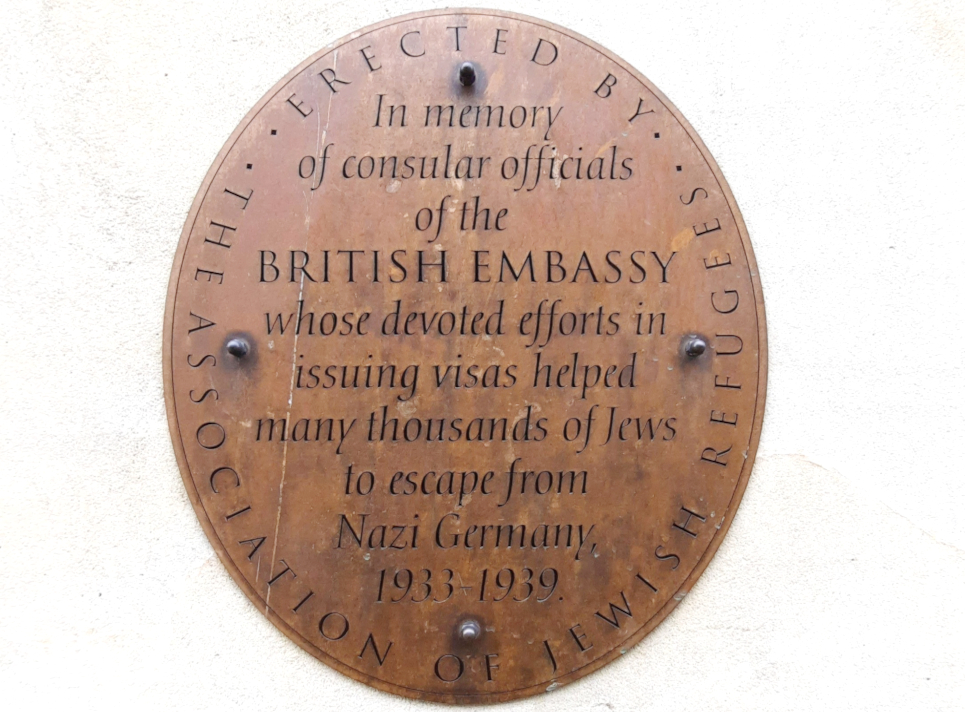
Each passport control office had a male chief, but women played a highly significant role in the undercover work of the network. They were even more likely than men to be overlooked, dismissed as typists, while in reality they were running agents, decoding reports written in code or invisible ink and carrying out missions, all at great risk to themselves.
Dr Helen Fry has done superb work on this and her book Women in Intelligence contains a chapter on ‘The Secret Secretaries’.
In Berlin, Frank worked closely with two women in particular, Sheila St Clair and Margaret Reid, who both also feature in The Berlin Passport Office. But the names of many women who carried out this work will never be known.
My fictional character of Corran Rutherford, who first appeared in The Paris Peacemakers and The Endeavour of Elsie Mackay, gave me an opportunity to highlight the often crucial but forgotten role played by women in the work of SIS.
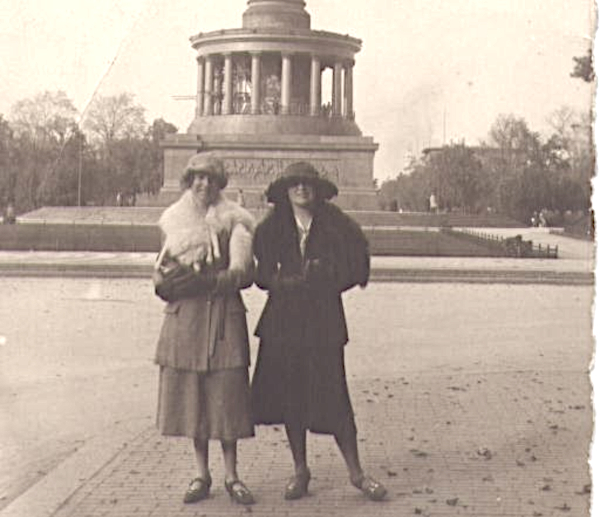
And what about Mildred Keith, my great aunt, the woman whose letters led me to this story? She left Berlin in 1924 and continued working for the British government in Warsaw, Prague and Buenos Aires, before in 1933 herself joining the passport control network.
She spent a year in Sofia as secretary to the passport control officer and SIS chief in Bulgaria, and then from 1936–9 worked for the passport control office in The Hague.
Although her letters home say nothing explicit about intelligence activities, she worked and socialised with people who were deeply involved in the world of espionage.
These included Monty Chidson, whose daring escape from Amsterdam kept a stash of diamonds out of Nazi hands, and Richard Stevens and Sigismund Payne Best, who were captured and imprisoned in the Venlo Incident.
Much of the extraordinary work carried out by men and women under the cover of passport control remains hidden: shrouded beneath the essential secrecy of the time, the destruction or non-release of relevant MI6 files, and individuals’ loyalty to their vows of silence.
Frank’s own story only began to filter out after his death. The Berlin Passport Office inhabits the space between what we know and what we will never know. That’s the beauty of historical fiction.
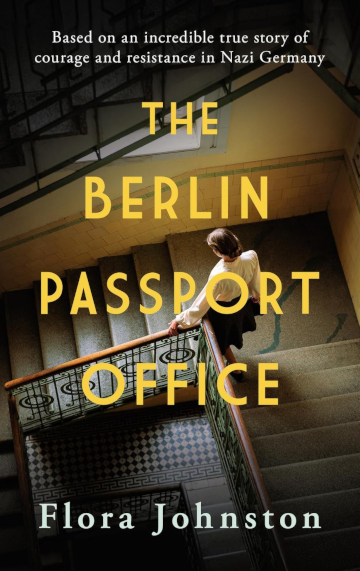
The Berlin Passport Office by Flora Johnston is published on 19 November, 2026.
Flora Johnston worked for over 20 years in museums and heritage interpretation, including at the National Museum of Scotland, which has greatly influenced the historical fiction she now writes. She studied at St Andrews University and lives in Edinburgh.
florajohnston.com
Twitter/X
Substack
Flora’s also written about the Paris Peace Conference of 1919, the background to an earlier novel, and Historical fiction’s role in giving a voice to women, about her debut.
You may be interested in these other related Historia features:
Travelling to Weimar Berlin – in 1930 and the 2020s by Fiona Veitch Smith
The lost cities of Berlin and Kindertransport and other responses to the WWII refugee crisis, both by Catherine Hokin
How Ian Fleming’s secret war work inspired James Bond by Alan Bardos
Under cover for Britain: two female WWII agents, Marie-Madeleine Fourcade and Barbara Bertram by Rachel Hore
Images:
- Minute from Frank Foley to Chancery, 29 March, 1933: FCDO Historians / The National Archives C 3045/319/18, FO 371/16721, public sector information licensed under the Open Government Licence v3.0
- Frank Foley, before 1940: Wikimedia (public domain)
- Palais Strousberg, later the British Embassy in Berlin, 1896: Wikimedia (public domain)
- Plaque on the wall of the British Embassy, Berlin: © Flora Johnston
- Mildred Keith in Berlin: © Flora Johnston


