
How do you write a historical heist? The ingredients, TL Mogford decided, were the same in all periods: target, tech and team. But it was while he was working in an Italian kitchen that he found the spark that led to his latest novel: the fact that saffron is worth its weight in gold. And it was in the 1660s that it was most expensive in England.
In some ways, the very idea of a ‘historical heist novel’ – or one set in the 17th century, at any rate – is a contradiction in terms.
For a start, the word ‘heist’ is a modern coinage. The OED dates it from the 1930s, citing it as an American corruption of the verb ‘to hoist’, in the sense of ‘to lift’, and therefore ‘to steal’. You can almost hear the first New Yoik gangster accent mispronouncing the word, “We’re gonna heist the speakeasy takings tomorrow…”
Then there is the inherent modernity of what the classic heist story entails – intrepid thieves pitting themselves against dazzling, high-tech security systems. Think Tom Cruise, suspended from a cord to avoid the state-of-the-art pressure and temperature sensors in Mission: Impossible. Or Catherine Zeta Jones, dancing through a cat’s cradle of lasers in Entrapment. Or Cassie Black, breaking into a sleeping baccarat player’s Las Vegas hotel room in order to crack his room safe in Michael Connelly’s superlative novel, Void Moon.

Like most people, I love a good heist. But I also love the immersive world of historical fiction. Does the clash between the two render them impossible bedfellows? Or is there a way legitimately to combine both genres?
The reason I found myself addressing this conundrum dates back to 1999, when I had a job as a sous-chef at a restaurant in Venice, hoping to improve my spoken Italian during the third year of my Modern Languages degree.
One of the first dishes I learnt to cook was risotto milanese. “Be sparing with the saffron, Tommaso,” I was warned by the head chef as he showed me how to make it. “It’s worth its weight in gold…”
Saffron and gold, I thought, worth the same amount… It was an intriguing notion. Might make for an interesting heist story, I mused, the first stirrings of a desire to try and write fiction starting to well within me.
But then I considered the idea more closely. Saffron is very light, gold very heavy. To steal enough saffron to constitute a decent heist would surely mean taking it from the location where it was made. I checked the label on the bottom of the restaurant’s jar of saffron: ‘Prodotto di Iran’, product of Iran.
_BHL291431.jpg)
Could I really set a book in Iran? Did I have the wherewithal; the specialist knowledge? I shelved the idea and got back to stirring my risotto.
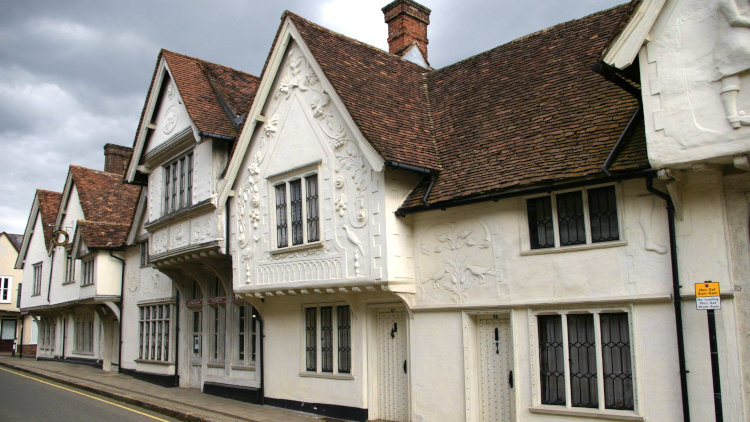
Fast forward a few decades, and an old friend moved to Saffron Walden in Essex. I’d always thought that the town’s pretty name had been dreamt up by planners to lure potential City commuters, but my friend soon put me right. The name was very old, he told me, and had come about because the locals had used to grow saffron there. Lots and lots of saffron.
Saffron grown in England, rather than Iran… I had never thought it possible. The saffron heist idea returned to my mind, so I decided to look more deeply into Saffron Walden’s history.
The traditional explanation for the appearance of saffron in the town goes back to the time of the Crusades, when a pilgrim was said to have brought back a single saffron bulb from the Holy Lands, hidden in his staff.
The airy, chalky loam of North Essex proved surprisingly similar to the crumbly soil of the Levant, and the saffron crocus thrived, so well that before long the entire town was growing the spice, with so much of it being made that in 1514, Henry VIII granted a charter to change the name from Chipping Walden to Saffron Walden.
Coming across a list of saffron prices over the centuries, I found that the year when it was at its most expensive was 1665. So close to 1666, I thought, a year which has always fascinated me, with its diabolical three sixes, and The Great Fire of London taking place to boot. That would make for an exciting time to set a heist.
Now that I had a year and a location, I was forced to confront the problem detailed above – namely, how to transpose the modern concept of the heist story into the midst of the English Restoration.
I decided to try and break down my favourite film and book heists into their component parts, hoping to discover what they had in common, and what was therefore essential to keep. In the end, I settled on what I dubbed the three ‘T’s – ‘Target’, ‘Tech’ and ‘Team’.
The target of my historical heist was clear – saffron. But any heist worth its salt needs a target confined within a small, specific place – money or jewels from a safe (or bearer bonds in the case of Die Hard); art from a museum (The Thomas Crown Affair); a NOC list from a computer (Skyfall; Mission: Impossible, again).
Saffron, however, comes from the mouths of flowers, which grow in fields. Would my putative thief need to conduct a dawn raid of the crocus plantations, armed with a pair of shears and a sack?
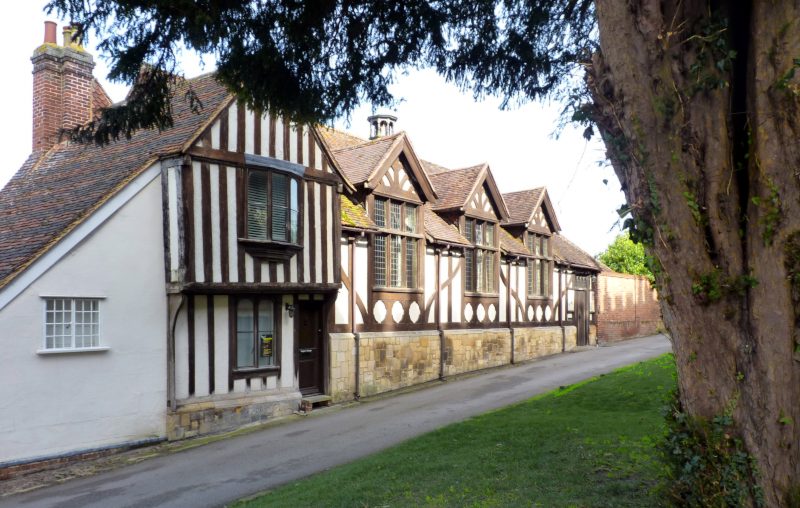
Delving back into 17th-century Saffron Walden, I learnt that the town’s saffron growers – known as ‘crokers’ – tended to grow their crocuses on land contained within the walls of their properties in order to keep their crop safe. What if one of these crokers was hoarding a vast quantity of saffron in his house? Would that not simulate the contained target that so many heists seemed to favour?
It was then that I learnt about ‘saffron cake’, an ancient method of compacting saffron, the better to store it. The bright red stigmas that protrude from each crocus flower were plucked out and laid upon wooden trays; then they were painted with small beer, causing them to stick together, before being compressed under heavy horsehair blankets.
I pictured my croker’s cellar, stuffed to the brim with solid blocks of saffron cake, just waiting to be ‘lifted’. The first ‘T’ seemed to be taken care of.
But what of the second, and potentially trickiest – ‘Tech’? Those seemingly impassable security obstacles put in place to protect the target? Well, it turns out that locks have been in use for a long time – the first were invented some 6,000 years ago, and the word ‘padlock’ was in common use by the late 15th century.
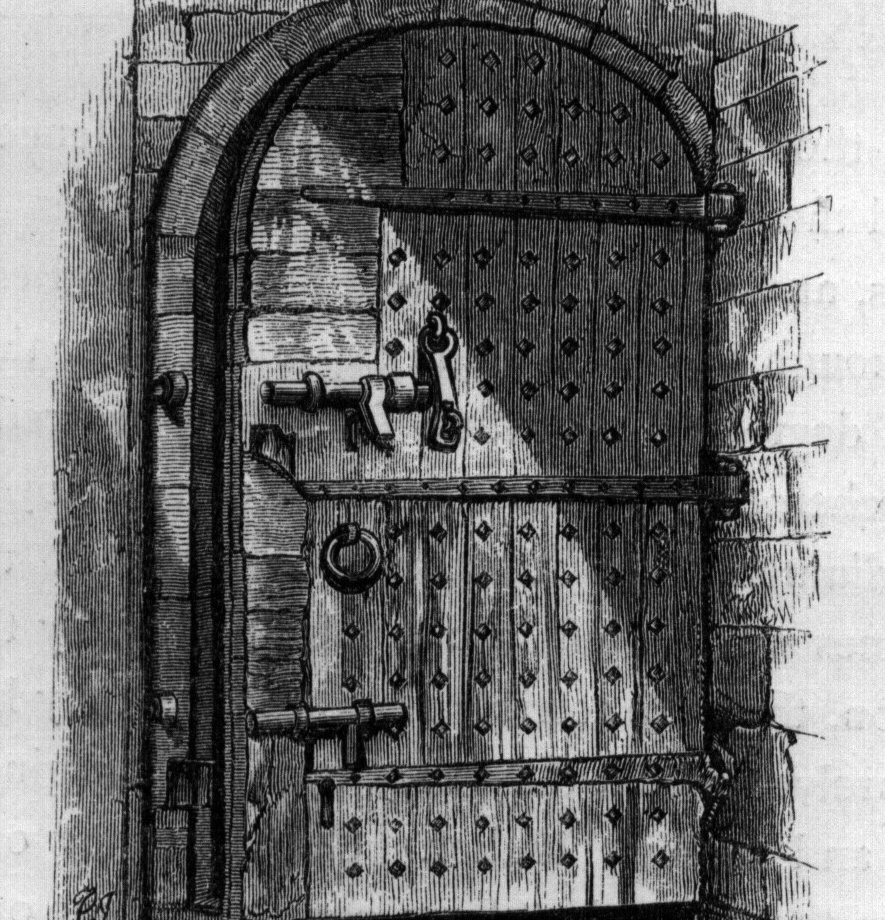
I pictured my saffron cellar secured by a heavy iron padlock, and accessed via a separately locked vault. And guarded by some kind of vicious dog – a bloodthirsty 17th-century hound, perhaps, like a mastiff… Suddenly, the absence of lasers and pressure-sensors seemed less of a hindrance.
But that still left the third ‘T’ – ‘Team’. The best movie heists all seemed to involve numerous different characters, each with a specialist role – think Ocean’s 11, or the seven members of The Italian Job (one of whose surnames happens to be Croker – a good sign, surely).
I sometimes find that excessive numbers of characters in a novel are confusing, so decided to scale my team down. There needed to be a hero, of course – in my case, Fabian Smith, a young Londoner who finds himself in debt through no fault of his own, and is forced to steal saffron in lieu of gold to try and save his family.
But wouldn’t Fabian need someone to help him? An inside man – or inside woman? A maid in the croker’s house would make sense, I thought, as the beautiful, no-nonsense Amye Bloxham began to take shape.
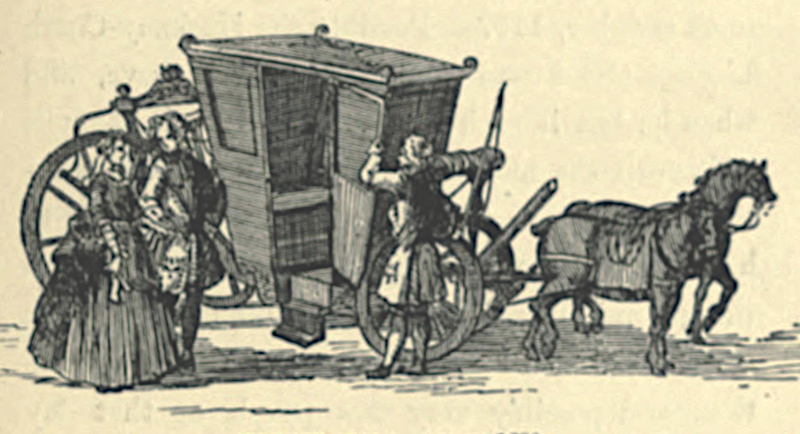
But what of the getaway driver (Baby Driver; Drive)? Souped-up muscle cars were out, so it would need to be a carriage driver. The first horse-drawn hackneys appeared in London in the early 1600s; why shouldn’t Fabian meet a hackman who had come to Saffron Walden for the crocus harvest? A third member of the team was on board.
My historical heist was starting to come together. Perhaps the fusion of ancient and modern might even make for something fresh? The only way to find out was to charge headlong at a fourth ‘T’. Typescript…
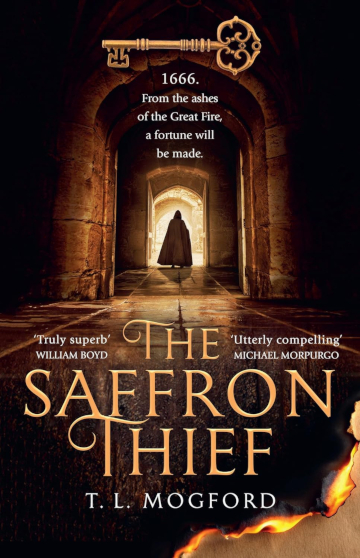
The Saffron Thief by TL Mogford is published on 30 July, 2026.
Read more about this book.
You might enjoy his other Historia feature, Apples, Chelsea, and my route to the plant hunters.
This is TL Mogford’s second historical novel, following The Plant Hunter. He has also written a series of crime novels about a lawyer from Gibraltar named Spike Sanguinetti. The first book, Shadow of the Rock, was a Spectator Book of the Year, and was shortlisted for the Crime Writers’ Association Dagger award for best debut.
Other features set in the Restoration period include:
The monarch with the magic touch by Andrew Taylor
Bedlam, Robert Hooke and Henry Hunt by Robert J Lloyd
Fake news, or the Horrid Popish Plot by Anna Abney
In search of the animals in the Great Fire of London by Deborah Swift
Thomas Blood and the Theft of the Crown Jewels by Angus Donald
And Jem Poster has written about researching historical fiction using the Great Fire of 1666 as an example in Serious play: the fiction-writer’s balancing act
Images:
- The former Sun Inn, Church Street, Saffron Walden (cropped and colour balanced): M J Richardson for Geograph (CC BY-SA 2.0)
- Attacking Dogs by David de Coninck, before 1700 (detail): Daderot for Wikimedia (public domain)
- Saffron crocus from Herbarium Blackwellianum emendatum et auctum, Latin translation of A Curious Herbal by Elizabeth Blackwell, 1737–9: Wikimedia (public domain)
- Verger’s Cottage, Saffron Walden: Geoff Doggett for PublicDomainPictures.net (public domain)
- Door of Guy Fawkes’s dungeon from Memorials of the Tower of London by Lieut-Gen Lord De Ros, 1866: Tufts Digital Library via Wikimedia (public domain)
- Hackney-coach. About 1680 from Omnibuses and cabs: their origin and history by Henry Charles Moore, 1902: Robarts — University of Toronto for Internet Archive (public domain)


