
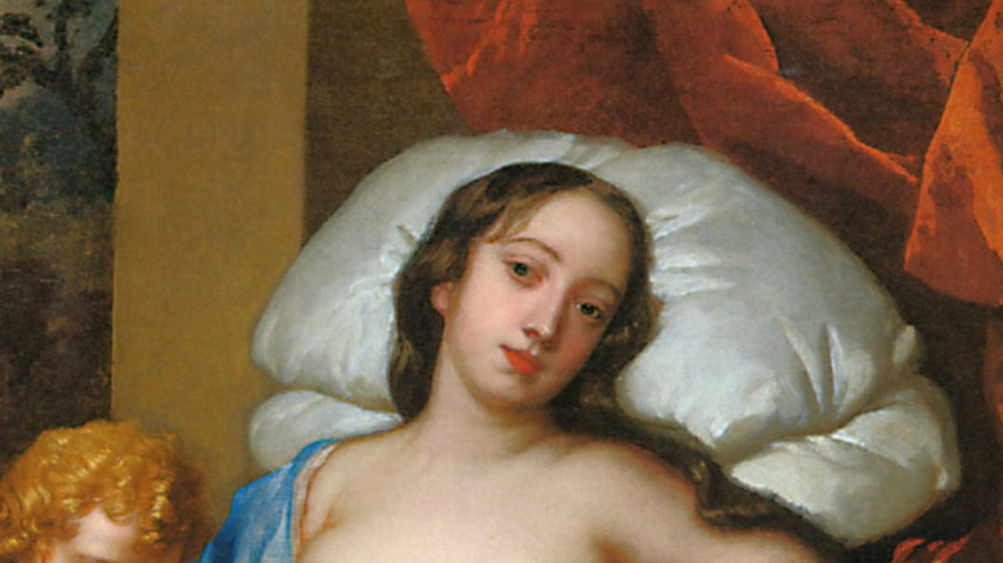
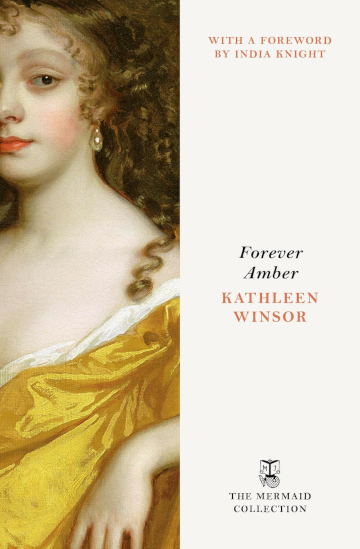
To mark the publication of a new edition of Kathleen Winsor’s scandalous historical novel, Forever Amber, the publisher Elizabeth Smith argues that this “brilliantly accurate” book is still relevant over 80 years after it first delighted – and challenged – readers around the world.
“[Forever Amber] is not only brilliant – once you start, I defy you to stop reading – but incredibly modern.” India Knight
“It may be time to recognise Forever Amber as a classic, and to appreciate Kathleen Winsor’s special brand of feminine genius.” The Guardian
Lady Chatterley’s Lover has long been held up as the book that changed censorship laws, but academics have subsequently argued that the cultural impact of Forever Amber has been largely neglected, despite its important role in the fight against censorship in the US and Canada.
Its categorisation as the feminine ‘middlebrow novel’: commercial fiction largely written and consumed by middle-class women, and therefore immediately attributed a lowlier status, rather than ‘highbrow’ fiction’ such as Lady Chatterley’s Lover, undermines its role in the censorship debate.

Forever Amber was fundamental in challenging global societal views on what was ‘decent and proper’ reading material for women.
Published in 1944, just as World War II was coming to an end, Forever Amber was widely considered the original ‘bodice-ripper’, shocking the establishment and raising the collective temperature of women all over the world. It follows its thoroughly modern heroine, Amber St Clare, on an extraordinary social odyssey, that includes multiple marriages and births, from the gutter to the very top of London society – via the King’s bed.
The visceral underbelly of London is exposed alongside the palatial life of Charles II and his courtiers, while the Plague and The Great Fire of London unite them. Throughout it all, Amber’s desperate yearning for the one man she can never have, the roguish Lord Bruce Carlton, colours all her actions.
Forever Amber was the debut novel of author Kathleen Winsor. Born on 16 October, 1919, in Olivia, Minnesota, at the age of 18 Kathleen Winsor made a list of her goals in life – one of which was to write a bestselling novel. She only put pen to paper, however, when she met her husband, Robert Herwig, at Berkeley University. Robert was writing a paper on Charles II and after reading through some of his research material, Kathleen became obsessed with the Restoration, reading a staggering 356 books on the period before she set to work.
This minute attention to the period is the reason the book is such an accurate reflection of the time, historically, geographically, socially and morally. Over five years, she wrote six complete drafts amounting to 9,241 pages, spending 1,303 hours on reading and research and 3,284 hours writing the book, eventually delivering an 11-pound manuscript to her publisher in New York in a box that had originally housed a ham from her local butcher.

The publisher cut it down to roughly a fifth of its original size, and the first printing went on sale 16 October, 1944. It was an instant hit.
In a world that holds women firmly in their place, Amber scandalises all by obeying no one’s rules but her own. It was this same disrespect for the moral codes of the 1940s, and lack of repentance that Amber shows for her behaviour, that led to Forever Amber being banned for obscenity in 14 US states (burned in Massachusetts), Canada, New Zealand, Australia and Ireland. It was cited that this ‘radical’ book had:
- 70 references to sexual intercourse
- 39 illegitimate pregnancies
- seven abortions
- 10 descriptions of women undressing in front of men
- 49 miscellaneous objectionable passages (it must have taken a very dedicated shocked reader to document them all…)
The censorship and scandal inadvertently fuelled the book’s massive popularity and Forever Amber went on to sell three million copies globally in its first year of publication and became a blockbuster in 16 countries.
As word spread, readers were desperate to get their hands on Forever Amber, with copies being smuggled across borders, and printers trying desperately to keep up with demand at a time when paper was still in short supply post-war. British lending libraries had massive, months-long waiting lists, and individual copies of the book were treated like gold, passed from neighbour to neighbour until the pages physically fell apart.

For a population thoroughly exhausted by years of total war and devastation, the book provided a profound escape in its near 1,000-page description of luxury grand homes, vibrant historical fashion, and royal court intrigues – it was house porn before Instagram, seduction and backstabbing before reality TV, royal scandal before the modern monarchy.
A film of Forever Amber was released in 1947. To lift a ‘Condemned’ rating, 20th Century Fox had to make aggressive script changes. Censors forced the studio to limit Amber’s on-screen romantic partners from 30 to just 5 men. The book’s 39 illegitimate pregnancies and seven abortions were entirely cut out of the adaptation, with Amber bearing only one child, and to comply with strict screen modesty rules, there was a complete omission of multiple sequences describing or implying women undressing in front of men.
Despite this sanitisation, the Catholic Legion of Decency’s immediate decision to denounce the film on its opening night, gave it a must-see boost (unsurprisingly…). While the film faced a massive backlash from the Catholic Church in America, the British response focused heavily on local government censorship. Despite the BBFC’s clearance, several conservative local councils across England, Scotland, and Wales found the film’s ‘bodice-ripping’ reputation too scandalous and banned it from being seen in their local cinemas.
Kathleen wrote seven other novels after Forever Amber. Despite her intention, she never wrote a sequel. None of her subsequent novels achieved the heights of success, cultural status and notoriety enjoyed by her debut. In a 1986 interview, Winsor recalled her agent’s early warning: “No matter how many other books I write, this is the one people will remember.” Winsor admitted: “She was right. It only happened once.”
_%E2%80%93_Government_Art_Collection,_Downing_Street.jpg)
For a modern reader, the sexual shock value is no longer there. Yet in the same way that, for my generation, Judy Blume’s Forever awakened and delighted its female readers, Forever Amber has long been a touchstone of female empowerment and still stands up to be enjoyed by modern readers.
As well as the brilliantly accurate historical representation of the period, there are many parallels to be made between the world of Amber St Clare and the one we currently live in: the disparity of wealth and class mobility, the double standards around ambition and relationships, debates around the autonomy of women’s bodies, just for starters.
Amber St Clare is a heroine for all times, and Forever Amber a book that has earned its right to be noticed, alongside its more ‘literary’ sisters, in the cultural debate around banned books. And I can confidently guarantee, you will have a much more rip-roaring time with Amber than Lady Chatterley.
Forever Amber by Kathleen Winsor is published in a new edition by the Mermaid Collection on 17 September, 2026.
The Mermaid Collection is a classics collection from Penguin Books that champions forgotten female voices who would have been the populist writers of their day.
Elizabeth Smith is Communications Director and Associate Publisher at Penguin Michael Joseph, a division of Penguin Books. As well as curating and publishing the Mermaid Collection, Elizabeth has worked with many contemporary writers including Marian Keyes, Sue Townsend, Jojo Moyes and Dawn French.
You may also be interested in these other features about historical fiction:
What is historical fiction for? by Paul Burke
So, what exactly IS historical fiction? by Marianne Kavanagh
The gift of writing historical fiction by Liz Hyder
What counts as historical fiction? and
How do you research historical fiction? both by Emma Darwin
Twisting the Tale: should historical fiction stick to the facts? by Chris Bishop
The delights and dilemmas of using real people in historical fiction by Chris Lloyd
Historical fiction’s role in giving a voice to women by Flora Johnston
Show, don’t tell, Write what you know: do they work for historical fiction? by Jem Poster
Fiction and the English Civil Wars by Jemahl Evans
If you’re as interested in the Restoration period as Kathleen Winsor was, here are some of Historia’s features covering that time:
Historia interview: Claire Hobson by Frances Owen — Claire is Charles II’s biographer
Running with the regicides: Why I decided to venture into the Restoration by SG MacLean
The monarch with the magic touch and
Baby Face, Charles II’s French mistress, both by Andrew Taylor
Barbara Villiers, beautiful, powerful… ravenous? by Andrea Zuvich
Charles II’s last mistress and
Catherine of Braganza, the neglected Queen, both by Linda Porter
The women Prince Rupert loved by Mark Turnbull
Aphra Behn: A Secret Life by Janet Todd
And so to bed – a goodbye to Pepys’s diary by Deborah Swift
Thomas Blood and the Theft of the Crown Jewels by Angus Donald
Fake news, or the Horrid Popish Plot by Anna Abney
Images:
- Portrait of a young woman (either Barbara Villiers or Nell Gwyn) by Peter Lely, 1660–1680: Wikimedia (public domain)
- Forever Amber, first edition, 1944: Wikimedia (illustrative, fair use)
- Charles II by Peter Lely, 1670: Royal Castle in Warsaw via Wikimedia (public domain)
- Barbara Villiers, Duchess of Cleveland by Mary Beale, after 1665: Wikimedia (public domain)
- The Palace of Whitehall from St James’s Park by Hendrick Danckerts, 1674–5: Government Art Collection via Wikimedia (public domain)


