
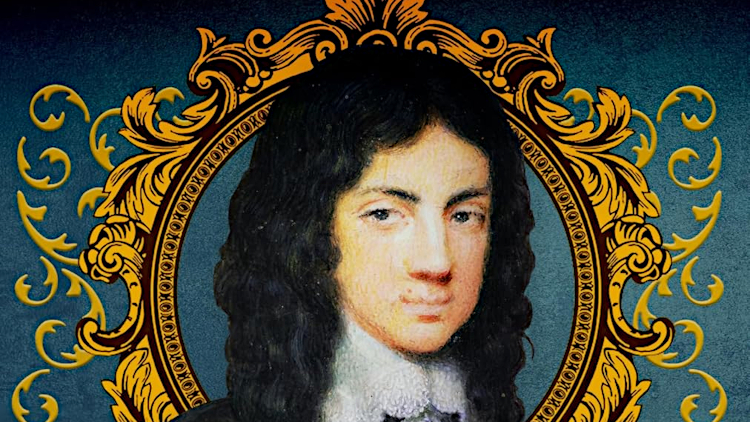
On 29 May, Oak Apple Day, it’ll be 396 years from Charles II’s birth in 1630 and 366 since his restoration. To mark the occasion, Historia spoke to Claire Hobson, whose biography charts those 30 turbulent years that formed the future king.
Your book, Charles II: From the Cradle to the Crown, looks self-explanatory from the title, but could you give us a brief idea of what you’ve written about?
It’s a biographical look at the Stuarts’ Charles II when he was a prince and, from age 18, a king deprived of power. Aside from earlier history in the prologue, the book covers his birth year, 1630, to the day of the Restoration in 1660, so delves into the roles adolescent and young adult Charles played in the Wars of the Three Kingdoms and his desperate, often highly risky, attempts to regain monarchical control.
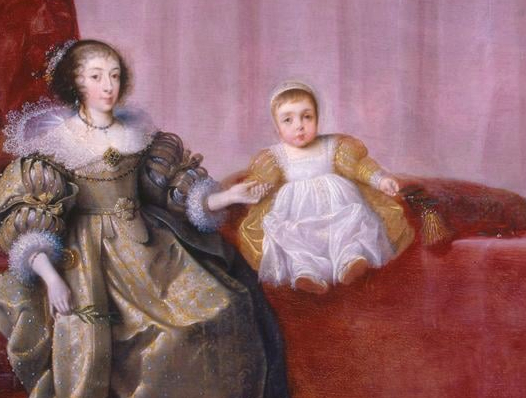
Before that, though, his childhood is closely examined, and one main aim was to explore his development. I consequently reflected on influences, such as certain attendants, and how his experiences saw him form his own thinking.
What drew you to write about Charles II?
Some years back, I started writing fiction centring on the disasters that befell London in 1665–66, and I quickly got hooked on the research, often due to Charles. At first, I believed him more likeable than I’ve since concluded, but he adopted good–bad juxtapositions and made himself extremely enigmatic.
So looking at his life is important for our understanding of Charles, and our understanding of Charles is important in itself, because he steered so much Restoration history. There’s also his sense of humour and the letters and anecdotes it leaves us with. He’s both fascinating and fun.
I suppose most people think of Charles as the Merry Monarch who had plenty of mistresses. But your focus is earlier. Why did you concentrate on his first 30 years?
Well, the publishers, Pen and Sword, had the idea. They saw a gap there. After all, the incident in the oak tree is the only thing many people know of Charles’s pre-Restoration life, yet that life was phenomenally eventful.

Conspiracy and battlefield drama gave me chance to inject excitement, and I was very lucky to be approached to write the book. Then, when I realised it also opened up an opportunity to analyse the making of the Merry Monarch, those first three decades gained new significance in my mind.
The events of Charles’s teens and 20s – the Civil Wars, his father’s execution, years of exile and uncertainty – would have been traumatic. How did they shape the man – and the king – he became?
One overriding effect was cynicism. That perhaps swayed his philosophy regarding integrity and fidelity, though I reckon his teenage relationship with Lucy Walter contributed there.
But yes, as early as the Bishops’ Wars of 1639–40, he was traumatised. Although his foolish gallantry at Edgehill in 1642 appeared driven by enthusiasm, he showed “melancholy” in private, and I found strong evidence that Charles contemplated suicide a few times in the 1650s.
He then seemed keener to seek pleasure than to secure a place in Heaven. He’d long identified religious steadfastness as problematic. Through family love, he gradually came to see why this steadfastness mattered to his father Charles I. But by the time of Charles I’s execution, Charles II had decided to handle things his own way.
Charles has a (deserved) reputation as a womaniser. But I get the impression he liked and respected women. How accurate would you say that is?

Pretty accurate, yes, although I do find myself asking occasional questions about consent as I see a likelihood that Charles, from his early 20s, used false identities with prostitutes. But proof is lacking, and his years of unfulfilled lust for the court beauty Frances Stewart imply he wasn’t inclined to force himself on women.
With the Marquis of Ormond saying Charles took “immoderate delight” in “effeminate” conversations, we should remember this king enjoyed engaging with women. Nell Gwyn attracted him through her wit, not just her physical attributes, and Jane Lane was a woman whose banter he admired while recalling the courageous help she’d given him during his escape after the Battle of Worcester.
His mother, Henrietta Maria, received only minimised respect from Charles, particularly when he returned to Paris after Charles I’s execution and told her to keep out of business. He didn’t appreciate her as a self-styled “generalissima”.
But by and large, he adored bold, bossy women. His nursery nurse, Christabella Wyndham, was one of those, and Charles pined in her absence after she’d been with him for about five years from his babyhood. Then, aged 14, he had a sexual dalliance with her.
My research told me Charles wanted lovers who could teach him something in his early sex life, and he never really comes across as seeking dominance over women. He was also happy for females to reign. What’s more, he wanted his wife Catherine of Braganza to bear him a son or daughter but he seemingly never held Catherine’s fertility problems against her.
Did your research for the book unearth any surprising information?
Definitely! For a start, Charles matured very quickly, so I was finding things like the remarkable equestrian skills he displayed aged 10. Maybe I shouldn’t have been surprised that nine-year-old Charles had fears for the monarchy’s future, but the visions he had with these fears were prophetic and certainly grabbed my attention, partly because Charles revealed them in an unusually tense conversation with his father just after the Short Parliament was dissolved.
Another surprise has to be the extent of the boy’s involvement in the Civil Wars. His 1645–46 role of Captain-General is labelled nominal, but that misrepresents the situation.
Beyond that, there was Charles’s refusal to back attempts at murdering Lord Protector Oliver Cromwell, and I’d say my jaw dropped when I researched Charles being sucked into peace negotiations at the end of the Fronde in France. I suspect he made crafty moves there, in 1652, to content Louis XIV.
Speaking of craftiness, I was also shocked to learn about the first time Charles had the future Duke of Monmouth kidnapped – as an infant. Regarding Charles’s exile-era offspring, I hadn’t expected to identify more than the four usually listed, but I now think there were at least six.
Is there any misconception about Charles that you’d like to see debunked?
The idea that he just lazily played around during exile! In reality, Charles was constantly working to achieve Royalist aims, and he met leaders of various sects, oversaw plans for uprisings, communicated with European powers, fought in the Franco-Spanish War, organised retribution after falling victim to espionage. The list goes on.
He established himself like a king, too, so led Privy Council meetings and made public appearances, interspersed with quite a few clandestine operations.
What do you hope readers of Charles II: From the Cradle to the Crown will take away after finishing your biography?
The fact childhoods are important to historical studies – they put people in context. Specific to Charles, meanwhile, I’d like readers to be left reflecting on his mental health and how his embrace of debauchery stemmed from both his misery and his understanding of the desire for counter-revolution in post-Commonwealth England. I also hope they’ll realise why Charles was so devious!
Have you got any plans to write another book?
Yes – although I’ve had ideas for Georgian focuses, I’m deep in the Restoration, writing a multi-biography about the Merry Gang. In other words, I’m showing up some of the most incorrigible men in history!
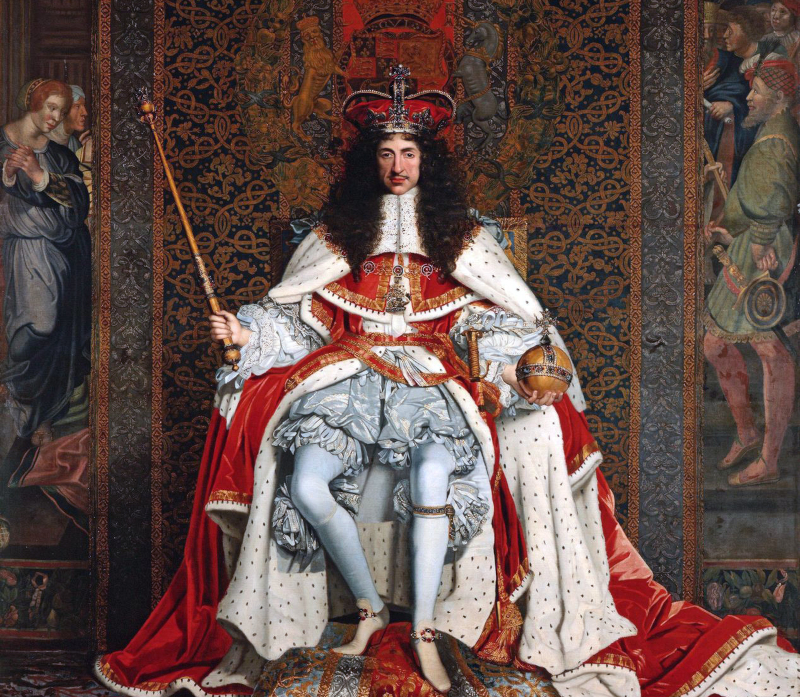
Here were the likes of the second Duke of Buckingham, the second Earl of Rochester, George Etherege and more – a bunch of courtiers who drank, brawled, fornicated and stripped publicly while leading groundbreaking theatrical movements and occupying pivotal government positions.
Crucially though, they were immensely witty and had an uncanny knack for amusing Charles II. Because of that, plus some complex interrelationships from his past, these rakes tried to get away with shocking crimes and daredevil antics, yet some of those antics played with Charles’s personal emotions. I’m really grateful that Pen and Sword accepted my proposal for a book on such an astonishing topic.
Let’s end on a fun note. If you could time travel for a day, which event in Charles’s life would you choose to be at? And what one object would you bring back as a souvenir?
I’d love to witness Charles meeting the potential countersignatories of the 1656 Treaty of Brussels securing his alliance with Spain. To please them, he had none of his advisers beside him, so was relying on his charm and acumen. Seeing those qualities in action would be fantastic.
Ooh, souvenir! As he went undercover to thwart Cromwellian spies, I’d want to snip a thread off his disguise! A disguise keepsake is a fitting Charles II keepsake.
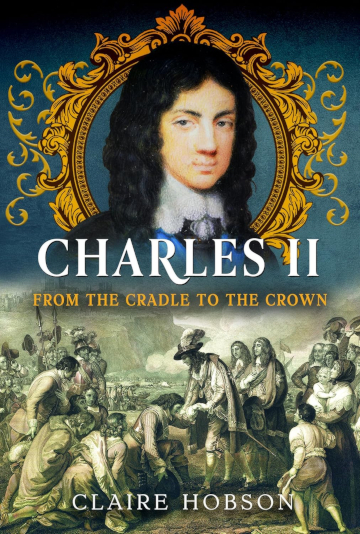
Charles II: From the Cradle to the Crown by Claire Hobson was published on 12 June, 2025.
Claire’s on Bluesky, Facebook, Instagram and Twitter/X.
As a fundraiser for the mental health charity Mind, Claire has organised and promoted Restoration-themed events involving leading historians. Through these, she produced regular history content on social media and scripted features for talks, but she now devotes more time to books, delving deeper into the 17th century.
Have a look at Historia’s features related to this topic, including:
Five memorable coronations by Frances Owen
The monarch with the magic touch by Andrew Taylor
Our features about Charles II’s Queen, Catherine of Braganza, by Linda Porter and Isabel Stilwell
Three of Charles II’s mistresses: Baby Face, Charles II’s French mistress by Andrew Taylor; Charles II’s last mistress by Linda Porter; and Barbara Villiers, beautiful, powerful… ravenous? by Andrea Zuvich
Running with the regicides: Why I decided to venture into the Restoration by SG MacLean
Charles I – the boy who would be King in which Mark Turnbull takes a similar approach to Charles I’s youth
Killing a king: the execution of Charles I and Henrietta Maria: queen, warrior, politician, woman by Leanda de Lisle
The women Prince Rupert loved by Mark Turnbull
Images:
- Detail from the cover of Charles II: From the Cradle to the Crown by Claire Hobson
- Detail from Charles I, Henrietta Maria and Charles, Prince of Wales by Hendrick Pot, c1632: © Royal Collection Enterprises Limited 2026 | Royal Collection Trust RCIN 405541
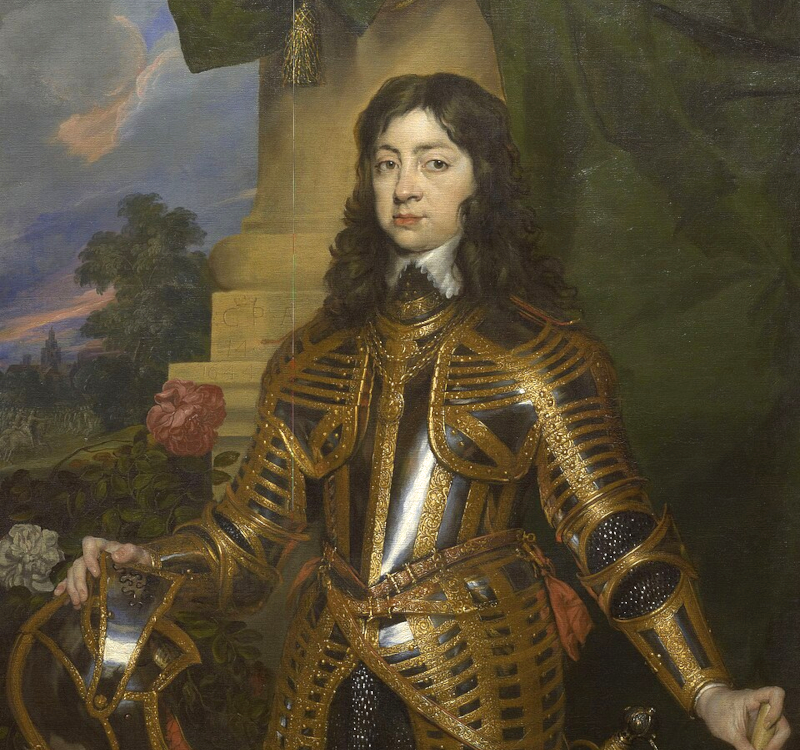
- Allegorical portrait of Charles II when Prince of Wales with a page on the right and the head of Medusa bottom left by William Dobson, c1642: National Galleries Scotland via Wikimedia (public domain)
- Frances Stewart by Peter Lely, c1662: CRT via Wikimedia (public domain)
- Charles II, when Prince of Wales by William Dobson, 1644: © Royal Collection Enterprises Limited 2026 | Royal Collection Trust RCIN 404921
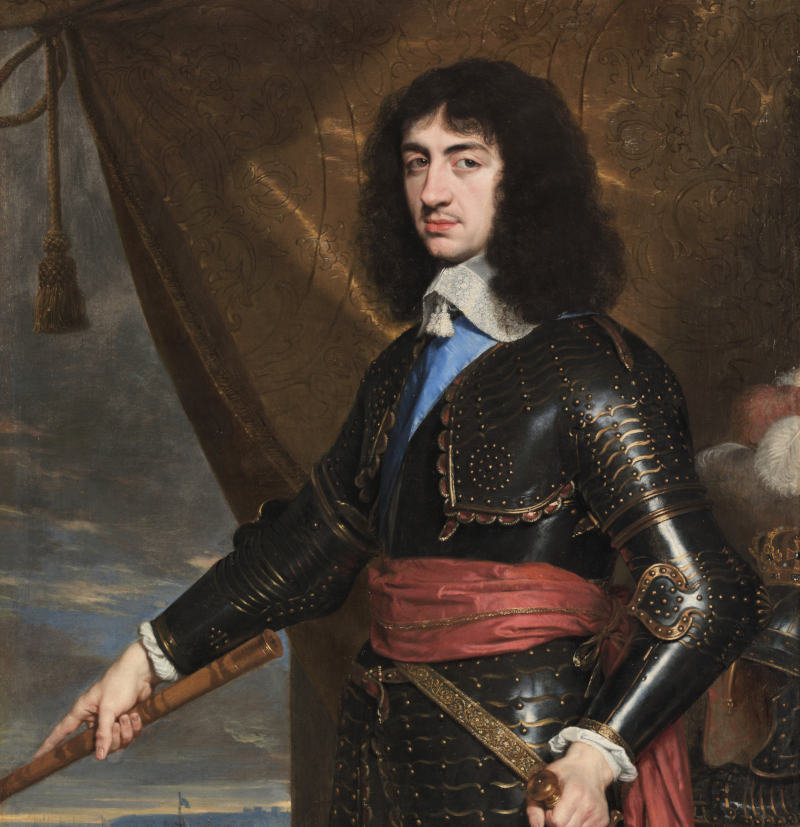
- Charles II by Philippe de Champaigne, 1653: Cleveland Museum of Art (public domain)
- Charles II dressed in Parliament robes over the Order of the Garter costume by John Michael Wright, possibly c1673: © Royal Collection Enterprises Limited 2026 | Royal Collection Trust RCIN 404951


