
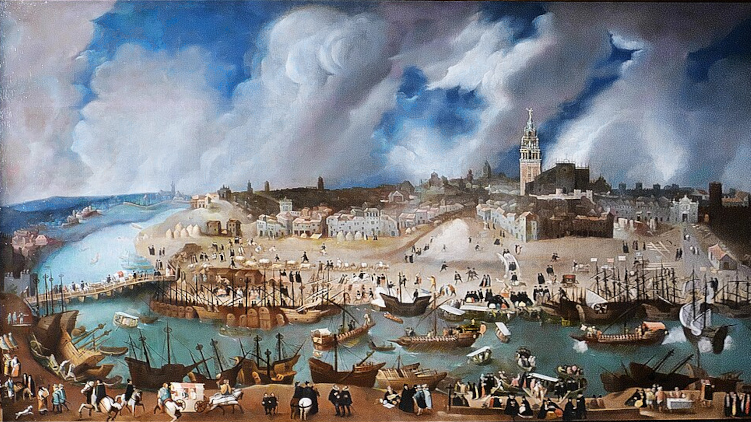
Seville in the 16th century was a city of wealth, the arts and international trade. But, says Matthew Carr, author of The Emperor of Seville, it was also Spain’s criminal capital, winning the nickname of the Great Babylon. He tells Historia how Seville embodied the paradox at the heart of Spain’s Golden Age.
History tends to remember Spain’s 1492–1659 ‘Golden Age’ as a period of political and military triumph and cultural achievement, in which a southern European backwater emerged from obscurity, and acquired a global empire.
This was the country of Cortés, Pizarro, and the conquistadores; of the country of the Buen Retiro and the Escorial; of gilded palaces and cathedrals; of El Greco, Lope de Vega, Cervantes and St John of the Cross.

But this same period was also an age of lawlessness, banditry and criminality, that made Spain’s roads some of the most dangerous in Europe, and transformed its cities into centres of la mala vida – the evil life.
More than any Spanish city, 16th-century Seville embodied these contradictions. On the one hand, Seville was Spain’s quintessential imperial city – the gateway to the Indies and the destination for the royal treasure fleets.
Twice a year, these flotillas unloaded gold and silver from the Americas onto the swampy strip of beach on the edge of the Guadalquivir River known as the Arenal, before being refitted and resupplied for the return voyage.
This two-way traffic transformed Seville into a febrile boomtown of some 100,000 people and a magnet for merchants, bankers, adventurers and fortune-seekers. Seville was the home of the Royal Mint, and the House of Commerce that managed Spain’s overseas empire.
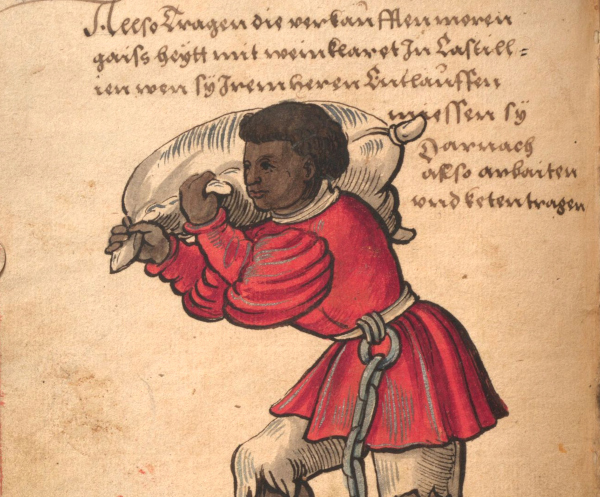
It was a city with the highest concentration of slaves of any Spanish city, famous for its luxurious shops, the beauty of its women, and the extravagant and lavish religious processions that still attract tourists during Holy Week. Seville was also a city of the arts – the city of Velázquez, Zurbarán and Murillo.
As in the rest of Spain, there was another side to this opulence, piety and cultural splendour. By the end of the 16th century, Seville had acquired an unrivalled reputation for vice and crime, that led many Spaniards to refer to the city as the Great Babylon, or simply ‘Babilonia.’
Within walking distance of the Arenal and the fashionable shops of the Calle Francos, whole districts were dominated by la hampa, (the criminal underworld), whose illegal activities included smuggling, the sale of stolen goods, organized begging, cape theft and purse theft, the adulteration of wine and vinegar, gambling, extortion, prostitution, fraud, and murder.
Today, visitors can still visit the Patio of Elms and the Patio of Oranges alongside the cathedral, where assassins-for-hire, thieves, conmen and pícaros (ruffians) plied their trades only a few yards from the cathedral steps, where bankers and moneylenders issued loans and letters of exchange, and sea captains recruited their crews.
.jpg)
The city’s under-resourced and often corrupt law enforcement agencies struggled to impose the state’s authority. On one occasion, it took 100 constables and auxiliaries to arrest a notorious picaro, but such numbers were rarely available.
Some of the city’s poorest districts were effectively left to fend for themselves, and became so dangerous in the winter, that their inhabitants locked themselves in their own homes at night and ventured out into the streets at their peril.
According to the Jesuit chronicler Pedro de León, “There was not a fiesta nor a Sunday, without one or various dead and wounded, and such bloody brawls and wars that it was impossible to pacify them.” Some of these brawls became public spectacles that were held outside the city walls, in which rival gangs attacked each other with stones and knives, while the locals placed bets on the outcome.
In a city that revolved around ships and sailing, Seville was also a major centre of prostitution. Thousands of women worked in brothels, or on their own account. Some of these ‘houses of conversation’ were licensed, and subject to regular medical checks in order to limit the spread of venereal disease.
.jpg)
With the reluctant tolerance of the ecclesiastical and secular authorities, good Catholic gentlemen could visit brothels with a designated male owner on a Sunday morning before Mass, provided none of the girls was under the age of 12 or named María.
Seville’s many orphans or homeless children were also recruited by the criminal underworld, as thieves, beggars or prostitutes. The 17th-century painter Bartolomé Esteban Murillo’s touching portraits of Seville street children only hinted at the poverty, squalor and desperation of a transient and underemployed population that coursed through the city’s often fetid and rubbish-strewn streets.
Criminality was by no means limited to the bajos fondos (lower depths). Magistrates and city councillors frequently took bribes from unscrupulous merchants and speculators, who artificially raised the price of bread and other basic foodstuffs, and increased the burden on the poor.
Thieves and murderers could bribe their way out of punishment. In the squalid and overcrowded royal prison, even murderers could come and go throughout the day and night, and obtain various privileges if they were wealthy enough to pay for them.

Criminals without means faced a range of harsh punishments, from service in the galleys to execution. Even cape thieves were often hanged, and their bodies were sometimes hung from the windows of the Seville court opposite the city hall. Murderers might be hanged or have their throats cut – either facing their executioner or with their backs turned, depending on their social status.
These punishments provided a satisfying judicial spectacle, but they did little to curb the lawlessness and criminality that was rooted in the city’s rigidly hierarchical governance, and the deep social inequalities that were intrinsic to Golden Age Spain.
In this sense, Seville embodied the paradox at the heart of Spain’s transformation into a global superpower: a country built on imperial conquest that often hovered on the brink of bankruptcy; a country that saw itself as the fortress of the Catholic faith and the hammer of heretics, and yet was very far from virtue; a country that acquired stunning wealth, little of which filtered down to its impoverished masses, and its permanent population of vagabonds, orphans and mutilated war veterans, who were forced to find their own means of survival.
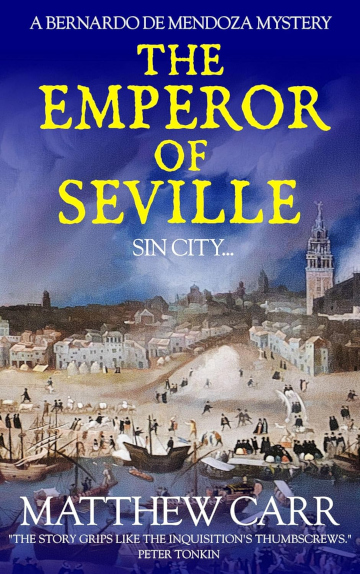
The Emperor of Seville by Matthew Carr was published on 11 December, 2025. It’s his second Bernardo de Mendoza Mystery.
It’s currently on offer on Amazon at 99p for the ebook or free on Kindle Unlimited. The deal ends on 22 January, 2026.
Read more about this book.
You may also enjoy these related features:
Roman Andalusia by Alistair Tosh
Al-Andalus: Islamic Spain in the 8th century by Matthew Harffy
The Templars and the reconquest of Spain by Simon Turney
Maria: the African woman who sailed with Drake on the Golden Hind by Nikki Marmery
(Re)writing the Spanish Armada by JD Davies
Images:
- View of the City of Seville attrib Alonso Sánchez Coello, c1585: Museo del Prado via Wikimedia (CC BY-SA 4.0
- The Arenal, detail from Hispalis Vulgo Sevillae… by Simon Frissius,1605: Wikimedia (public domain)
- ‘So the bought Moors carry claret in wineskins…’, illustration from Trachtenbuch by Christoph Weiditz, 1530–40: Germanisches National Museum, Digitale Bibliothek (public domain)
- Patio of Oranges: Luca Nebuloni for Wikimedia (CC BY 2.0)
- The Young Beggar by Bartolomé Esteban Murillo, 1647–8: Musée du Louvre via Wikimedia (public domain)
- The Royal Audiencia of Seville, a court of the Crown of Castile: Anual for Wikimedia (CC BY 3.0)


