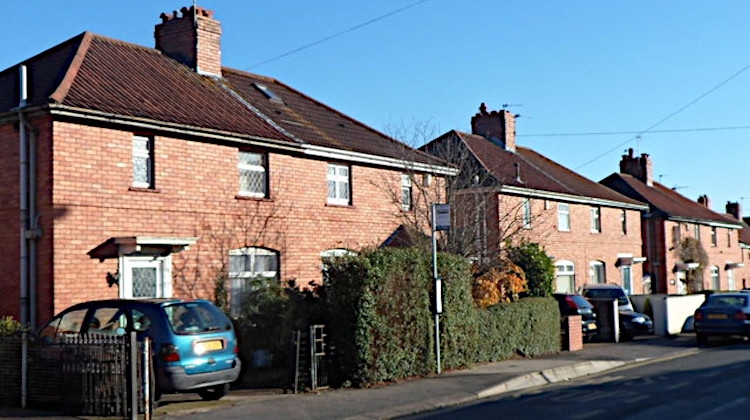
There’s no reason to be snobbish about council houses, says Lizzie Lane. For the people who moved into the first ones, built in the interwar period, they were the clean and comfortable ‘homes for heroes’ they’d been promised – far better than the crowded, pest-infected slums they left behind.
Sturdy semi detached and terraced houses were constructed in the period between the First and Second World Wars to fulfil the promise of the title – Homes for Heroes. The council house had arrived.
Large estates sprang up on the outskirts of large cities – my own home city, Bristol, included.
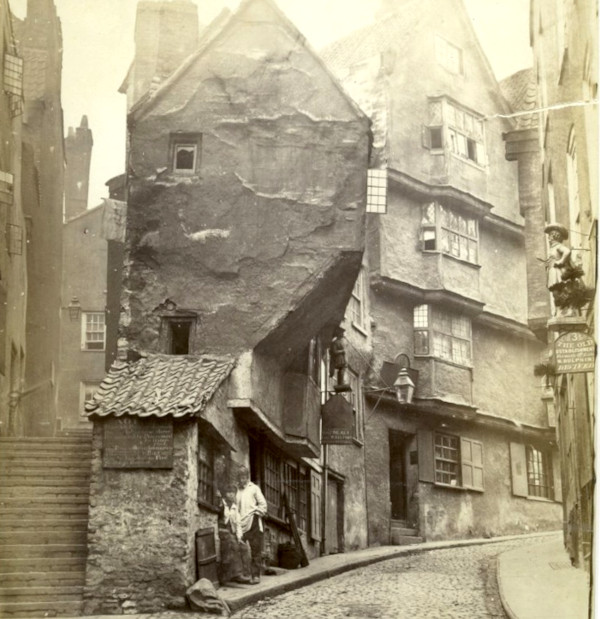
Residents of inner city slums, crammed into ancient buildings (some of which dated from the Middle Ages), were keen to escape the tin bath hanging from the wall, the old water pump and primitive privies situated in the communal backyard.
These houses had gardens. Some of the residents began growing fruit, flowers and vegetables. Some didn’t know how. They’d never tried. Some kept chickens. Even goats were not unknown.
For many it was the first time they’d experienced an indoor WC and bath where the hot water from the boiler used for laundry was channelled into the bath. The facility was there to bathe more often – the standard becoming once a week!
No longer was water drawn from outside. The kitchen had a proper sink and a cold-water tap, hot water for tea making and cooking being boiled in a kettle.
No central heating of course. That came much later. There was a main fire in the living room, smaller fire grates in the bedroom, though in the house I lived in they were seldom used. Hot water bottles helped relieve the chilly coldness of the bedding.
My mother used to get up and light the fire first thing in the morning before the rest of the family was up. She certainly needed to do so in winter, when ice coated the inside of the bedroom windows, sometimes the living room as well.
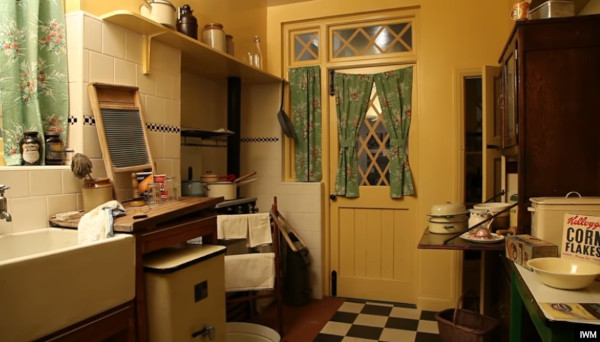
Cooking was done on a gas stove, laundry in the zinc boiler in the corner of the kitchen. The kitchen walls were bare brick and, like the other rooms, was painted in cream distemper.
The coalhole was beneath the stairs and accessed from the kitchen. Just imagine the dust after the coalman had emptied his sacks…
The council decorated inside and out every three years. The window frames certainly needed it; they were Crittall metal framed and ran with condensation at any time of year once the cooker was on.
There has always been snobbery about council houses, but my, what a change they were from the appalling conditions some people had been living in: cloistered tenements, stinking drains, crowded conditions, accommodation shared with mice, cockroaches, bugs and rats.
More of these estates were built after the Second World War, though not quite of the same standard as those constructed between the wars.
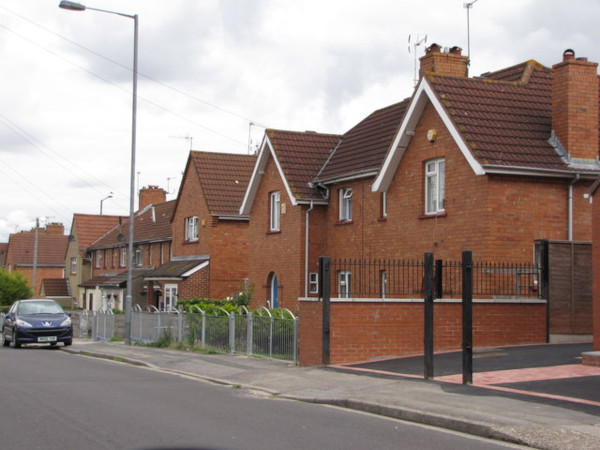
Built by local authorities, two million of these well-built properties have been sold off, many to investors to be rented out, as they’ve always been, though many were bought by tenants.
There’s an old saying about writing what you know; seeing as I was brought up in a three-bedroom council house (for seven of us), I had to use what I knew and more that I could find out.
I recall the characters who lived in those houses, their experiences living in two or three rooms in city centre slums.
The thirties I didn’t know, but my mother did. She moved from a couple of rooms into a shared house to her first council house in the thirties – one of the original tenants. Thus to her I dedicate the Coronation Close series set on the Knowle West estate in Bristol.
Oh, and to that person who asked me if they had washing machines and tumble driers: it was the zinc gas-fired boiler for laundry and washing, and the mangle outside the back door for drying!
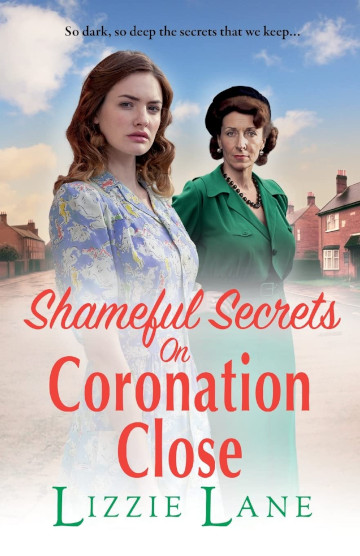
Shameful Secrets on Coronation Close by Lizzie Lane is published on 20 April, 2023. It’s the second in her Coronation Close series set in 1930s Bristol.
Lizzie Lane is the name Jean Goodhind writes under for her World War Two novels.
See more about this book.
You may enjoy Watercolour research: a historical writer’s technique, another piece she’s written For Historia, this time as Jean Moran.
Images:
- Salcombe Road, Knowle, Bristol: © Jaggery for Geograph (CC BY-SA 2.0)
- Steep Street, a notorious slum lying between the quay and St Michael’s Hill in Bristol: Bristol Pictorial Survey, Library Collections 781/L93.11 Ste © Bristol City Council
- Kitchen of the 1940s House: Imperial War Museum © IWM (IWM Non-Commercial Licence)
- Typical 1930s housing, Newquay Road, Knowle West, Bristol: © Jez McNeill for Geograph (CC BY-SA 2.0)


