

Who were the real hero(ine)s of the Blitz? “The wartime mothers of the East End,” one former doctor, who saved many lives, told author Kate Thompson. Kate writes about the lessons she learned from interviewing East London women who’d survived the bombs: the daughters of childminders, abortionists, money-lenders; the costermonger, the butcher, the singer. These working-class women inspire Kate’s novels. She starts with the story of a formidable matriarch who shares her name.
Kate Thompson was a woman who took multi-tasking to a new level. The mother of nine raised all her children in three rooms of a condemned slum in Bethnal Green, East London, yet still she found time to nurse her neighbour’s son through double pneumonia, fight her rapacious landlords for a ground-breaking reduction in rent and calmly extinguish incendiary bombs during the Blitz.
Clad in a starched apron, this well-upholstered and formidable wartime East End matriarch seemed indestructible. Yet sadly, she was not.

At the age of 63, with the war in its fourth year, Kate was suffocated to death in a night of undiluted hell. On March 3rd, 1943, she, along with 172 other men, women and children, was crushed to death in the space of 15 minutes after an explosion triggered a deadly stampede down to Bethnal Green Underground shelter. Rescuers’ hair turned grey overnight; whole families were torn apart at the loss of all those children.
I lament Kate’s passing too. It might sound odd that I should grieve for a woman I don’t know, but that’s where history is a great connector. For when I saw her name – my name – on a memorial to the dead, I felt an instant, emotional connection to this woman, and the quest to find out more about my namesake has led me on a journey in which I have uncovered the lives of some remarkable women.
Over the past 15 years, I have had the privilege of meeting hundreds of wartime women who have been kind enough to share their memories with me. When people ask me where I get the idea for the characters in my novels, it’s always from these inspiring women.
I’ve attended tea dances, coffee mornings, quiz nights, bingo and library reminiscing sessions, as well as one-to-one interviews in elderly people’s always immaculate living rooms, and each time I leave feeling humbled at the richness and complexity of working-class wartime communities.

Denise from Stepney – whose mum, Polly, was the street matriarch as well as being a mother to seven girls – put it to me like this: “Every turning had one, she was the go-to woman when something needed sorting.
“If a woman fell behind on her rent, Mum would step in and negotiate with the rent collector to stop her being evicted. If there were ever any dodgy-looking men hanging about, she’d see ’em off. If there was trouble, Mum sorted it. Baby needed delivering, Mum was the one the local girls turned to. She even got involved if a husband wanted too much sex from his wife!
“She was a midwife, nurse, social worker, citizens advice bureau and neighbourhood watch rolled into one.”
I learnt that life in the 1940s was tough, so the women had to be too.
Polly was a child-minder by day, abortionist by night. Over time, Denise gained an understanding of the way her mother helped out girls in trouble. Her chosen method was a crochet hook. She used the kitchen table, laying down a rubber sheet. If the pregnancy had been advanced enough and the foetus intact, Polly would wash it and bury it in the churchyard opposite: “In consecrated ground,” she told her daughter, with a brutal logic.
As her mother’s secret unfurled, Denise looked upon her with new eyes, marvelling at the dichotomy of her mother, the local child-minder, also acting as the local abortionist.
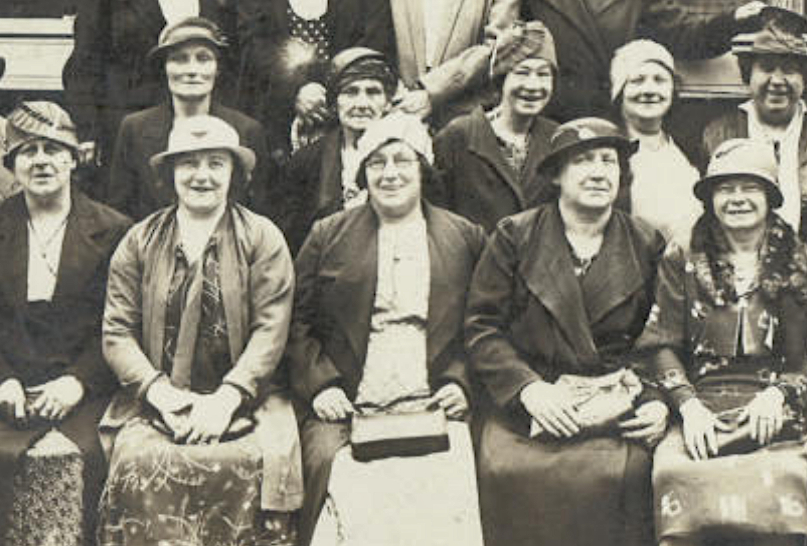
Over the years, dozens of girls in the same predicament traipsed through their doors, pale-faced and terrified. With abortion strictly illegal and birth control inadequate, it was a wonder there weren’t more.
During the war out-of-wedlock sex was no longer taboo and imminent danger acted as a powerful aphrodisiac. The arrival of two million American GIs to Britain in 1942 added to the potent mix.
Consequently, the number of illegitimate births in England and Wales jumped from 24,540 in 1939, to 35,164 in 1942. In response, a clandestine subculture existed in working-class communities to help avoid these scandals. Polly was a paradox. A woman of faith, who nurtured new life, but was equally competent in ending it.
As her childhood rolled out Denise realised it was also a love of her community that drove Polly. Despite rationing, there was always plenty of food in their cupboard and coal for the fire, thanks to the black market, and Polly made sure no one on the street went without.
Another woman who played a vital role in her wartime community was Alice Walker. “Mum acted as a money lender, helping out women for whom there was more week than money,” confides her daughter Marie Butwell. Along with the pawnshop and buying items on tick, women like Alice enabled women to pay the rent or tallyman when he came on his rounds.

93-year-old Marie, nicknamed Girl Walker, was born in Stepney in 1933. The first time I met her she was out on the street washing out her wheelie bin. “Eighty years ago, everyone would be out here scrubbing their steps, now I’m the only one,” she told me.
Marie’s mother raised her with five strict codes of conduct. Speak the truth and shame the devil. Work hard. Have a running-away fund. Never borrow money. If you lose your way, never ask a copper or a priest, ask a tramp, and then give him tuppence for a cup of tea.
When Marie was six, war broke out and she was evacuated to Windsor. Here she was treated like so many other so-called ‘lousy Londoners’ and suffered shocking abuse at the hands of the woman she was billeted with. When Alice got wind of this, she swept in like a hurricane and knocked her daughter’s abuser out with one punch, before marching her daughter back to the East End.
When the Blitz broke out, Marie was buried alive in an Anderson shelter when a railway siding was bombed and fell on top of it, trapping her for three days, before she was finally rescued on New Year’s Day 1941. “To this day, whenever I go anywhere, I always make sure I know where the exits are,” she told me.
Despite the horrors she endured, Marie was never allowed to show her fear. She became what I call the “no choice but to get on with it generation”.
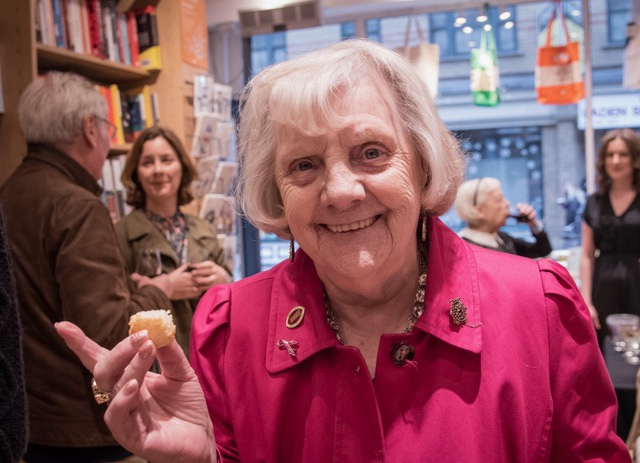
Babs Clark, from Bethnal Green, was another inimitable East Ender I met whose entire childhood seems to have been spent narrowly escaping death. Like Girl Walker, she too was abused when she was evacuated. When her costermonger mother, Bobby – who, according to Babs, “had muscles any docker would be proud of” – discovered this, she dished out a similar revenge to Girl Walker’s mum, before vowing to bring Babs back to the London.
When Bobby and Babs were machine-gunned on the beach in Torquay by a German plane, Bobby declared: “Sod that, we’ll be safer off back in the East End.”
Babs had nothing but respect for her hard-working mum, who was as tough as boiled brisket after losing her first husband whilst pregnant with Babs’ sister during the Depression. Bobby raised Babs not to dwell on misfortune, but to work as hard as you possibly could. “Hard work was a currency, which ensured the survival of my whole family,” she insisted.
Hard work, along with a fierce sense of belonging was instilled in the many women I interviewed, with all insisting that not one woman, but the entire street parented them.
Keeping a close eye on her neighbours’ kids in dockside Deptford was Irish mother of seven, Mrs Dudgeon, who cared for local children so that their mothers might go to work, not for money, but in exchange for a “bit of shopping” or having her steps scrubbed.
Her duties extended to helping birth the babies of the street, cutting the cord with a sterilised razor blade before wrapping the newborn infant in a while boiled man’s shirt, as well as laying out the dead.
But Mrs Dudgeon really came into her own when the Luftwaffe was battering the close dockside community. She ran the local shelters with ease, making sandwiches for all and soothing fractious babies back to sleep, even encouraging parents to go to the local for a drink, provided they come back when the raids began.
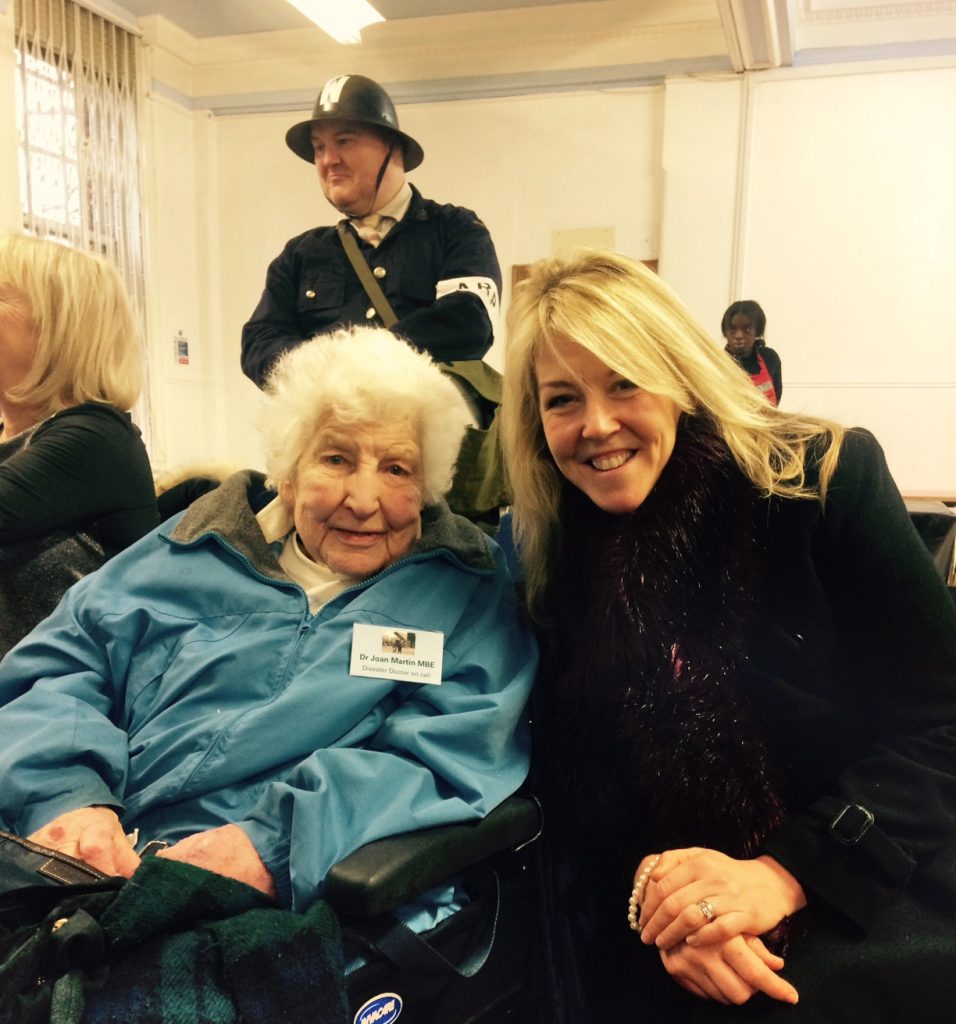
Her heroics were not isolated. Dr Joan Martin saved life after life during the Blitz as one of the few female medics practicing back then, moonlighting by night as an ambulance driver. Six months before her death aged 102, she was at pains to stress to me who the true heroes of the Blitz were.
“The wartime mothers of the East End,” she insisted. “They were remarkable, tough women who suffered great deprivation, but always put their children first, often going hungry themselves so that they might eat.
“I saw such terrible suffering in the East End. Malnourished children with rickets, covered in scabies and bug bites. The kids would come in and, when given a drink of milk, would ask politely: “Where can I drink to?” They were stunned to hear they could have a whole glass. It was those strong mothers who raised polite children in the teeth of such poverty who deserve the medals.”
From East Ender Henrietta Keeper, nicknamed Minksy, I learnt that laughter is the best medicine. “Me and my sisters would sing harmonies underground during the Blitz to drown out the sound of the bombs. We were Bethnal Green’s answer to the Andrews Sisters.
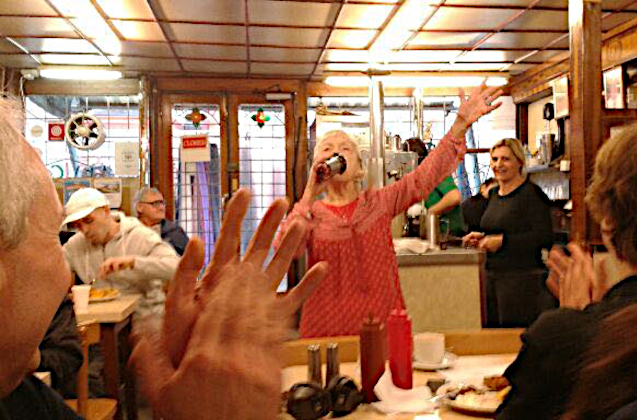
“I loved it when there were big parties, even weddings underground. There would be conga lines snaking up the platform with everyone singing at the top of their lungs. I learnt my trade in swagger and song during the Blitz.’
I met Minksy regularly in E Pelliccis café in Bethnal Green, where the Kray brothers famously met, up until her death in 2020, aged 93. The owner, Anna, would serve her a cappuccino with a willie stencilled in chocolate, leaving Minksy shrieking with laughter.
“I’ve been coming to this café for 80 years,” she would announce, before whipping a microphone out of her bag and belting out a rousing version of Viva Espana.
Sadly, so many of these colourful women have passed away. We shall never see their like again. The wartime communities I write about were killed off by a combination of post-war suburbanization and the institutionalization of roles women took for granted.
When I reflect back on their rich lives I realise, I really have very little to grumble about.

The Secret Society of Librarians by Kate Thompson is published in paperback on 27 August, 2026.
Kate is a journalist, ghostwriter and novelist. She’s written 12 fiction and non-fiction books, three of which have reached the Sunday Times bestseller list.
If you enjoyed this feature, have a look at the other ones Kate has written:
In search of a Holocaust survivor’s past
Uncovering Jersey’s wartime resistance
Why I started a podcast
Bethnal Green’s underground wartime library
Other related Historia features include:
The challenges of researching working class lives by Esther Freeman
Blitz Kids: celebrating the 80th anniversary of VE Day by Duncan Barrett
The Second World War crime boom by Mark Ellis
Sent away by sea: the forgotten history of WWII’s ‘seaevacuees’ by Hazel Gaynor
Kindertransport and other responses to the WWII refugee crisis by Catherine Hokin
“Put those Christmas lights out!” The Home Front during World War Two by Jean Fullerton
Collapse by Chrissy Sturt (the 2022 HWA Dorothy Dunnett Short Story winner), set during a bombing raid
Don’t mention the war! by Keith Lowe
Researching rural Devon in the 1920s and 1930s by Vanessa de Haan
Images, all © Kate Thompson unless otherwise stated:
- Group photo of wartime women in Bethnal Green, with Kate Thompson centre, in a white dress and glasses, handbag on her lap: provided by Kate Thompson
- Memorial plaque commemorating the victims of an accident on the south-eastern staircase of Bethnal Green tube station during an air raid alert in 1943 (slightly cropped): Sunil060902 for Wikimedia (CC BY-SA 3.0)
- Kate with Daisy Woodard: Kate Thompson
- The ‘other’ Kate Thompson, centre: see 1
- Alice Walker, butcher, Stepney: Kate Thompson
- Marie (Girl) Butwell: Kate Thompson
- Dr Joan Martin with Kate: Kate Thompson
- Henrietta (Minksy) Keeper singing in Pelliccis: Kate Thompson


