
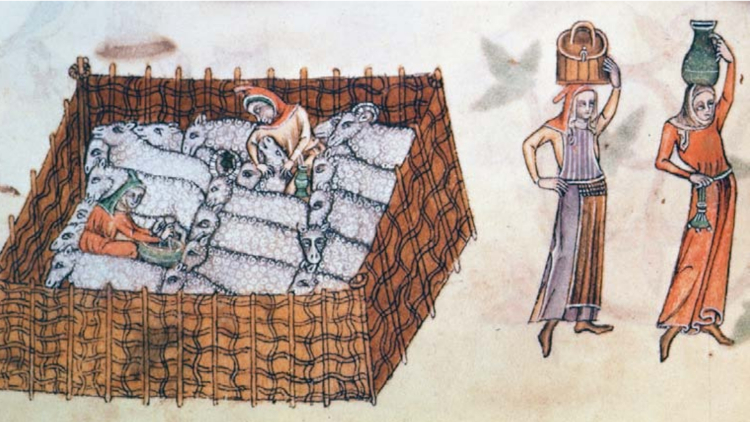
Medieval women’s family lives varied widely, as did the work they carried out daily. Rank in society was a factor, as was whether they lived in a town or the country, but the most important influence on their lives was their position in a family, the historian Catherine Hanley explains.
Family was the concept and the structure that dominated the lives of medieval women.
Men took their place in society according to their rank or occupation, and were defined accordingly, but although women were also members of a designated social class, they were additionally (and perhaps more strictly) defined by marital status and by their relationships to men.
They were single, married or widowed; they were daughters, wives or mothers. They were perceived, both socially and legally, as members of male-led families rather than as individuals in their own right.

Although the lives of noble and royal women tend to be better documented than those of women lower down the social scale, this concept of family applied to all ranks, and a careful search of contemporary records can shed light on how it affected townswomen, artisans and peasants.
The vast majority of businesses in a medieval town were small family affairs, owned and managed by a man who was assisted by his wife, children, apprentices and servants.
Although the women of the enterprise would, in the style of an old-fashioned Happy Families card, be referred to merely as ‘the grocer’s wife’, they were often just as skilled as their husbands, expected to understand the workings of their own business and of the wider industry so that they would be able to take over immediately if he died or was otherwise absent.
There were, however, hurdles placed in the way of women who wanted to engage in business. Most trades were run by guilds, official societies that controlled their particular occupations via strict training and membership criteria. Membership of guilds was generally divided into two levels, for masters and apprentices, although some also had a third, intermediate category for journeymen
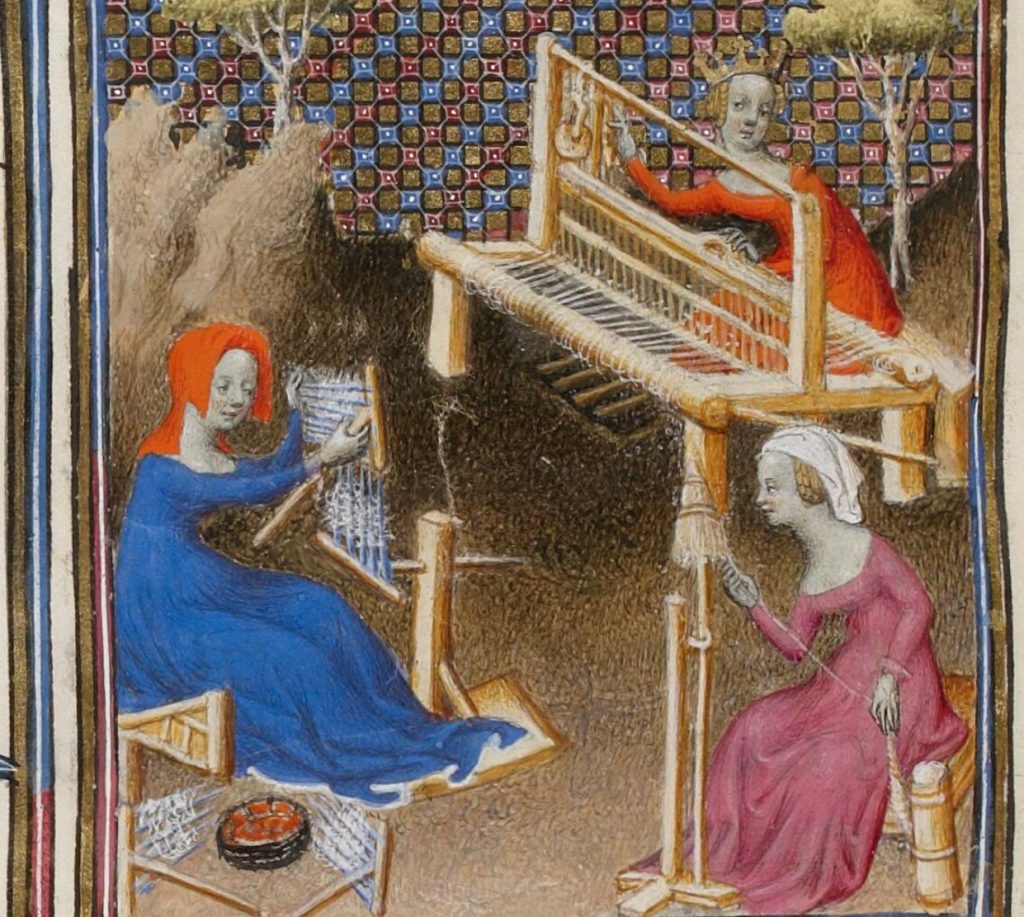
The terms master and journeyman are no accident: guilds were run by and for men, who actively excluded women except under specific restricted circumstances.
Single girls (including apprentices) were completely barred; married women could only be included as the wife of a male guild member; and even when widows took over their husbands’ businesses they did not enjoy full rights, being prohibited from serving as officials and voting in the elections for such positions.
If they subsequently remarried to a guild member, they would drop down to the ‘wife of’ membership category once more, and if they married anyone other than another member of the same guild, they were expelled. Their status as the wife in a new family superseded any level of individual skill or experience, as they were expected to subordinate themselves to the needs of their new household instead of running a business in their own right.
The excuse was that these procedures were necessary due to women’s general inferiority, but there was a double standard at work: the fact that a widow was expected to take over a business immediately following her husband’s death indicates that society knew perfectly well that these women were qualified and capable, even as it denied them the right to prove it in public.
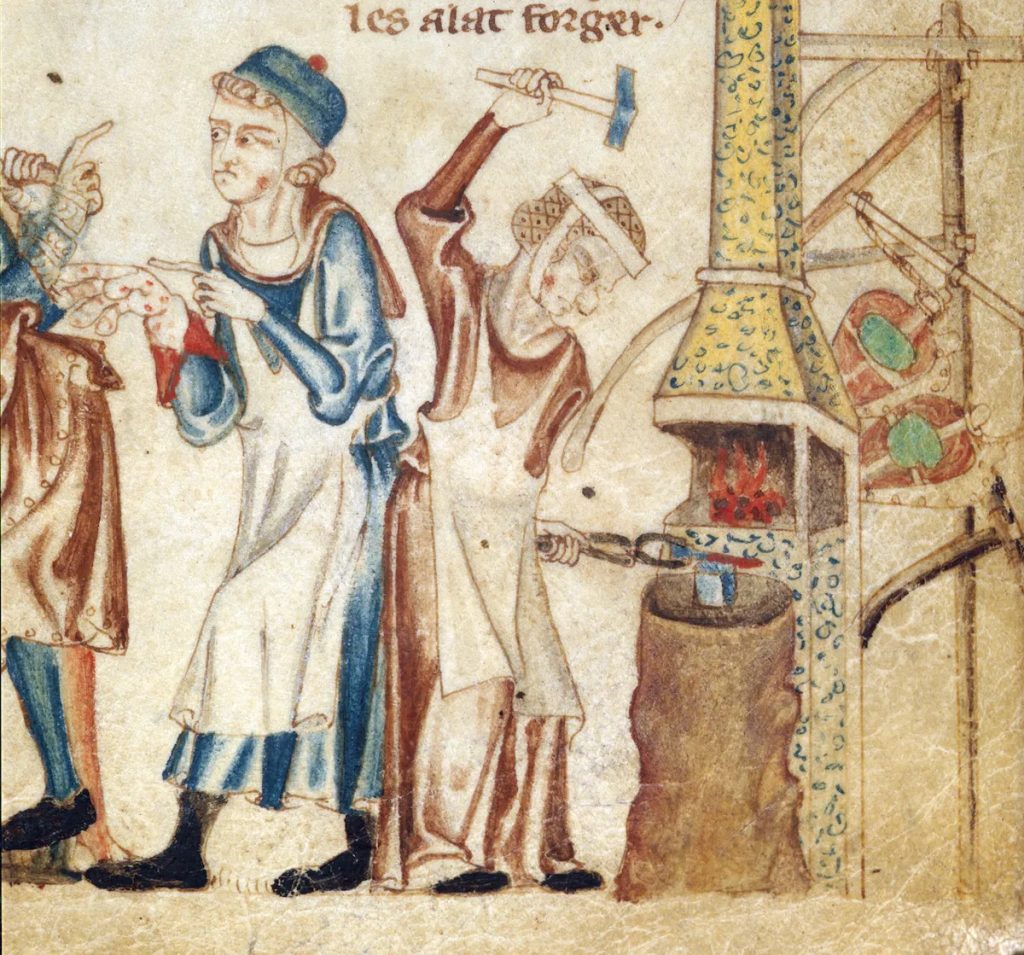
Throughout the Middle Ages, women engaged in productive and wage-earning work. Many of these jobs were in the areas we might expect, such as textile manufacture, brewing and baking, but women also worked in a greater variety of jobs than we might assume, and there are extant records of female carpenters, painters, thatchers and even blacksmiths and armourers.
Once again, however, the constraints of family were evident. Women working in male-dominated professions were rare, and any opportunities that did arise were limited.
Generally a woman could only break into a particular field if her husband or father worked in it; she might start by ‘assisting’ him, then gradually become skilled and take over her own portfolio of work, but this would continue to be recognised only as assistance in records and accounts. Moreover, any money a married woman earned automatically belonged to her husband.
Other patterns of female employment serve to emphasise that women were often taken on simply because they were easy to exploit.
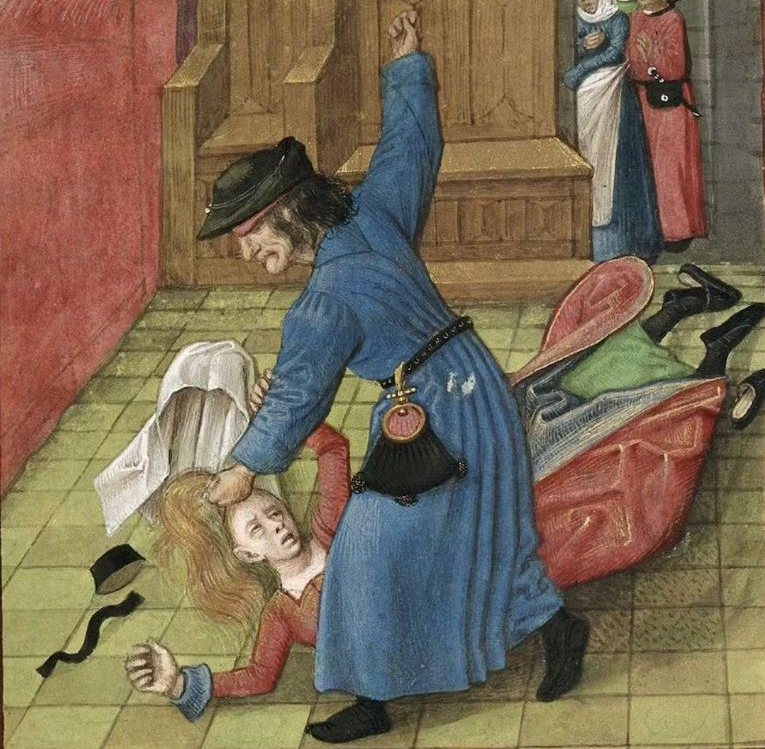
On building sites, for example, women were paid so much less than men that their wage was only the same as that of a young boy, while they could accomplish more work in a day than a child. They could be employed to do all the really menial work, such as carrying water, sand or gravel, or digging ditches for foundations.
And, as uncontracted, daily-paid workers of little value who were – it was assumed – only there to earn a bit of extra cash to put towards a household income, they could be engaged or let go at a moment’s notice. This was extremely useful for the manager of a building site, whose needs varied from day to day: if it was too wet and cold for mortar to set, for example, he could simply tell his female menial labourers to go home and come back another day. It was no business of his whether they could afford dinner that evening or not.
The situation was no better for peasant women who lived and worked in the countryside. There, again, it was the family household that was the standard unit of society, and the male head who represented it. In virtually all manor court rolls we find that men are referred to by their own names, while women are defined by their relationships: they are listed as the wife/widow/daughter/servant of a male householder, rather than as individuals.
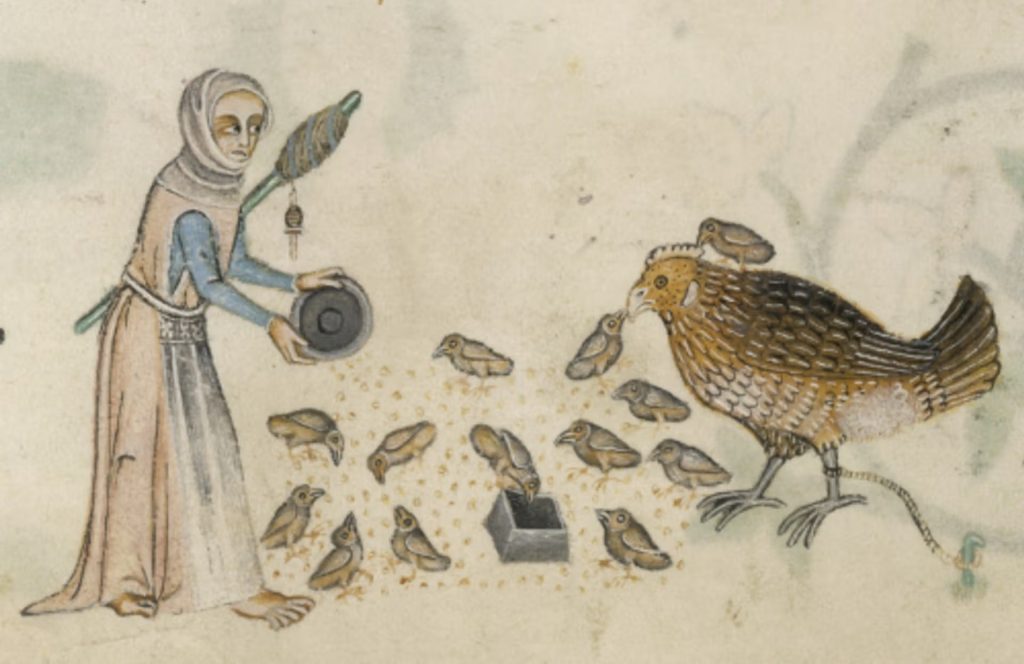
The peasant household was an economic and labour unit that was divided into men’s and women’s work.
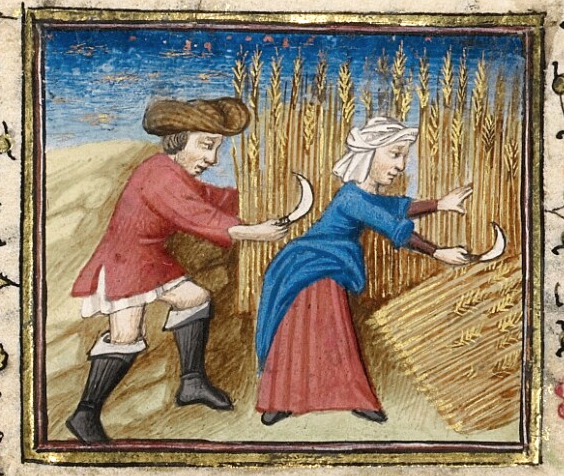
Men’s work was ‘outside’ (ploughing, sowing, reaping, haymaking, winnowing, threshing, hedging, ditching) while women’s work was ‘inside’, which meant inside the household property, not necessarily indoors: cooking, cleaning, milking, making butter and cheese, carding, spinning, weaving and sewing, feeding poultry and livestock, gardening and growing vegetables, foraging in the woods for nuts and berries, collecting firewood and looking after children.
However, women were often called upon to help men with their tasks, while men almost never helped women with theirs. We see women being engaged in the fields at busy times of year, on top of their own duties, but the idea of a man spinning or sewing was so ridiculous that seeing it depicted was a parody, the sign of a world turned upside down.
Medieval women were not expected to be the heroines of their own lives, but rather a supporting act for (the male members of) their families.
This was a tragedy both for them and for wider society. In personal terms, a girl born to a poor rural family who might – in other times and circumstances – have had an opportunity to exercise her talents would either never become aware of them, or they would be crushed out of existence as she was forced into a life of domestic drudgery.
And society and history also lost out: although it is true that most of the great surviving medieval works of art, literature, architecture and invention were created by men, to assume that only men were capable of producing these things is to look at the situation the wrong way round.
For every medieval work of genius produced by a man there is a corresponding one missing because a woman, tied to the duties of home and family, never had the chance to exercise her talents.
There was no ‘ideal’ family existence for medieval women, whatever their class. Every kind of life was one of compromise and concession, with women sacrificing some part of themselves for the sake of others around them.
The only real wonder is that so many of them should have succeeded in carving out productive and sometimes even happy lives, despite all the obstacles placed in their path.
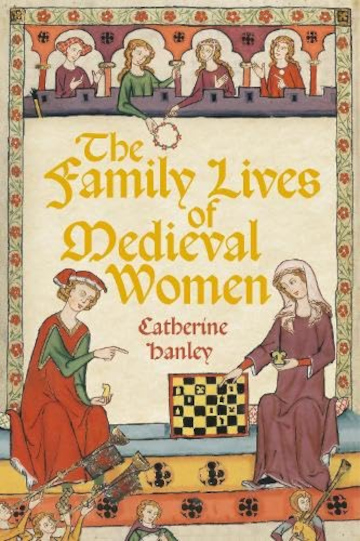
The Family Lives of Medieval Women by Catherine Hanley is published on 9 April, 2026.
Read more about this book.
Dr Catherine Hanley is a medieval historian.
She’s written a number of features for Historia, such as:
Matilda: The greatest king England never had
Joanna Plantagenet, the lionhearted woman
Philip of France, medieval England’s greatest enemy
The personal and the political in the Middle Ages
1217 and the ideals of chivalry
England’s Forgotten King
England’s First Great Naval Victory
Other relevant features you may enjoy include:
Magna Carta’s inspirational women,
The Anarchy: a true cousins’ war, and
Inspired by Scotland’s medieval queens, all by Sharon Bennett Connolly
To have and to hold: pawns in the medieval marriage game by Anne O’Brien
Female networks of power in the Middle Ages by JF Andrews
Images:
- Working in a sheep pen, women carrying a basket and a vessel, Luttrell Psalter, 1325–40: British Library Additional 42130 f.163v via Wikimedia (public domain)
- The Moneylender and his Wife by Quinten Metsys, 1514: Louvre via Wikimedia (public domain)
- Women weaving, combing, spinning: BnF Gallica Département des Manuscrits Français 598 70v (free and open access)
- A female blacksmith, Holkham Bible Picture Book, c1320–30: British Library MS Additional 47682, f. 29v (free for web use)
- Jealous Husband from Roman de la Rose, 1320–40: British Library Harley 4425, f. 85 via Picryl (public domain)
- A woman feeding chickens, Luttrell Psalter, 1325–40: British Library Add MS 42130, f.166v (direct link to online catalogue unavailable because of cyber attack) (free for web use)
- July calendar page; Reaping; Leo, Workshop of the Bedford Master, c1440–1450, the J Paul Getty Museum, Los Angeles, Ms. Ludwig IX 6, fol. 7, 83.ML.102.7 (Getty Open Content Program)


