

This month, the third novel by the bestselling historical action author Griff Hosker to come out in 2024 is published. And it’s only March. Griff has published over 175 novels in all. Intrigued as well as impressed, we asked him to tell us about his career as a writer.
I was just 7 years old when I borrowed my first ‘proper’ book from the adult section of the public library; it was a 400-page historical novel about King David. An ambitious choice for a schoolboy but even at that age I was interested in detail and longer books; I remember my mother having to persuade the sceptical librarian that I could read it.
Looking back, I think that was the moment I’d chosen a career as a writer; even though the actual writing would come much, much later.
I grew up in south-east Lancashire, in a town filled with factories. As a child I loved making up stories; primary schools in the 1950s held weekly ‘Composition’ lessons and I remember the excitement I felt at being challenged to come up with a tale in a short time frame.
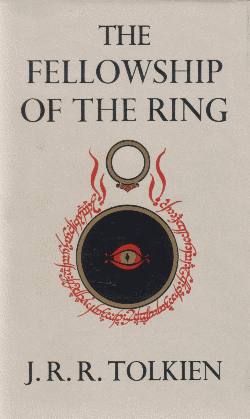
As a grammar school boy my literary diet was largely informed by the school and it introduced me to a fine assortment of authors, with Tolkien becoming an instant favourite. Through trips to the Welsh mountains and the Lake District, my school years also sparked an interest in what would become my second greatest passion: history. The seeds of a career as a writer of historical fiction had certainly been planted, but, growing up as I did, a working-class boy in a northern town, the journey there wouldn’t be straightforward.
Thanks to my parents, I learned the value of hard work. After stints working in factories in the 1970s, I eventually went on to become a teacher of English in secondary schools; a role held for over 30 years. The love of literature I had as a child had always stayed with me, and certainly influenced my approach to teaching. I began to focus on plays and musicals as a method of helping pupils learn and enjoy storytelling.
Children who would struggle to engage in more conventional methods often would relish the opportunity to be involved; I ensured that if a child wanted to have a part, I would write one for them. The pinnacle of this was a performance at the Millennium Dome where my pupils had the incredible opportunity to perform a piece that we worked on together.
In the early days of studying and teaching, my mother had bought me a typewriter so I could keep giving life to my creative thoughts. Sending manuscript after manuscript to traditional publishers I received no interest, but I continued to write; for the love of the stories I was creating and the hope that, one day, the dream of others reading my works would be realised.

My chance finally came when I reached 60. Recently retired, I couldn’t envisage spending the rest of my life doing nothing, so I decided to double down on my attempts at becoming a published author. The Sword of Cartimandua, my first novel, was inspired by the little-known tale of the last Queen of the Brigantes, who was rescued by a Roman cavalry unit. This time I was published.
The Arts Council had launched a programme called FeedARead which operated as a print-on-demand service and it presented the perfect opportunity to get my work out there. The uptake was modest but holding that first copy of my own book gave me the inspiration to carry on writing.
My real breakthrough came when I discovered Amazon Kindle; not only did it enable me to self publish on my own terms, it also opened up the world of digital reading, which has made a huge difference to audience reach. With the new opportunities presented to me, I found that I was able to become more prolific in my work.
I initially set myself targets for writing; 5,000 words a day, working every day from 6am until mid-afternoon. It soon became a routine and one which continues to this very day; I wake every morning overflowing with plots, adventures and battles and sit at my desk with a pot of coffee. I try to remain true to my 5,000-word cut-off but more often than not, caught up in the intensity of the stories, I find myself aiming for just one more page. I loved it 12 years ago and I still do.
I am often asked where I find my inspiration and how I go about researching a novel. Historical accuracy is important to me; all my novels have detailed factual content and I research everything before I put my fingers to the keyboard.
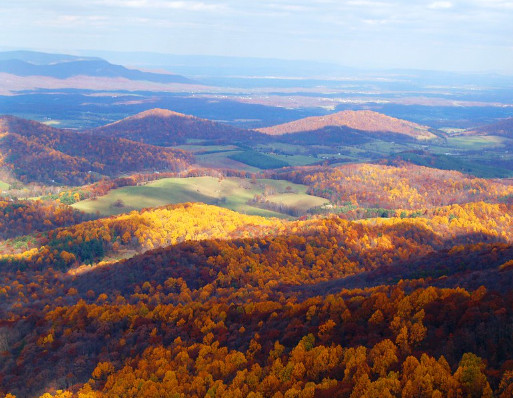
Growing up in Lancashire and now living in the North East of England, I have had the privilege of being surrounded by magnificent castles and monuments, and time spent strolling around the ruined remnants has always led me to imagine life as it was. I’ve been lucky enough to travel further afield over the years: I went to the Shenandoah Valley to research my American Civil War trilogy and to Waterloo when writing my Napoleonic series.
Of course, much of my research is gathered by talking to people during day-to-day life. My local pub is full of people with different interests who prove to be a mine of information; there is a railway buff who can recount timetables from the 19th century, great for detailing Victorian-era Britain. There is another chap who knows all there is to know about Northumberland. I also like to meet re-enactors, who not only have great uniforms and equipment, but many interesting nuggets of information.
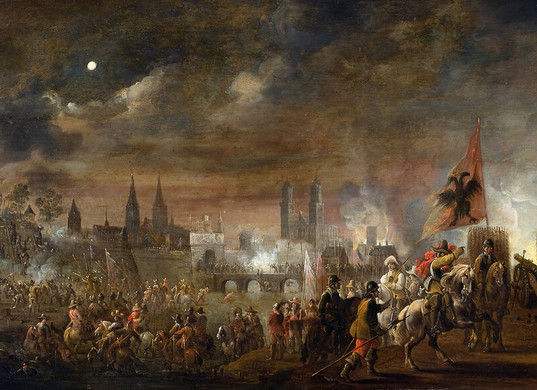
Other sources of inspiration just come back to my sheer love of history and certain events that I find captivating. My recent book, Horse & Pistol, takes me back to my study days when I read about the Thirty Years’ War. A conversation with my son brought it back to my mind and inspired me to write about it. It’s a fascinating period in European history that had a major impact on the development of Europe as we know it today and yet there are relatively few books covering it.
I like writing in series but I never write a full series in one go. I find it easier to write if I, for example, follow a Viking book with one set during a later period, such as World War I, and vice versa. Some novelists would find that confusing but it’s a discipline that works for me.
It is now nearly 70 years since my primary school days and almost 12 years since I published my first ebook. Over 175 books later, I still have my passion for Composition and the drive to continue writing for as long as I am able. It amazes me that my books are being read by people across the world.
Some of those readers from the early days are still on the journey with me now and their positive feedback and love of the characters and stories I have created is truly humbling. To each one of the readers who has taken time to read one of my books, I thank you, and I hope you continue to enjoy reading them as much as I enjoy writing them.

The Sword of Cnut by Griff Hosker is published on 29 March, 2024. It’s the fifth book in his Danelaw Saga.
Griff is a writer of historical fiction and is based in northeast England. Having worked as an English teacher for 40 years, he turned to writing historical fiction in 2011. His first novel, the Roman-focused Sword of Cartimandua, sparked a prolific career as an author. To date, he has published over 175 titles and is consistently ranked amongst the bestselling authors on Amazon.
Griff’s other 2024 books and over 140 others are listed in our round-up of historical books published this year.
You may enjoy two more features about the Thirty Years’ War:
Nördlingen, a town where history is past and present by JC Harvey
Historia interviews: Fiona Forsyth and Eleanor Swift-Hook
More about Northumberland’s history:
Bebbanburg 2020: the lessons I learned from a seventh-century siege by Matthew Harffy
A life of war in Anglo-Saxon Britain by Edoardo Albert
Review: The Last Kingdom – Seven Kings Must Die by Essie Fox
Images:
- Photo of Griff Hosker: supplied by his publisher, Sword Books
- Cover of first edition of The Fellowship of the Ring, 1954: Wikimedia (fair use)
- Caractacus, King of the Silures, deliver’d up to Ostorius, the Roman General, by Cartismandua, Queen of the Brigantes by Francesco Bartolozzi: Wikimedia (public domain)
- Shenandoah Valley: Jeffry N Curtis for Flickr (CC BY-SA 2.0)
- The Siege of Magdeburg by Pieter Meulener,1650: Gandalf’s Gallery for Flickr (CC BY-NC-SA 2.0)


