
Amanda Cockrell looks at the history of accusations of communism as a political attack, particularly as they affected screenwriters in the US during the ‘Red Scare’ of the 1940s and 50s, and finds echoes today. Repression fears art, she concludes, and as writers it is our job to see that it does.
Seventy-five years ago, my screenwriter parents lived through the Hollywood blacklist, part of the Red Scare in the US when writers’ careers were destroyed by suspicion of communist sympathies.
The president has now begun to fling the term Communist at anyone who displeases him, from hecklers to the entire Democratic party, an almost verbatim re-enactment of a time when opposition to the government’s policies was considered grounds for harassment and even arrest.
So I wrote a novel, Are You Now or Have You Ever Been?, about the Hollywood blacklist and the last time the political right began hunting the political left and calling them traitors, because I wanted to understand what it was like then, and how it got so out of hand.
So how did the blacklist get started? Who decided that we needed thought police? And saw disloyalty in opposition politics? It didn’t spring up full blown overnight, it played on old suspicions and discontents.
During the Great Depression of the 1930s, what we were doing didn’t seem to be working and what communism promised seemed as if it might be a fairer way. Membership in the Communist Party of the US increased. At the same time the US government began suspecting links between the Party and the film industry. A number of big stars were named as possible communists.
They were cleared, and things settled down because the start of World War II created an alliance of convenience with the Soviet Union. After the war, when the Soviet Union developed nuclear weapons, the hunt for communists in American heated up again, particularly for possible spies. As it turned out, there had been a spy, but he was at Los Alamos, not writing screenplays.
The Red Scare hearings were driven by both the Un-American Activities Committee in the House of Representatives and Joseph McCarthy in the Senate. McCarthy presented charts of what he claimed were communist cells in the US, and waved sheaves of paper that supposedly listed communists in the government, always without showing any actual evidence.
The persecution of writers specifically started with the House Committee on Un-American Activities, with backing from J Edgar Hoover and the FBI and launched by a column in The Hollywood Reporter that named a list of supposed communist sympathisers who were sneaking propaganda into American films.
Those called before the House or Senate as suspected communists were pressured to turn in others to save themselves. Anyone who refused to participate was an ‘unfriendly witness’. By the late 30s many people had grown disillusioned with Stalin’s government, but that didn’t matter. “Are you now or have you ever been a member of the Communist Party?” was the question witnesses were asked repeatedly. If you had ever been associated with the Party, you were guilty.
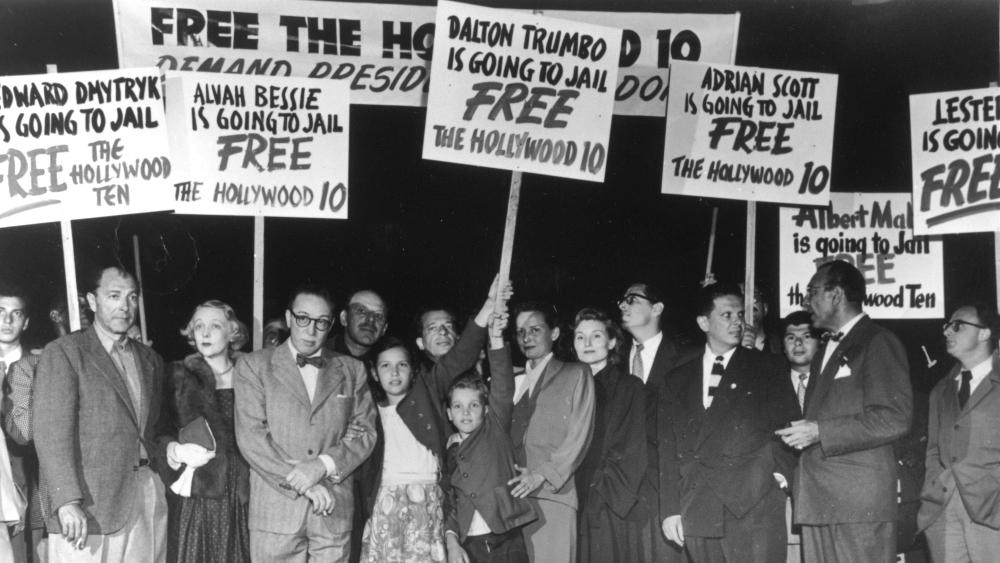
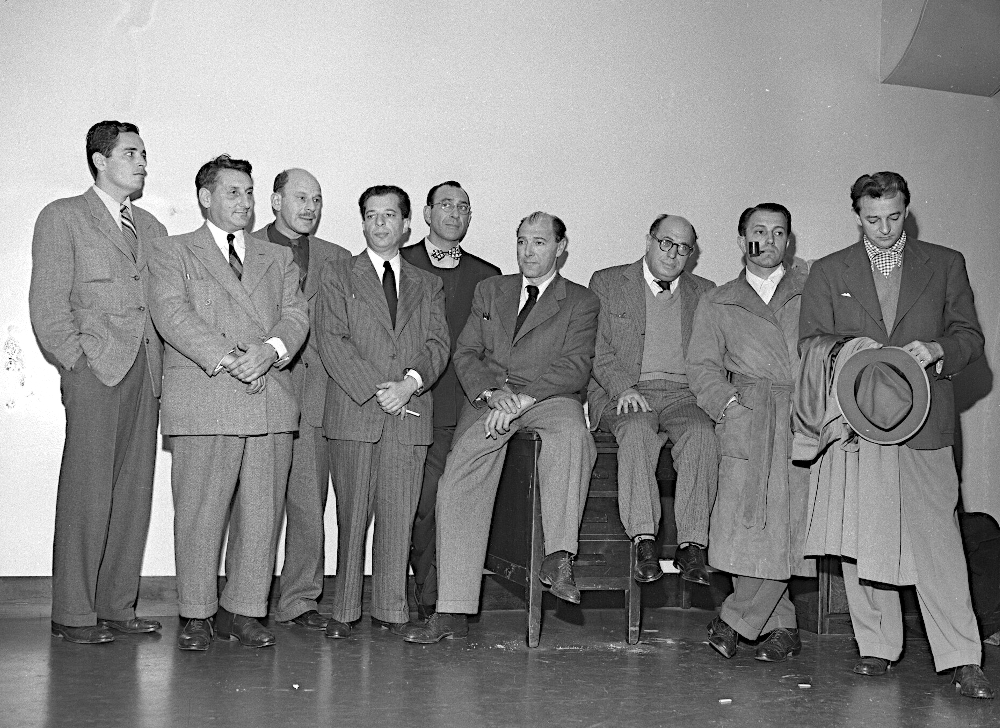
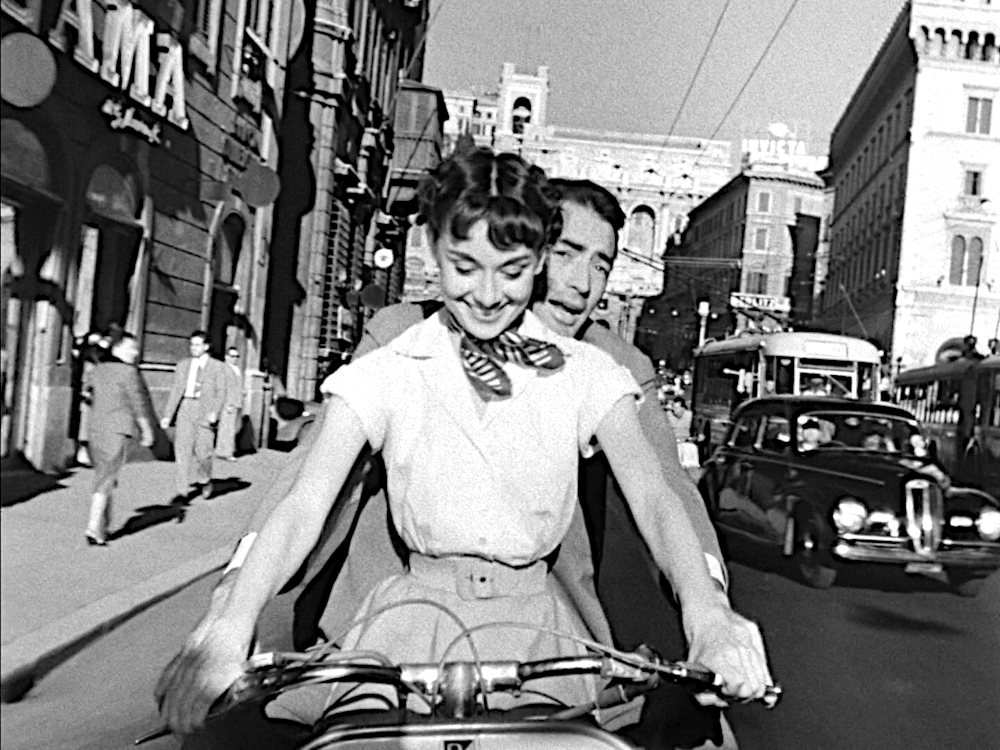
The first highly publicised case was the Hollywood Ten, all screenwriters who refused to testify. Dalton Trumbo, the writer of Roman Holiday among a slew of others, may be the best known of them but they included writers like Ring Lardner Jr, Alvah Bessie, and Edward Dmytryk.
The Committee charged them with contempt of Congress and began criminal proceedings. They were all sentenced to a year in prison and then blacklisted. Only Dmytryk recanted and named names. The rest served their sentence and suffered the destruction of their careers.
Bowing to political pressure, the film studios declared they would not hire anyone suspected of being a party member – or even of communist sympathies. Names circulated through the industry, built on suspicion or refusal to cooperate with the hearings. Various supposedly patriotic organisations released lists of their own, producing a kind of greylist that could tank a career just as easily. Support for civil rights or protesting against nuclear testing were enough to get a name on a list.
Blacklisted writers might still get work, under no name, or a pseudonym, or by using a ‘front’, someone who would claim to have written the screenplay and take a cut of the payment. No doubt producers looked the other way a lot. But a blacklisted writer could not get screen credit even if their script was produced, and in the film industry, screen credit is vital to a career.
Some in the industry turned on their friends, became ‘friendly witnesses’ helping the government decide who to pursue next. Many of those blacklisted left the country. Writers, directors, actors, went to work in England or France. Some never came back.

There were people who fought back, at risk to themselves. Some picketed, protested, some quietly gave work to blacklisted writers even when they couldn’t give them screen credit. Some worked as fronts, marketing a blacklisted writer’s script to a producer under their own name. Not all of these actions were entirely altruistic, but they did help.
McCarthy was finally brought down in 1954 when he went after the Army. The Army’s lawyer, Joseph Welch, told McCarthy, when McCarthy tried to smear one of Welch’s staff, “Until this moment, I never really gauged your cruelty or your recklessness… Have you no sense of decency?”
The hearings were broadcast live on all three television channels, which were all there was, so the entire country saw them and those words somehow broke the spell of McCarthy’s immense national popularity. Sensing which way the wind was blowing, the Senate finally censured him, his party ostracised him, and the press ignored him.
That did not end the blacklist. The first real break didn’t come until six years later when Otto Preminger announced that Dalton Trumbo, one of the original Hollywood Ten, would get screen credit for his script for Exodus, and Paul Newman signed to play the lead. Following that, Kirk Douglas announced that Trumbo would also receive credit for Spartacus.
Gradually, blacklisted writers began to get work again, but some writers’ careers, particularly those of the younger ones just starting out, never recovered. Many left the industry entirely, driven out by the ghost of the blacklist long after it was officially over.
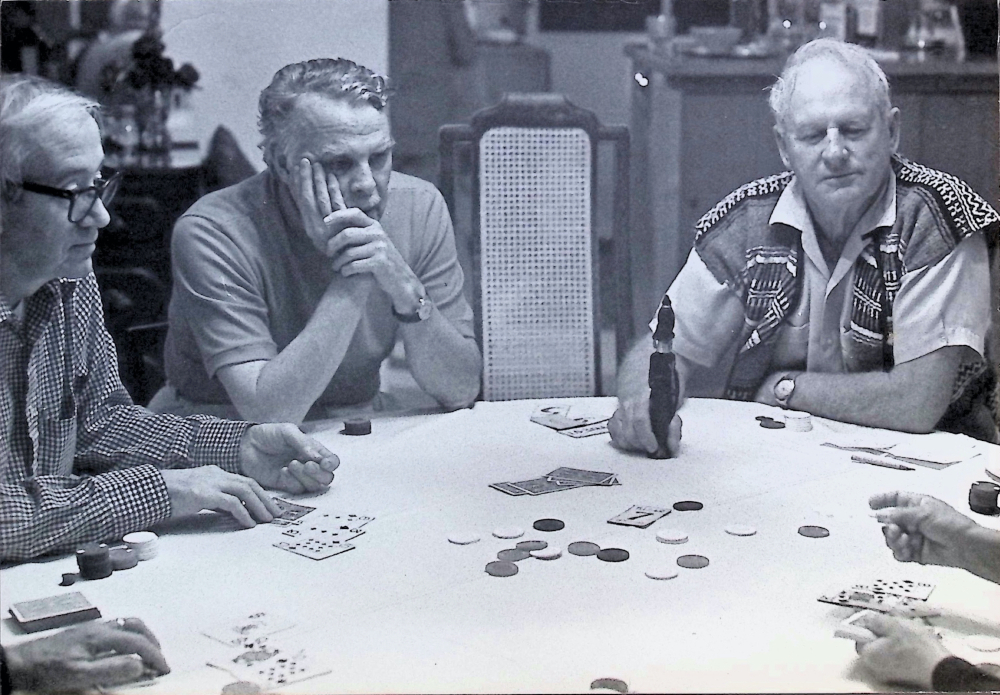
My parents were fairly left-wing but were never, so far as they knew, blacklisted themselves. There were times when they just didn’t get work. It might have been the usual inconvenience of a freelance career. Or maybe someone had mentioned them, maybe their names were similar to someone’s, maybe their friends were under suspicion, maybe anything. Then they got work again, and didn’t ask, because you couldn’t ask.
They did have friends who were blacklisted, among them Michael Wilson, whose experience stands for that of so many writers whose careers were destroyed by the blacklist. Wilson was the writer of The Bridge on the River Kwai, Lawrence of Arabia, Friendly Persuasion, and many other films.
In 1951 he appeared as an ‘unfriendly witness’ before the House Un-American Activities Committee, refused to answer their questions, and was subsequently blacklisted
He left for France with his family and the US revoked his passport so he couldn’t return. When The Bridge on the River Kwai won the Oscar for best screenplay, it was given to Pierre Boulle, the author of the novel on which the film had been based, who was very surprised indeed.
Michael Wilson died in 1978 after finally returning to the US. In 1986 he was given posthumous screen credit for The Bridge on the River Kwai and other films, and his wife and daughters were presented with his Oscar, which must have been small compensation.
What all of this research has reminded me of in 2026 is that repression fears art. And as writers it is our job to see that it does.
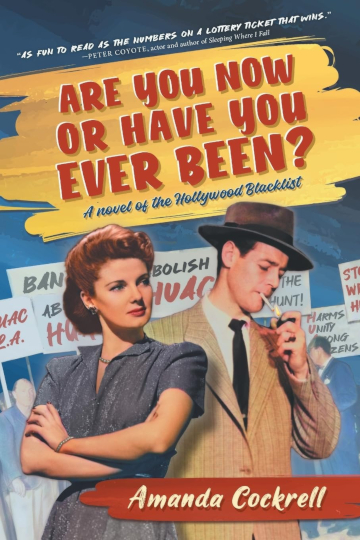
Are You Now or Have You Ever Been? by Amanda Cockrell was published on 2 November, 2025, in the UK and in the US.
Amanda is a former lecturer in creative writing and children’s literature at Hollins University. Her other books include Coyote Weather.
Writing as Damion Hunter, she’s the author of of 10 Roman novels. Hadrian’s Eagles, her latest, is published today. Read more about it.
Related Historia features include:
The Georgian Experiment by Eric Lee
The fall and rise of fascism by Catherine Hokin
John F Kennedy, the ambassador’s second son by Susan Ronald
Images:
- Protest in favour of the Hollywood Ten in the 1950s (cropped, lightened): WGBH Morning Stories for Flickr (CC BY-NC-SA 2.0)
- Charged with contempt of Congress, nine Hollywood men give themselves up to US Marshal (R–L: Robert Adrian Scott, Edward Dmytryk, Samuel Ornitz, Lester Cole, Herbert Biberman, Albert Maltz, Alvah Bessie, John Howard Lawson and Ring Lardner Jr), 10 December, 1947 (slightly cropped, lightened): Los Angeles Times Photographic Collection at the UCLA Library via Wikimedia (CC BY 4.0)
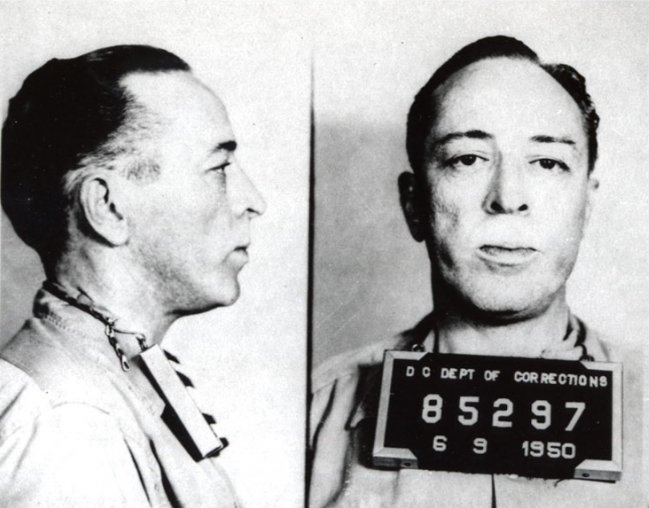
- Dalton Trumbo, Federal Correctional Institution, Ashland, 9 June, 1950: Federal Bureau of Prisons via Wikimedia (public domain)
- Screenshot of Audrey Hepburn and Gregory Peck from the trailer for Roman Holiday, 1953: Wikimedia (public domain)
- Joseph Welch (left), with United States Senator Joe McCarthy of Wisconsin (right), at the Senate Subcommittee on Investigations’ McCarthy-Army hearings, June 9, 1954: United States Senate via Wikimedia (public domain)
- Blacklisted screenwriter Michael Wilson, right, with Amanda’s father, Francis Cockrell, centre, at a weekly poker game in Ojai, California in the 70s: photo by Joseph Franklin


