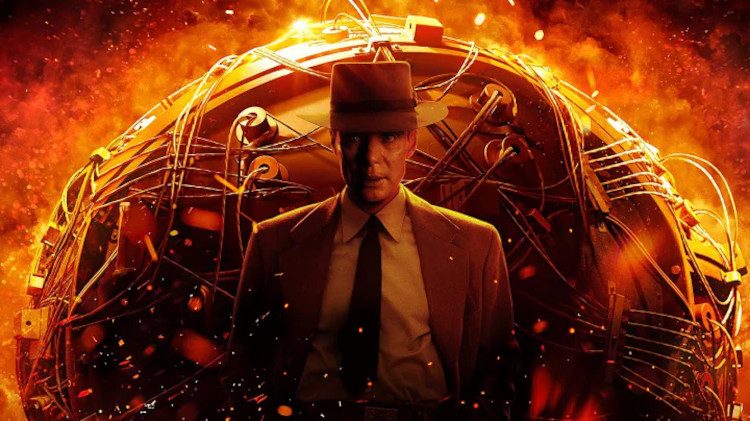
David Boyle, author of a recent biography of Robert Oppenheimer, reviews Oppenheimer the film.
No movie in recent history can have been quite so hyped like Christopher Nolan‘s Oppenheimer, released in the UK on 21 July. But I don’t believe any of the other contenders can have lived up to the hype as this one has.
It is difficult enough reviewing a film when it has been so universally praised. When you’ve recently written a book with the same name, it is doubly tough. This is partly because so much of the dialogue is so familiar, because I have read it myself and reproduced so much of it in my own book.
Yes, General Groves (Matt Damon) really did promise to hang the weather forecaster if the rain failed to clear up in time for the postponed Trinity test.
.jpg)
It isn’t all authentic dialogue; some of it was imagined in a number of those neat little scenes which move the action forward — like the conversation between Einstein and Oppenheimer which so upset Lewis Strauss, or Strauss’s rant to the young staffer during his senate hearing.
Conversations like the disastrous meeting between Oppie and President Truman were completely accurate.
With walk-on parts as Gary Oldman as Truman and Kenneth Branagh as Niels Bohr, you might expect that the acting to have been good. But personally I completely believed in Cillian Murphy as Oppenheimer and Robert Downey Jr as Lewis Strauss (pronounced ‘straws’ because he was a ‘southerner’).
I don’t want to cavil about scenes I wish I had seen — the film is already three hours long, for goodness’ sake. I fear there was quite a lot of good material left on the cutting room floor. Like the moment when they finally put the bomb together for the first test, it doesn’t quite fit. And perhaps a little more about his youthful attempt to poison his Cambridge tutor — which had consequences, after all.
The only aspect that still worries me is whether the film was clear enough about the consequences of the tiny courtroom scenes for Oppenheimer’s health — because on the face of it, he only loses his security clearance. Harry Dexter White, the US Treasury negotiator at Bretton Woods had, after all, collapsed after giving evidence at his own hearing in Congress in 1948, and died two days later.
To some, Oppie seemed his old self afterwards, but occasionally the full horror was clear – his hair had gone white during the hearing.
“I think to a certain extent it actually almost killed him, spiritually, yes,” said the nuclear pioneer Isidor Rabi. “It achieved what his opponents wanted to achieve; it destroyed him.”
Sometimes it was only the amount and colour of his hair that guided us whether a scene was in the past or the future. Even so, I haven’t met anyone who failed to follow a highly complex story.
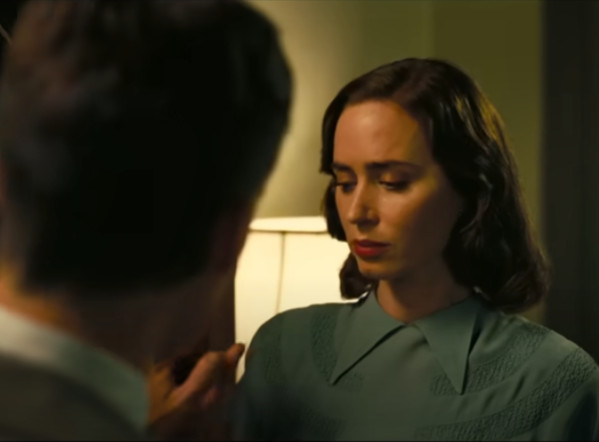
The only problem is that two brilliant actresses were wasted. Florence Pugh as Jean Tatlock only managed a few naked scenes before she was shuffled off (it was never explained that they had been engaged for four years). The same for Emily Blunt as Kitty Oppenheimer (it wasn’t explained that she was a trained chemist who worked briefly at Los Alamos).
Luckily, there is one intense scene when she turns on his accusers during the hearing. If it hadn’t been for that moment, the story might have felt bereft of female characters.
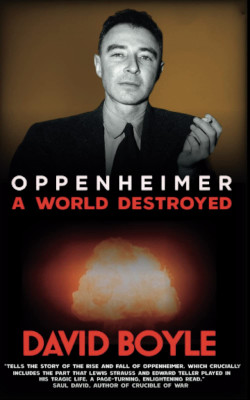
Oppenheimer: A World Destroyed by David Boyle was published on 10 May, 2023.
David is the author of a number of books about history, social change, politics and the future. He is co-director of the thinktank New Weather, policy director of Radix, an advisory council member of the Schumacher Centre for New Economics in Massachusetts, and a fellow at the New Economics Foundation.
Images:
- Detail from film poster for Oppenheimer: fair use
- Film poster for Oppenheimer: fair use
- Cillian Murphy and Emily Blunt, still from film: fair use


