
Writing a biography, especially of someone who isn’t already the subject of a published book, can mean searching for living relatives who may have documents or stories that shed light on their life, as Jane Dismore explains. Then, once you find them, you have to persuade them to let you have those stories — or even just to talk to you.
“How interesting your research must be,” said an enthusiastic member of the audience after a talk I gave about the biographies I have written, “with all those lovely places you visit and people you meet.”
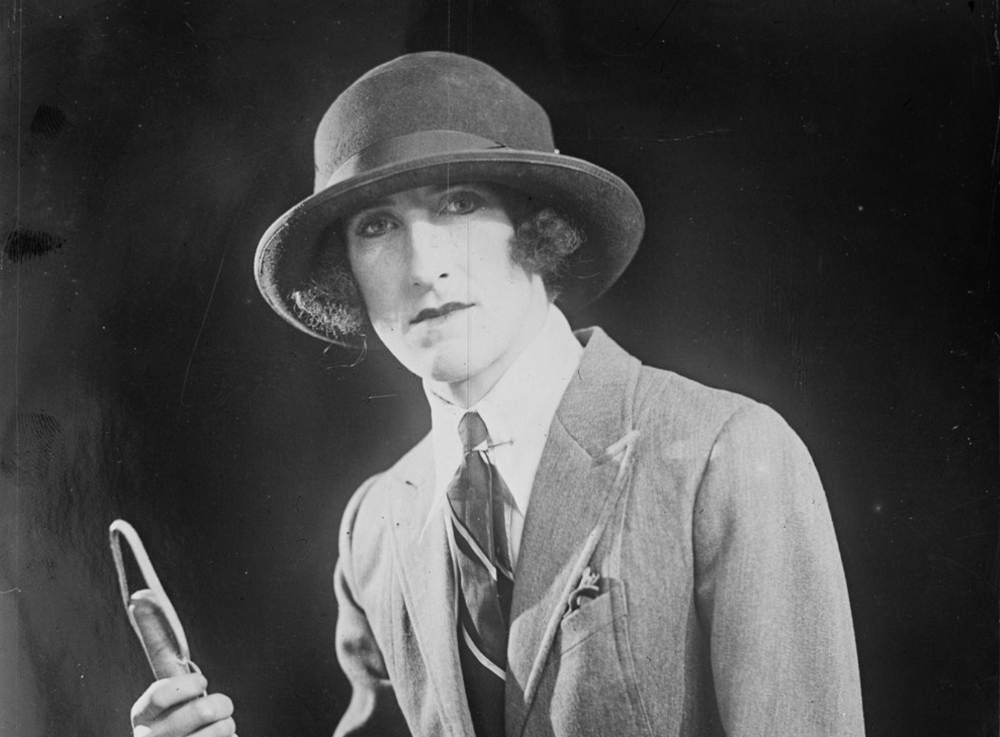
Interesting it certainly is, but other adjectives also come to mind, accompanied by invective if I am having problems locating or accessing the sources I need. The trouble is, I do love resurrecting the B-listers from history: my latest biography, No Country for a Woman, is the first book about Lady Dorothy ‘Dolly’ Mills, a female explorer and writer who was huge in the 1920s and ’30s but has since been overlooked.
Sometimes, though, I ask myself why I am not writing about Winston Churchill or Jane Austen, as publishers seem to love another book about them because they’re tried and tested, and for biographers they are a ready-made source of information.
But then I return to my subject with joy in my heart and a spring in my step — all the way to archives, often around the country, because original material is important whoever your subject is. When no books exist, it is often the starting point.
While the UK has some marvellous public archives, sometimes it is private collections that hold the vital material. That means searching for living descendants or other relatives who may have crucial documents or stories that shed light, golden or otherwise, on their ancestor.
Once these indispensable creatures are located, a degree of wooing and baring of credentials, perhaps name-dropping too, is often necessary before they will talk, let alone part with the information you want. This might be the case even when your subject is alive and happens to be the best-known woman in the world.
When researching my book Princess: The Early Life of Queen Elizabeth II I needed new material and wanted to talk to Myra, Lady Butter, who grew up with the queen. Fortunately, I had interviewed Lady Butter’s niece, the Duchess of Abercorn, for a previous book and she introduced us.
Some families cling possessively to a particular image of their ancestor, fearing a tarnishing of their reputation even if they are long dead. When researching Tangled Souls: Love and Scandal among the Victorian Aristocracy I needed to see letters in an aristocrat’s archive which I believed would expand upon, and relate more accurately, what was already known about their ancestor’s romantic, albeit adulterous affair.
Eventually I was given access — through their archivist, not personally — to some, but not all, of the letters (I knew there were more). Fortunately, the affair, although significant to my book, was not the main one, so I worked with what I had.
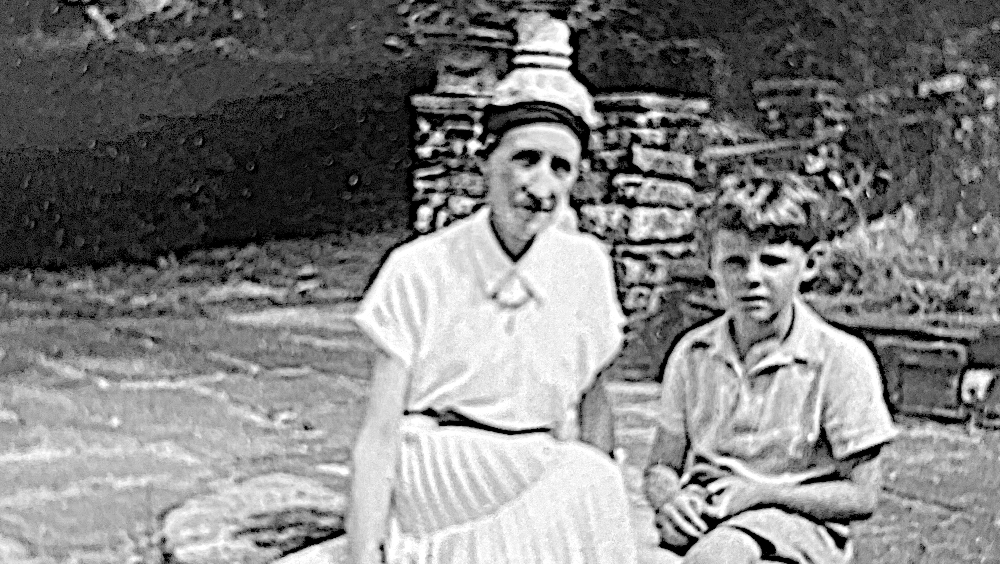
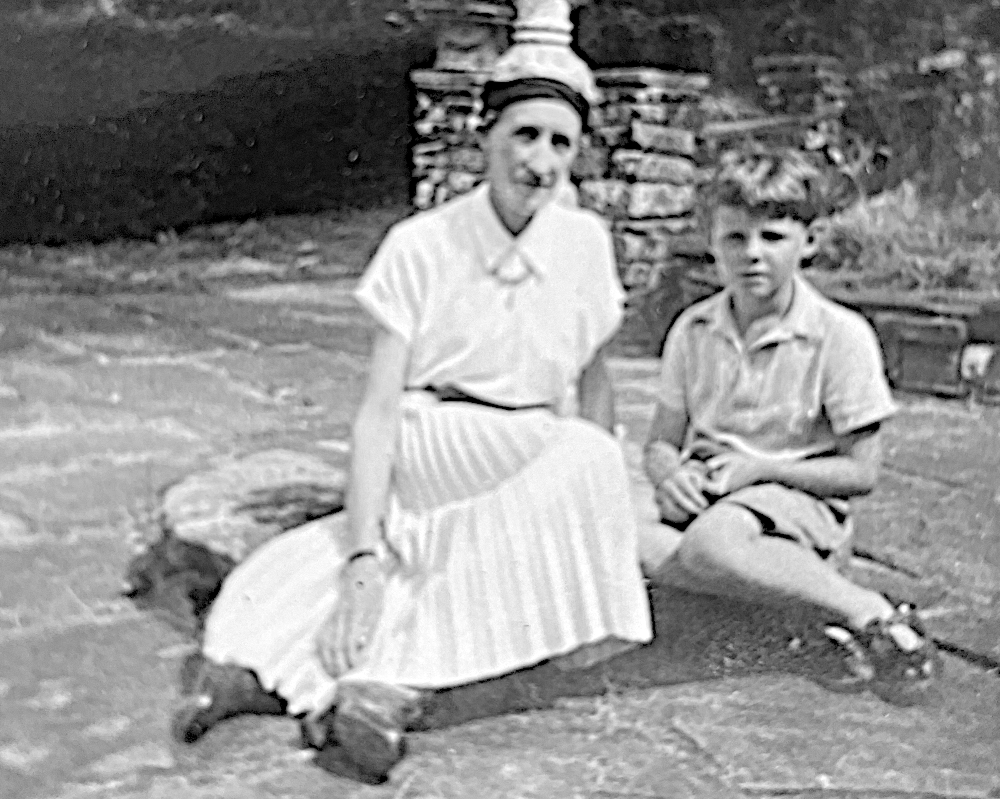
Having assistance from family is wonderful. For No Country for a Woman, I was fortunate to locate Dolly’s nephew, Anthony, whose mother was Dolly’s half-sister. He met Dolly when he was a boy and gave me photos and permission to quote from her works.
Not wishing to disappoint him later, I warned him that in the late 19th century, Dolly’s father – his grandfather – had been involved in a scandalous and much-publicised court case brought against him by a woman from his bachelor days, and that it would be in my book. Fortunately, Anthony already had no illusions about his grandfather. Even so, it was good to have his praise when the book was published.
Appreciation by relatives is sometimes a relief and always gratifying. The central figure of Tangled Souls is the handsome, charismatic and clever Victorian ‘bad boy’ Harry Cust, whose racy reputation (fully justified) had increasingly eclipsed his brilliance over the last century. I wanted to present him in a more rounded way, together with his wife Nina, a gifted poet and sculptor who was more than the obsessive lover often portrayed.
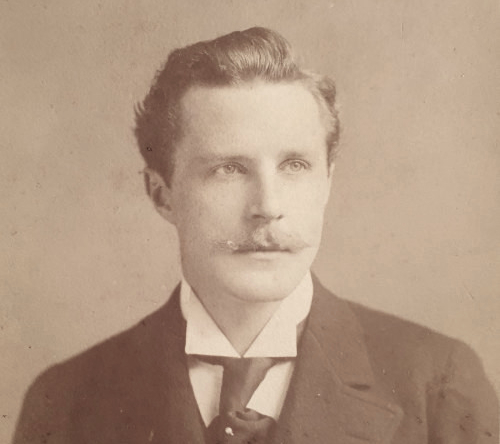
Harry had an illegitimate daughter through whom he has great-grandchildren, including the literary half-sisters Artemis Cooper and Allegra Huston (who was raised by film director John Huston). Cooper gave Tangled Souls a great endorsement, while Huston wrote an appreciative feature for the Oldie (quoted in the paperback edition).
Whether it is worthwhile tracing relatives is a judgment call to be made each time. I knew Harry had siblings but tracing their descendants would have been hugely time-consuming, with no chance they would have met him and an incalculable chance of their having any useful material.
Imagine my surprise when, in 2025, three years after Tangled Souls was first published, I was contacted by Harry’s great-grand nephew, who had found my book in a library. While he could not have augmented my material, he knew enough about Harry to write that I “painted a fascinating picture of a man of his time and class in an unusually nuanced and balanced way”. Phew!
Sensitivity is crucial, not only when deciding how to use delicate information but sometimes whether to use it at all. In Princess I recount an episode from the early 20th century that involved her mother’s family, Bowes-Lyon. A girl was fathered illegitimately and had to fight in the courts for recognition as part of that family.

Although she had died, I discovered she had a half-sister who was still alive. How exciting, I thought, as I eventually tracked her down. Perhaps they met! And I could tell her, if she did not already know, that she was related to QEII!
I received a letter inviting me to telephone. A carer answered. She did not know if her charge was aware she had had a half-sister, but she was sure she would love to meet me. She had dementia, the carer explained, but she had good days too, and maybe I would be lucky when I saw her, and I could discuss it then.
What, ask someone with dementia about their sister when they may not know they had one, and who was dead by then anyway? Not even telling her about the queen could make up for causing more confusion. Reader, I could not do it.
As for my (potential) next book, I need to know if a family holds documents about a recent ancestor. Members include a well-known actress (who would be brilliant playing the central figure in a screen adaptation, but let’s not jump the gun). I have emailed her agent with an enquiry to forward but I am not hopeful of this hyper-vigilant gatekeeper…
Maybe I can find a new angle on Austen?

Tangled Souls: Love and Scandal among the Victorian Aristocracy by Jane Dismore is published in paperback on 24 September, 2026.
Read more about this book.
No Country For a Woman: The Adventurous Life of Lady Dorothy Mills, Explorer and Writer by Jane Dismore is published in paperback on 5 November, 2026. It was shortlisted for the East Anglian Book Awards in 2025.
Jane is a biographer and history writer and a Fellow of the Royal Historical Society. She has appeared on TV and radio and popped up in podcasts.
www.janedismore.com
X
Facebook
Instagram
Read Jane’s two Historia features on her books:
Damned Souls: an aristocratic Victorian scandal
Lady Dorothy Mills, explorer and writer
Other related features:
Erich Karl, one of the first children saved by Clare Mulley
Historia interview: Clare Mulley by Carolyn Kirby
In search of a Holocaust survivor’s past by Kate Thompson
Imagining Olga Gray, a beautiful spy by Rachel Hore
Historian or novelist? Writing fiction based on facts by Julie Owen Moylan
The delights and dilemmas of using real people in historical fiction by Chris Lloyd
My problems writing about Jackie Kennedy and Maria Callas by Gill Paul
Should historical authors feel guilt when they write real people as antiheroes? by AJ West
A Guide to Victorian Sex by William Sutton
Finding the decadent women of the 1890s by Jad Adams
Images:
- Lady Dorothy Mills and her nephew Anthony: provided to the author by Anthony
- Lady Dorothy Mills, CNews, Agence Rol, December 1923: Bibliothèque nationale de France (public domain)
- See 1
- Harry Cust, courtesy Artemis Cooper: supplied by author
- The Queen Mother (Elizabeth Bowes-Lyons) kindles the Flame of Hope on the day of its’ unveiling at Banting House, 7 July, 1989: Helmholtz19 for Wikimedia (public domain)


