
The historian and author Jad Adams has been researching the remarkable women of the 1890s for many years. But it was only when he concentrated on contributors to the famous — and decadent — Yellow Book that the project came into focus. Even then, there were many difficulties, as he tells Historia.
I like writing books about people who haven’t had a book written about them before. When looking for a new subject I was drawn to the women of the 1890s, who, it seemed, were everywhere in literary life: getting published, getting reviewed, writing journalism and having affairs, but had been little written about.
‘Women of the 1890s’ was a big canvas. My early attempts were too amorphous, like the proposal thrillingly entitled The Decadents in Love, which put together all the best stories but looked, therefore, like a short story collection and had to be jettisoned.
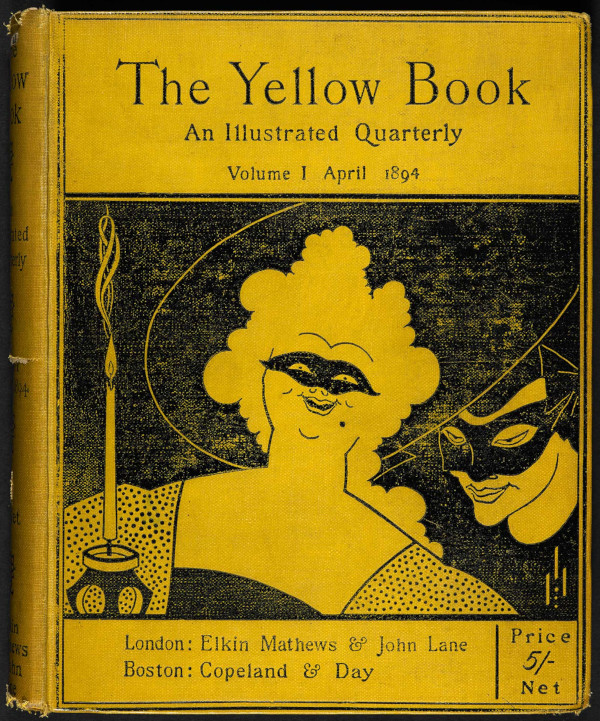
My programme of research really took off when I fixed on the women of the Yellow Book, the iconic art and literature journal.
The Yellow Book was a quarterly published between 1894 and 1897. With its daring fin-de-siècle designs and showcasing of women, it became known as the leading publication of decadent and realist writers and artists; the young genius Aubrey Beardsley was its art editor. The whole period became known as ‘the Yellow Nineties’ in tribute to it.
A third of its contributors, some 47, were women. I could use the story of the Yellow Book as the spine to brink their disparate narratives together.
All I had to do was to read their work, find their archives and life-writing and set off on a journey with the most interesting, so that was simple.
Well, maybe not.
I started this research at the beginning of this century when even the finding aids weren’t digitised, let alone the archives themselves. Huge printed volumes of research guides listed authors and said where their papers could be found. George Egerton’s are in Princeton, for example; Ella D’Arcy’s letters are in the Clark Library in Los Angeles.

Most of the 47 had no archives or life writing, I couldn’t even find the dates for one lost soul. Some people, like Vernon Lee and Pearl Craigie, had so much material that people had already written books about them. Not wanting to copy other people’s research, I excluded them.
I made an exception for one, the poet Charlotte Mew, about whom Penelope Fitzgerald wrote a biography in 1984. I wanted to omit her but everywhere I looked there was the diminutive figure of Charlotte Mew squeaking to be let in.
Besides not having had a biography written about them before the project started, the other criteria for me were that they should be writers of undoubted quality; there should be sufficient surviving documents or testimonies to allow their authentic voices to be heard; and the biographical story I would tell should be a strong one.
Some writers had foreseen my labours and deliberately sabotaged my efforts to biographise them. Ella Hepworth Dixon was a prolific writer and newspaper editor who should have been an interesting subject — but she scotched biographical study by destroying all her papers and writing a memoir, Sketches of People I Have Met on the Way, which was largely accounts of famous men she had encountered.

The UK was rich in sources.
I was off researching in National Library of Scotland in Edinburgh at festival time when the streets were thronged with mummers distributing flyers advertising shows; and at the National Library of Wales where I found myself in Aberystwyth on Freshers’ Week amid the hordes of drunken undergraduates.
But a considerable number of modern manuscripts had been swept across the green baize of the Atlantic to reside in American archives. Research in the US had to piggy-back on trips I was making for other reasons.
I gave a lecture in Austin, Texas and took the opportunity to visit the Ransom Library. I was invited to New York to contribute to a documentary and took the time to work in the New York Public Library.
Finally I was down to 11 characters who covered a wide spectrum. One was adventuress Ménie Muriel Dowie, who gained fame for her fearless lone travels as A Girl in the Karpathians; it was her sexual adventures which brought her down.

Some contributors to the Yellow Book were wealthy — Gabriela Cunninghame Graham and Olive Custance lived on country estates, in Scotland and Norfolk respectively, when they were not at their houses in London. At the other extreme, Ella D’Arcy lived in one room and died in a workhouse hospital ward.
Evelyn Sharp was an active, hunger-striking suffragette; bisexual aristocrat Olive Custance married Oscar Wilde’s lover Lord Alfred Douglas; Mabel Dearmer died on campaign in the First World War — her last book was Letters for a Field Hospital. I so enjoyed their company.
There is always a sadness when finishing a biography, having to leave a subject behind to fend for themselves, so to speak.
I had not anticipated the obvious: that with a group biography sorrow is duplicated many times.
I have had to say goodbye to a group of friends with whom I have shared many years and frustrating times. I hope they like the book; goodnight, sweet ladies.

Decadent Women: Yellow Book Lives by Jad Adams is published on 1 October, 2023.
See more about this book.
You may enjoy these similar features:
Six godmothers of archaeology by Alexandra Walsh
Businesswomen through the ages by Gill Paul
Clean Minds, Dirty Books by William Sutton
The Victorian theatrical world of mystery and illusion by Essie Fox
Magicians and film-makers, masters of illusions by Liz Hyder
Music hall and musical inspiration by Sarah Rayne
Images:
- Details from The Frog Princess by Mrs Percy Dearmer (Mabel Deamer) from The Parade, 1897: Wikimedia (public domain)
- Cover of volume 1 of the Yellow Book, April, 1894: British Library C.121.b.17 (public domain)
- Ella D’Arcy (cleared for use by the publisher)
- Ménie Muriel Dowie (as in 3)
- Olive Custance (as in 3)


