

Gill Paul writes about some of the businesswomen who defied convention and restrictive laws to become successful entrepreneurs through the ages, including the wealthiest woman in early New York; the painter Hogarth’s sisters; the inventor of a baby-making vegetable compound; the African-American who became the first self-made female millionaire in the US; and the rivals who are at the centre of her new novel, Helena Rubinstein and Elizabeth Arden.
My new novel, A Beautiful Rival, is about two formidable self-made female millionaires, Elizabeth Arden and Helena Rubinstein. Neither of them had family money or rich husbands, and when they started their businesses in the early 1900s women couldn’t get bank loans, yet both managed to create vast global empires that still exist today. How unusual was that, I wondered?
In the Middle Ages, of course, the odds were firmly stacked against women owning their own businesses, thanks to the Church giving men absolute authority over them (“Wives, submit to your own husbands, as to the Lord”). When women married, any money they had made or property they owned, whether through investment, gift, work or inheritance, became their husbands’.
Of course, they assisted in family businesses such as brewing, baking, spinning, or running shops and inns, but the ownership could only be theirs if they were single or widowed, and so long as there was no pushy male relative trying to steal it from them.
By the 17th century some rare stories emerge of extraordinary female entrepreneurs, such as Dutchwoman Margaret Hardenbroek, who ran an import-export business between Europe and the New World, and who was the wealthiest woman in New York when she died in 1691.
The Dutch were more accepting of women in business than the British, and Margaret was able to choose a usus marriage under Dutch law, which gave her husband no rights to her wealth.
In 1739, Eliza Lucas Pinkney took over her father’s South Carolina plantations at the age of sixteen and transformed them through her passionate interest in botany. She discovered ways to produce new crops, in particular indigo, used for dyes, which became the colony’s second most valuable export after rice. She shared her knowledge with fellow plantation owners and her experiments massively increased the colony’s wealth.
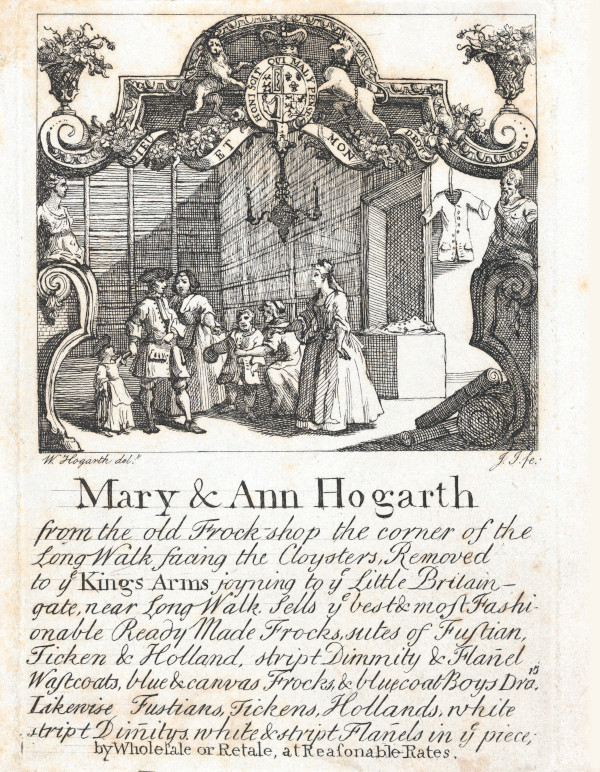
In 18th-century London, many of the shops on bustling Cheapside were owned by women, with dress-making the standout profession. William Hogarth’s sisters, Mary and Ann, sold fabrics and ready-made clothes, and were able to get their famous brother to design them fancy business cards.
Martha, Mary and Esther Sleepe each ran a celebrated upper-class fan shop on Cheapside. There were female milliners, whalebone sellers, candlemakers and herbalists, and in London, unlike in the rest of the UK, they could be members of the relevant guilds.
By the Victorian era, around 30 per cent of all British businesses were owned by women. Most were either clothing-related or service industries, like laundries or lodging houses or brothels. There were exceptions, though. Eliza Tinsley took over her late husband’s self-employed nail-making trade and turned it into a hardware factory in Dudley that employed four thousand people by 1871 and is still going strong today.

In the US, Rebecca Lukens was able to inherit the family ironworks because there were no male relatives left, and she transformed it into the country’s leading manufacturer of iron to supply the burgeoning railways.
And Lydia Pinkham launched her hugely successful Vegetable Compound, said to relieve ‘women’s troubles’ and prevent miscarriage. “There is a baby in every bottle,” read the advertisements. There was also 20 per cent alcohol.
The laws in the US had begun to change from 1839, allowing women to inherit and run family businesses. In Britain, the 1870 Married Women’s Property Act was a key step forward.
But the playing field still wasn’t level because banks treated women as poor credit risks. Until 1975 in the UK, banks could legally reject women’s loan applications simply because they were women and therefore high-risk. Until 1988, female entrepreneurs in the US needed a man to co-sign business loan applications. Yes, you read that correctly – 1988!

Businesswomen got round these restrictions in a number of ingenious ways. Madam CJ Walker started her company selling hair-care for black women by going door-to-door and demonstrating to customers how to use her products, then relying on word of mouth to do the rest. By 1917 she had become America’s first entirely self-made millionaire, according to the Guinness Book of Records.
In 1902, Helena Rubinstein imported a Polish face cream to Australia, persuading women that it would reverse the damage done to their complexions by the harsh climate. She got customers to pay upfront then wait five or six weeks while the product was shipped across, thus solving her cashflow problem.
Helena was a marketing genius from the start. As company figurehead, she pretended she had studied Medicine in her native Krakow, and had learned about skin from top experts across Europe.
Her take-out message was that women could reverse the signs of ageing by using her products, and thus transform their lives. “Has he said he loves you lately?” one advert read. “If not, you need my new Hormone Cream.”
She launched in London in 1908, Paris in 1909, then in Manhattan in 1915 – where she went head-to-head with another extraordinary entrepreneur, Elizabeth Arden.

Miss Arden first went into business with a partner called Elizabeth Hubbard, who had created a basic face cream range. Their partnership lasted less than a year before in 1910 she manoeuvred to take over the lease of the salon, the products, and the clientele, shuffling the less ambitious Mrs Hubbard out through the back door.
Elizabeth sold her products by mail-order, and invested in fancy packaging so she could charge inflated prices to ‘polite society’. Needless to say, she wasn’t happy when Helena arrived in her territory, claiming to be the “world’s foremost skin scientist”. What followed was a clash of the cosmetic titans…
Throughout the 20th century, successive laws were passed giving women equal pay to men and equal rights in business, but there’s a long way to go.
In the UK, around 30 per cent of small businesses are female-owned – same as in the Victorian era – and they tend to be in healthcare, education, or food and drink, rather than science, engineering and technology. In the US, 42 per cent of companies are now owned by women and the number is growing.
Entrepreneurs such as Sheryl Sandberg, Martha Stewart, Oprah Winfrey, JK Rowling, Hilary Devey and Karren Brady are following in the footsteps of lone individual women of centuries past who simply refused to accept that their role in life was to submit to men.

A Beautiful Rival by Gill Paul is published on 31 August, 2023.
Gill has written several other features you may be interested in, including:
The Twenties, then and now
My problems writing about Jackie Kennedy and Maria Callas
The politics of Tutankhamun’s tomb
Stockholm Syndrome in Ekaterinburg?
Images:
- Trade card of Mary and Ann Hogarth, the old Frock Shop (detail) by William Hogarth, c1730: Met Museum (public domain)
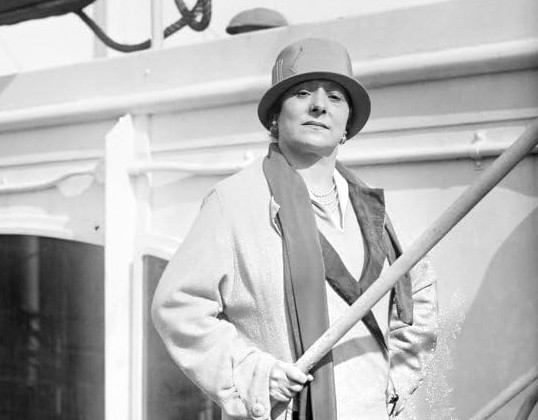
- Helena Rubinstein, Bain News Service: Library of Congress (public domain)
- Trade card of Mary and Ann Hogarth, the old Frock Shop, see above
- A box of Lydia Pinkham’s Vegetable Compound: Magicpiano for Wikimedia (CC BY-SA 4.0)
- Madam CJ Walker, between 1905 and 1919: Smithsonian Institution via Wikimedia (public domain)
- Elizabeth Arden by Alan Fisher, 1939: © Library of Congress Prints and Photographs Division via Wikimedia (public domain)


