
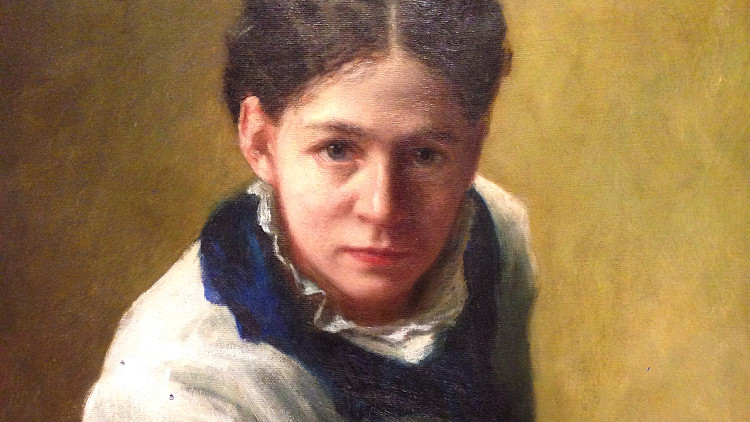
Were Victorian women feisty? As Jem Poster says, they wouldn’t have recognised the word, but they’d have known the attitude. Some were feisty enough to become detectives – like Eliza Mace, the fictional protagonist of his new book.
Reviewers of our co-written historical detective mystery, Eliza Mace, have repeatedly described the book’s titular heroine as ‘feisty’. Originating in the United States, far from the small Welsh border town in which Eliza lives, and not recorded until many years after the 1870s timeframe of our story, the word isn’t one that she would have recognised. It is, however, a word that neatly encapsulates a key aspect of her character, and we’re more than happy to have it applied to her.
For a few online reviewers Eliza’s feistiness has seemed questionable. Is it likely, they ask, that a woman of Eliza’s social class (minor gentry) would behave in the way she does, insistently challenging the values upheld by her mother and by Victorian society more generally?
The question isn’t unreasonable, and answering it allows us to explore matters of general importance both to historical research and the writing of historical fiction.
If we wanted to characterise, in a few broad brushstrokes, the Victorian values implied in the question, we might foreground social propriety and a strict moral code; we might also acknowledge the extent to which the application of those values served to keep in subjection the majority of the working class and the majority of women. But broad brushstrokes are of limited use to the writer of fiction.
As we shift our focus from the general to the particular – as good writers must – we’ll find that it’s the exceptional that captures our imagination: the self-educated miner who muscles his way into the mine-owner’s office to complain about pay and conditions, the woman ‘of good family’ who takes to the streets to demand the vote.
It’s true that many men and women lived out their lives in subservience to the dominant values of Victorian society; it’s also true that Queen Victoria’s long reign saw a succession of challenges to the conventions of the age, many of them led or supported by decidedly unconventional women.
Living in relative isolation, Eliza might not have had a detailed understanding of the ferment that, as a matter of historical fact, forms the backdrop to the events of the fiction she inhabits, but she would certainly have caught the vibe of the moment.

In 1867 the eminent political economist John Stuart Mill, at that time a Member of Parliament, put forward an amendment that would, if accepted, have given women the same voting rights as their male counterparts. The amendment was defeated, but the same year saw the foundation of the London National Society for Women’s Suffrage; one of the first members of its executive committee was Millicent Fawcett, who would in due course establish and lead the National Union of Women’s Suffrage Societies.
Fawcett understood clearly that women’s voting rights and women’s education went hand in hand. She was a member of the group that, in 1871, established Cambridge’s second college for women, Newnham, following closely in the footsteps of two other remarkable women, Emily Davies and Barbara Bodichon, co-founders of Girton College.
None of these women subscribed blindly to mid-Victorian social norms – indeed, they took a vitally important stand against them. On those grounds they must be considered atypical of the society they were born into, but this obviously doesn’t alter the fact that they existed.
Which brings us back to Eliza, who didn’t exist but might well have done. Naturally curious, and with her appetite for education whetted by the books in the family library as well as by her naturalist uncle’s informal tuition, she sets her sights on the newly founded Girton College.

With her mother strongly opposed to the very idea of women’s education and unwilling to fund any such venture, Eliza must fight for what she wants; and she will only succeed through a spirited defiance that may mark her out as extraordinary in the context of her time but is nevertheless historically authentic, reflective of one of the many strands in the complex fabric of Victorian society.
Novelists tend to thrive on the exceptional, finding inspiration in the thoughts and actions of those who pit themselves against their everyday circumstances. If Eliza’s story had been one of unresistant conformity to Victorian codes of conduct, it would hardly be a story at all; but set her in opposition to those codes and the narrative takes on a compelling energy for both writer and reader.
Yes, Eliza is ambitious, argumentative, disobedient, even transgressive; these qualities may make her unusual by the standards of her time (though perhaps not as unusual as some might be tempted to think) but they also mark her out as a vital force in the narrative she inhabits and dominates.
She will need those qualities as she moves on through our planned series, from incidental involvement in the search for her missing father to the life of a professional detective. A detective? Is it plausible that a woman would have taken on such a role in the 1870s? As suggested by the title of PD James’s 1972 detective mystery, An Unsuitable Job for a Woman, related questions of appropriateness still hung in the air a century later.
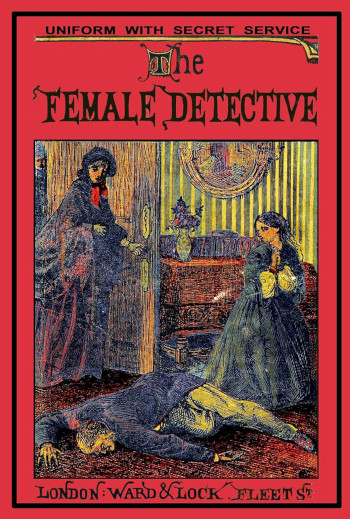
Yet there’s no question about the presence, in Victorian society, of the woman detective. As Sara Lodge has ably demonstrated in her 2024 study, The Mysterious Case of the Victorian Female Detective, from the 1860s onwards women played an increasingly important part in police investigations.
Enlisted partly on account of their ability to draw out confidences from other women and partly on account of the relative ease with which they were able to pass unnoticed in environments in which a police officer would have been conspicuous, they featured prominently in 19th-century newspaper reports. Eliza’s entry into their ranks is by no means implausible.
These female detectives (women such as Ann Lovsey, Sarah Dunaway and Elizabeth Joyes, whose exploits are chronicled by Lodge and referred to in a related Guardian article), often stepped knowingly into situations fraught with danger. They needed to be feisty; and it’s worth returning to that word now to note an important transformation. The Oxford English Dictionary defines ‘feisty’ simply as ‘aggressive, excitable, touchy’, but that essentially negative definition misses the shift that has taken place in the word’s meaning over the years.
Now applied almost exclusively to women, it carries clear implications of approval or admiration, as in these definitions provided by other dictionaries: ‘active, forceful and full of determination’; ‘tough, independent and spirited’. The tonal shift reflects a significant change in social attitudes to strong women. As a society we may still have some distance to go but, building on the achievements of those Victorian women who successfully challenged the conventions of their age, we’ve come a long way since the 1870s.
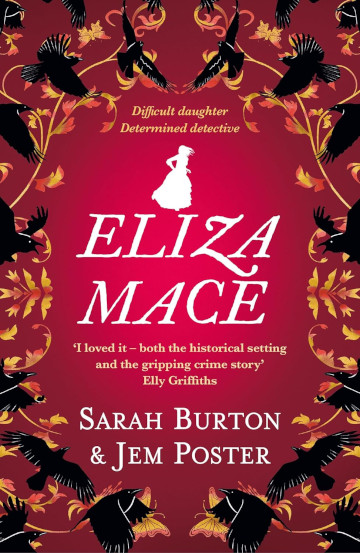
Eliza Mace by Jem Poster and Sarah Burton was published in paperback on 27 February, 2025.
Jem Poster is the author of Courting Shadows and Rifling Paradise. He is also co-author, again with Sarah Burton, of a handbook for fiction-writers, The Book You Need to Read to Write the Book You Want to Write.
Find out more about Eliza Mace.
You may also be interested in these related Historia features:
The window-smashing suffragettes of 1912 by Jennifer Godfrey
Red brick women: 1930s university pioneers by Lizzie Bentham
Imagining Somerville: a research mystery by Fiona Veitch Smith
An epidemic of murder in late Victorian London by Sarah Bax Horton
‘Paedo Hunter Turns Prey!’ The ironic fate of the father of tabloid journalism by Carolyn Kirby
And in our interview with Alis Hawkins she speaks about 19th-century crime in West Wales
Images:
- Sarah Cowell by Jane E Bartlett, c1877: Brooklyn Museum via Wikimedia (public domain)
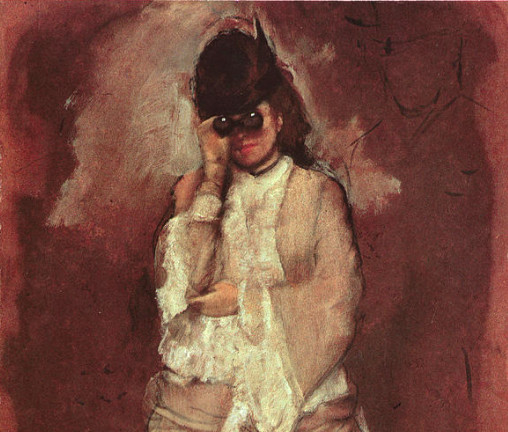
- Woman with Binoculars by Edgar Degas, c1869–72: World History Encyclopedia (public domain)
- Millicent Fawcett: Bain News Service/Elliott & Fry, restored by Adam Cuerden via Wikimedia (public domain)
- Girton College, Cambridge, 1890s: Detroit Publishing Co, under license from Photoglob Zürich, restored by Adam Cuerden via Wikimedia (public domain)
- Cover of The Female Detective by Andrew Forrester Jun


