
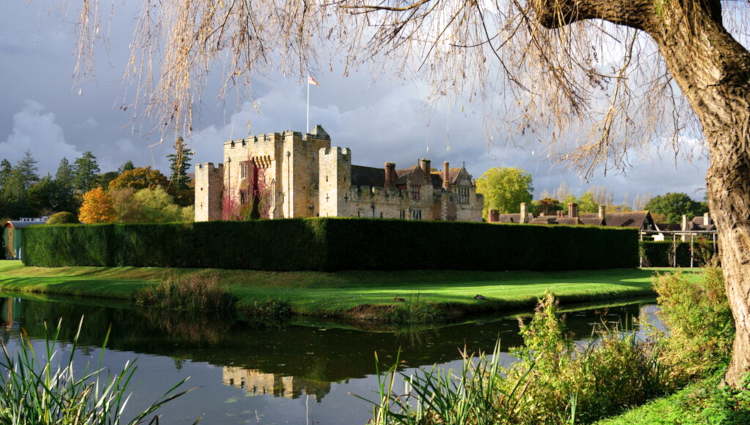
If we remember Elizabeth Boleyn, Countess of Wiltshire, it’s as the mother of Anne, Mary and George, and the wife of Thomas. Yet, as Alexandra Walsh discovered, she was a significant woman in her own right — but one who has disappeared under the shadows of her more famous relatives. Here Alexandra aims to put Elizabeth back in the light.
She was the mother of the most famous queen consort in British history: Anne Boleyn. Her daughter Mary had two unacknowledged children by Henry VIII and her son, George, fell from grace with his sister Anne.
The wife of Thomas Boleyn; the sister of Thomas Howard, 3rd Duke of Norfolk, the daughter of the Earl of Surrey, she was a significant and important woman, yet despite standing at the heart of one of England’s most notorious dynasties, Elizabeth Boleyn’s story has vanished from history.
.JPG)
Her husband’s name survives in diplomatic records. Her children’s fates are immortalised in tragedy. Her brother’s power and ruthlessness echo through the chronicles, but Elizabeth’s voice is lost in shadows, silenced by the clamour of her family and the swathe they cut across Tudor history.
When I began writing The Boleyn Curse, I knew it was essential to silence her family in order to find Elizabeth. As I studied each member of the Howard and Boleyn lines, she was there and slowly I pieced together the snippets and glimpses of her until she became a strong, fierce and determined woman.
Born of formidable women
She was born Elizabeth Howard, daughter of Thomas Howard, Earl of Surrey (later 2nd Duke of Norfolk), and his first wife, Elizabeth Tilney.
Tilney herself was remarkable: twice married, widowed in the Wars of the Roses and a former lady-in-waiting to Elizabeth Woodville. She understood both the glitter and the danger of court life, lessons she would pass to her daughters.

When Richard III seized the throne in 1483, the Howards aligned with him. It was a dangerous gamble and, when Richard travelled to Bosworth to fight for his crown, Elizabeth’s father, the Earl of Surrey, and her grandfather, the Duke of Norfolk, were with him.
The Duke of Norfolk was killed at Bosworth and the Earl imprisoned after Henry Tudor’s victory. When this news reached her, Elizabeth’s mother fled with her children to sanctuary in a Benedictine priory on the Isle of Sheppey.
Eventually, the Earl of Surrey was released, the family was reunited and the Howards were welcomed into the court of the new king, Henry VII. Then, in 1497, Elizabeth Tilney died and the Howard family changed again, with the Earl hastily remarrying Elizabeth Tilney’s much younger cousin, Agnes, who had long been a member of the Howard household.
Marriage and ambition
Around 1499, Elizabeth Howard escaped the presence of her stepmother when she married Thomas Boleyn, heir to a prosperous Kentish family with connections to the Irish earldom of Ormond. It was an interesting match: old nobility adjoined to new ambition.
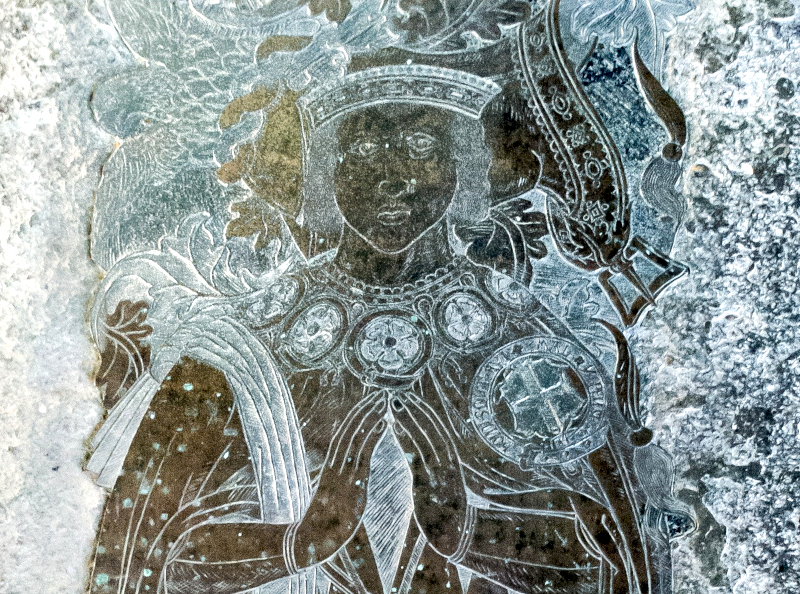
Thomas’s intellect and charm propelled him rapidly through the ranks of Henry VII’s and then Henry VIII’s court. Elizabeth managed their estates and household, and through her Howard lineage gained access to powerful circles of influence.
In June 1509, at the coronation of Henry VIII and Katherine of Aragon, Elizabeth was invited into the new queen’s household. She was granted a gown from the royal wardrobe and treated as a baroness, an early sign of esteem. At Christmas 1513, she received one of the most expensive gifts Henry gave that year: four gilt cups with covers, lavish tokens of royal favour.
Historians disagree on how often Elizabeth was present at court. Alison Weir suggests she was “not much at court”; focused instead on her children’s education. Elizabeth Norton argues that by 1519 her status was such that she was entitled to be fed at court. This tension between domestic matriarch and court insider was part of the fascination of reconstructing Elizabeth’s life.
The historian’s riddle
_-_Portrait_of_a_Woman_-_RCIN_402991_-_Royal_Collection.jpg)
There is one direct reference to Elizabeth which suggests Henry VIII may once have been attracted to her. It is a famous comment and appears as the Foreword to The Boleyn Curse, it was this question which gave me my ‘What if?’ and inspired this story.
When Henry was seeking legal authority to marry Anne Boleyn, the courtier George Throckmorton alleged that the king had ‘meddled with the mother and the sister’. Henry replied: ‘Never with the mother’.
Whether denial or truth, the rumour was inflammatory, as Tudor gossip could be a weapon to tarnish reputations and undermine legitimacy. Elizabeth’s very presence in this stories hints at a woman whose influence was powerful. What if Henry had been attracted to Elizabeth? If so, was this the reason he pursued her daughters, because she had refused to succumb? We will never know for certain.
Symbols and inheritance
Throughout The Boleyn Curse, I use the imagery of the white falcon, from real birds which Elizabeth takes hunting, to the magical talking bird from The Squire’s Tale, part of Geoffrey Chaucer’s The Canterbury Tales and, of course, the white falcon of Ormond which was Anne Boleyn’s choice of emblem when she became queen.

The Boleyns were represented by a bull’s head, the Howards by a lion; but the falcon is proud, fearless, beautiful and deadly. It symbolises grace and danger combined, qualities I wanted Elizabeth to own and which, I subtly suggest, Anne admired, hence her reason for adopting the bird as her own motif.
A family divided
My other enduring thought concerning Elizabeth was the strength she displayed during the darkest period of her life – the moment her eldest brother, Thomas Howard, 3rd Duke of Norfolk, sentenced two of her children to death on behalf of the king.
How would you endure this horror: as a mother, a sister, a human?
It is cruelty unimaginable, and yet Elizabeth endured it; and this became the emotional heart of The Boleyn Curse: the strength of a woman forced to bear the unbearable.
A quiet legacy
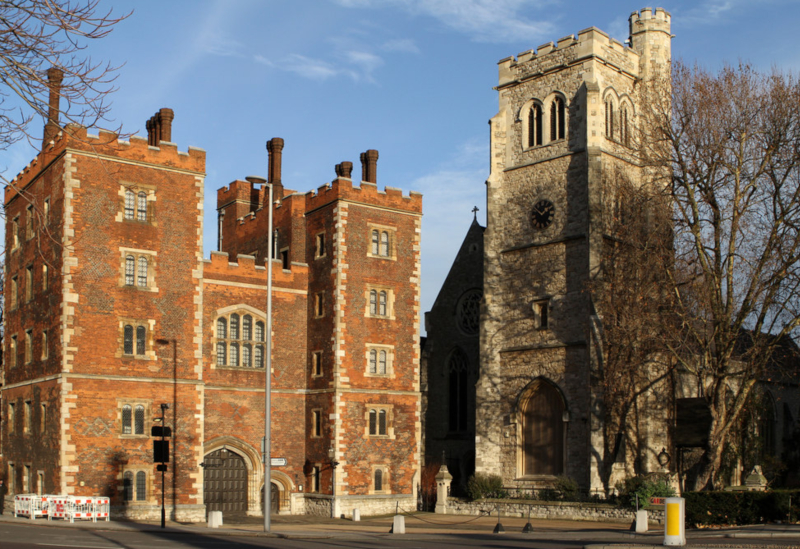
After the executions of Anne and George, Elizabeth withdrew from court, grieving and unwell. She died in April, 1538, while staying near Baynard’s Castle in London, and was buried in the Howard vault at St Mary’s Church, Lambeth, now the Garden Museum.
When writing The Boleyn Curse, I wanted Elizabeth to remain at the centre of her own story, rather than vanishing into the shadows cast by the bright light of her children’s fame. Her journey from sanctuary child to Tudor matriarch, from court favourite to bereaved mother.
Like her mother before her, she navigated a man’s world with courage, wit and grace. She survived dangerous rumours, shifting loyalties and personal catastrophe. She represents the countless women whose strength sustained these great and ancient houses, even as their names slipped quietly from the page.
It was an honour to help give back Elizabeth Boleyn’s voice.
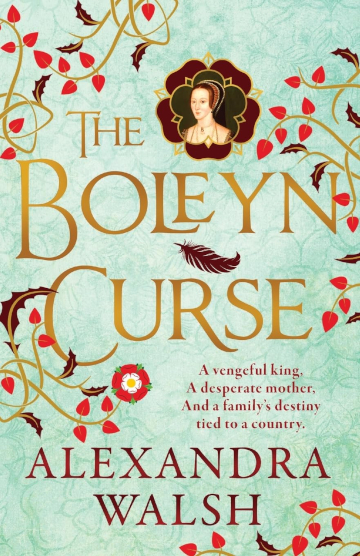
The Boleyn Curse by Alexandra Walsh is published on 15 March, 2026.
Find out more about this book.
Alexandra writes dual timeline historical fiction and timeslip mysteries that uncover the lost voices of women, both real and imagined.
Other pieces she’s written for Historia include:
The scandalous Seymours
Bess Throckmorton and the Gunpowder Plotters’ wives
Six godmothers of archaeology
Why do we tell stories? Finding Cordelia
The uncanny story behind my novel
Read Historia’s interview with Alexandra.
You may also be interested in:
Henry VIII, impotence and the thorny question of male heirs by Carol McGrath
Thomas Howard, the man behind the Tudors by Kirsten Claiden-Yardley
Tardiness and tempest: Henry VIII’s courtship of Anne Boleyn and
Did Henry VIII really want Katheryn Howard to be executed?, both by Alison Weir
TV review: The Mirror and the Light by Tracy Borman
And, from a while ago, Linda Porter watches Wolf Hall
Images:
- Hever Castle (slight crop): Peter Trimming for Geograph (CC BY-SA 2.0)
- Thomas Howard, 3rd Duke of Norfolk by Hans Holbein the Younger, c1539: Royal Collection via Wikimedia (public domain)
- Elizabeth Tilney, Countess of Surrey, detail from stained glass in Holy Trinity Church, Long Melford: Andrewrabbott for Wikimedia (CC BY-SA 3.0)
- Monumental brass in Hever Church in Kent to Thomas Boleyn, 1st Earl of Wiltshire (detail): Jules & Jenny for Wikimedia (CC BY 2.0)
- Portrait of a Lady called Mary Boleyn, Lady Stafford: Royal Collection via Wikimedia (public domain)
- Silver falcon badge of Anne Boleyn, tympanum, St Margaret’s Church, Tivetshall St Margaret, Norfolk:, 1587: Wikimedia (public dpmain)
- Lambeth Palace and St Mary-at-Lambeth: Martin Addison for Geograph (CC BY-SA 2.0)


