
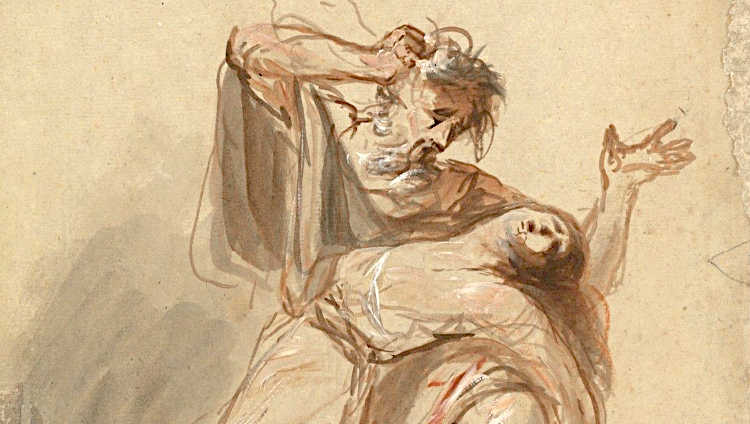
While writing her latest book, a reimagining of the story of Cordelia, Alexandra Walsh was struck by the way some figures reappear in different tales through the ages. Why, she wondered, do we tell and retell these stories? So she set about finding Cordelia.
Towards the end of my new novel Daughter of the Stones, my present-day protagonist Caitlin King asks a question that has haunted writers for centuries: “Why do we tell stories?”
It was a thought that preoccupied me while I wrote the book. Why do some tales endure for generations while others fade into obscurity? Why do certain figures — half-remembered, half-imagined — keep reappearing across time?
These questions not only shaped the novel but also made me reflect on my own career, which has always revolved around telling stories in one form or another.

Humans have always told each other tales. From travelling bards in early settlements to monks copying manuscripts in candlelit scriptoriums, from Shakespeare and his contemporaries to the novelists and screenwriters of today, stories have bound us together. Around fires, in courts, in playhouses and now through books and digital screens, we gather to share adventures.
Beowulf, the tales of King Arthur, the Icelandic sagas, Welsh folklore, Shakespeare’s tragedies — all these stories have left trails of imagination drifting into the sky while rooting themselves in the collective memory. They are the soil from which every new story grows.
In Daughter of the Stones, Caitlin suggests that the telling of stories is a way to create a collective memory. Stories strengthen communities, give us a sense of belonging and create a cauldron of knowledge to pass to future generations. They forge links with our ancestors.
And sometimes, when I’m writing, it feels as though these stories are flowing from nowhere — as though they have always been there, waiting to be uncovered.
One of the stories that has always intrigued me is King Lear. Most of us know it through William Shakespeare’s play, first performed in the early 1600s. Yet Lear’s origins reach back much further.
The first version we would recognise was written by Geoffrey of Monmouth in his Historia Regum Britanniae (1135). His tale of King Leir and his daughters was later retold in Holinshed’s Chronicles (1577), Shakespeare’s key source.
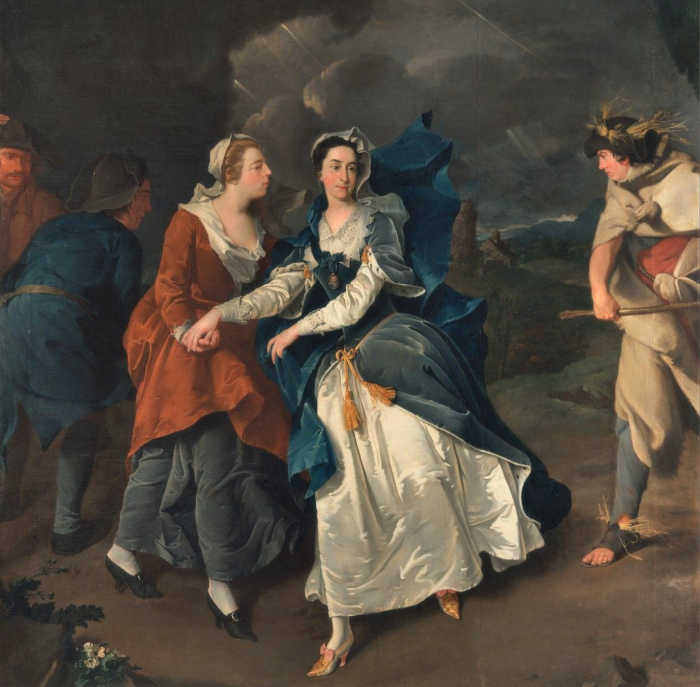
Shakespeare, of course, was not the last to reimagine Lear. In 1681, the Irish poet Nahum Tate produced a version in which Cordelia survives and marries Edgar, the Earl of Gloucester’s son. This happier ending dominated the stage for nearly 150 years until Victorian actor-managers gradually restored Shakespeare’s tragic original.
What makes the story of Leir unusual is that it places women centre stage: Goneril, Regan, and above all Cordelia. Geoffrey of Monmouth ends his version with Cordelia becoming queen in her own right — a startling departure in an age when women rarely held power in legend or history.
Her name is equally striking. Cordelia sounds unexpectedly modern compared with the other names Geoffrey used. Was she based on a real queen whose story has been lost? Was she a goddess in disguise?
Although I couldn’t explore this in depth within the novel, I couldn’t resist following the thread in my research.
Scholars have long suggested that Cordelia’s name may derive from Creiddylad, a Welsh goddess associated with flowers and love. Creiddylad also appears in Culhwch and Olwen, one of the Welsh Arthurian tales. There, she is the daughter of King Lludd Silver Hand and the unwilling prize in a never-ending contest between two rival suitors.
_Culhwch_ac_Olwen.jpg)
These battles were said to take place every May Day until Doomsday — a fragment, perhaps, of an older myth about divine combat.
But the surviving manuscripts that mention Creiddylad, the White Book of Rhydderch (c1325) and the Red Book of Hergest (c1400), were written long after Geoffrey of Monmouth. So perhaps his Cordelia inspired these later stories rather than the other way around.
The Mabinogion, the great collection of medieval Welsh prose tales, offers more clues. Here, Creiddylad (sometimes Creirddylad) is named as the daughter of Lludd Llaw Ereint — Lugh of the Silver Hand. Some sources claim she was the daughter of Llyr, a shadowy Welsh sea deity who may have provided the model for Geoffrey’s Leir.
The web of connections is tantalising but inconclusive. Llyr’s children appear in several myths — some are turned into swans for 900 years — but Cordelia never quite materialises.
She remains an echo, a name, a figure hovering between goddess and queen, memory and imagination.
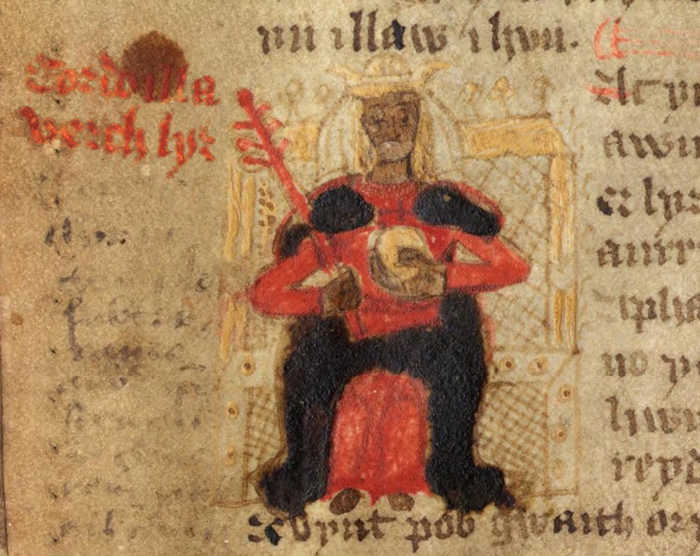
Despite my best efforts, the historical Cordelia remains elusive. She is most famous as King Lear’s dutiful daughter: banished for refusing to flatter her father, then returning at the head of an army to save him. She embodies loyalty, courage, and quiet strength.
Perhaps there was once an early queen whose story Geoffrey preserved in fragments. Perhaps Cordelia is a figment of a monk’s imagination. Or perhaps she is something greater — an archetype, a symbol of female power that resurfaced whenever Britain needed her.
What matters is that her story endured. From Geoffrey to Holinshed, from Shakespeare to Nahum Tate, from the Victorians to the 21st century, Cordelia has never stopped communicating across the void.
And now, in my novel, Daughter of the Stones, she speaks again.
The book is a dual-timeline mystery, weaving together Iron Age Britain and the present day. In the modern storyline, Caitlin King finds herself drawn into her family’s secrets while rehearsing a production of King Lear – The Musical. Through visions and research, she connects with Cordelia across the centuries, uncovering the echoes of a forgotten queen.

The story draws on stone circles, Welsh mythology and the enduring power of ancestral voices. At its heart lies Cordelia, reimagined not as Shakespeare’s tragic victim but as a woman of agency whose legacy still shapes us today.
So, why do we tell stories?
We tell them to connect to the past. To give voice to those who were silenced. To share wisdom across generations. To remember and to imagine.
Cordelia has travelled from a 12th-century chronicle, through Shakespeare’s stage, into modern novels like mine. She has endured because she speaks to something timeless: the desire to be heard, the courage to stand alone, the strength of women’s voices.
As Caitlin reflects in Daughter of the Stones, stories are more than entertainment. They are memory. They are connection. They are how we understand who we are.
Listen closely. The stories of the past still speak. If we listen well, they can guide us into the future.
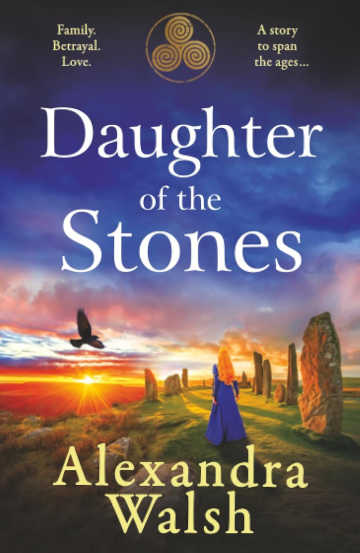
Daughter of the Stones by Alexandra Walsh is published on 23 October, 2025.
Find out more about this book.
Have a look at Alexandra’s other writing for Historia:
Bess Throckmorton and the Gunpowder Plotters’ wives
Six godmothers of archaeology
The scandalous Seymours
The uncanny story behind my novel
And our interview with her: Historia interviews Alexandra Walsh by Frances Owen
More related features:
The magic and science of 18th-century Wales by Susan Stokes-Chapman
The Fairy (tale) Godfather by Nicholas Jubber
Arthur will come again… and again… by Giles Kristian
Who was King Arthur? And did he exist? by Fil Reid
History, historicity, historiography and Arthurian legend by Nicola Griffith
Images:
- The Death of Cordelia after Thomas Barker: Yale Center for British Art, Paul Mellon Fund (public domain)
- Title page of King Lear by William Shakespeare, 1608: Wikimedia (public domain)
- Susannah Maria Cibber (née Arne) as Cordelia (in Nahum Tate’s version) by Pieter van Bleeck, 1755: Yale Center for British Art, Paul Mellon Fund (public domain)
- The opening of the tale of Culhwch and Olwen, Red Book of Hergest / Llyfr Coch Hergest, 1382–1410: Bodleian Library, Jesus College MS 111 via Wikimedia (CC BY 4.0)
- Cordeilla verch Lyr from Brut y Brenhinedd (the Welsh translation of Geoffrey of Monmouth’s Historia Regum Britanniae), 1485–1515: Llyfrgell Genedlaethol Cymru – The National Library of Wales, Peniarth MS 23 (public domain)
- King Leir and his Daughters from the Chronica Majora, vol 1, by Matthew Paris, 1240–53: Corpus Christi College Library, Cambridge, MS 26 via Wikimedia (public domain)


