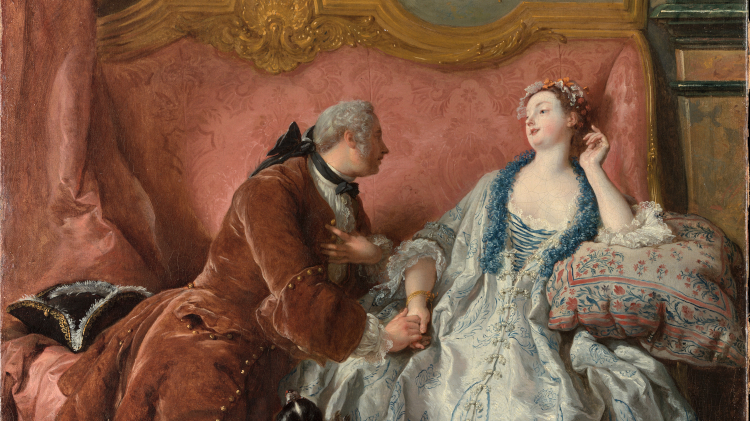
Romance is blooming in the book world — though, really, has it ever not? So let’s hear it for full-blooded historical romance, says author Maggie Craig; rooted in history and with handsome, ruffle-shirted heroes.
I write historical non-fiction and novels. I’m more than happy to have the latter described as historical romance. They are quite gloriously that. They are also meticulously researched.
As a willing hostage of the Jacobites of 1745 since childhood, I’ve spent decades knee-deep in libraries and archives. My interest is in the so-called ordinary people who played their part in these seismic events, rather than the man popularly known as Bonnie Prince Charlie.
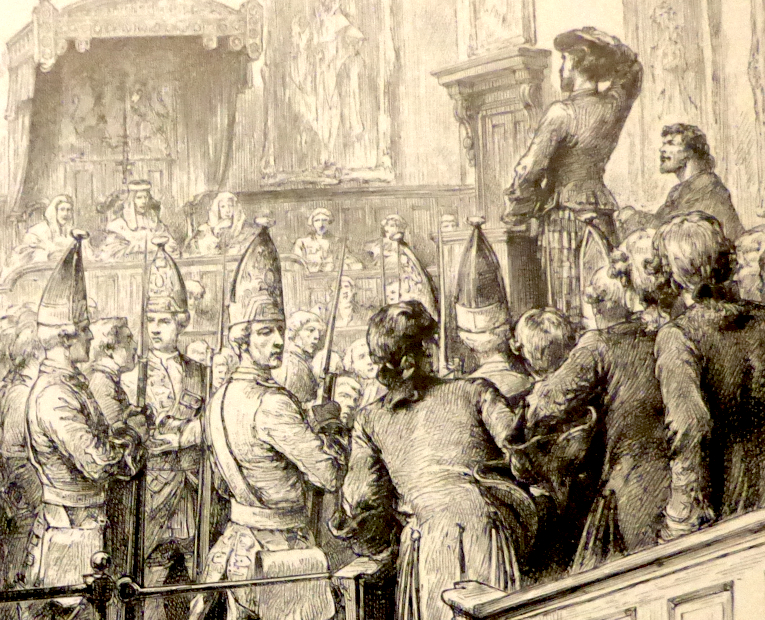
I’ve pored over letters between husbands and wives, brothers and friends, and hastily-sketched maps and accounts of bloody battles. I’ve read a plethora of lists, seen the names of hundreds of captured Jacobites transported across the Atlantic as indentured servants.
I’ve read accounts of interrogations of Jacobite prisoners, heard the heart-stopping defiance of their answers ring around my head. I’ve read their dying speeches, printed up and thrown to the crowd as they mounted gallows in London, York and Carlisle.
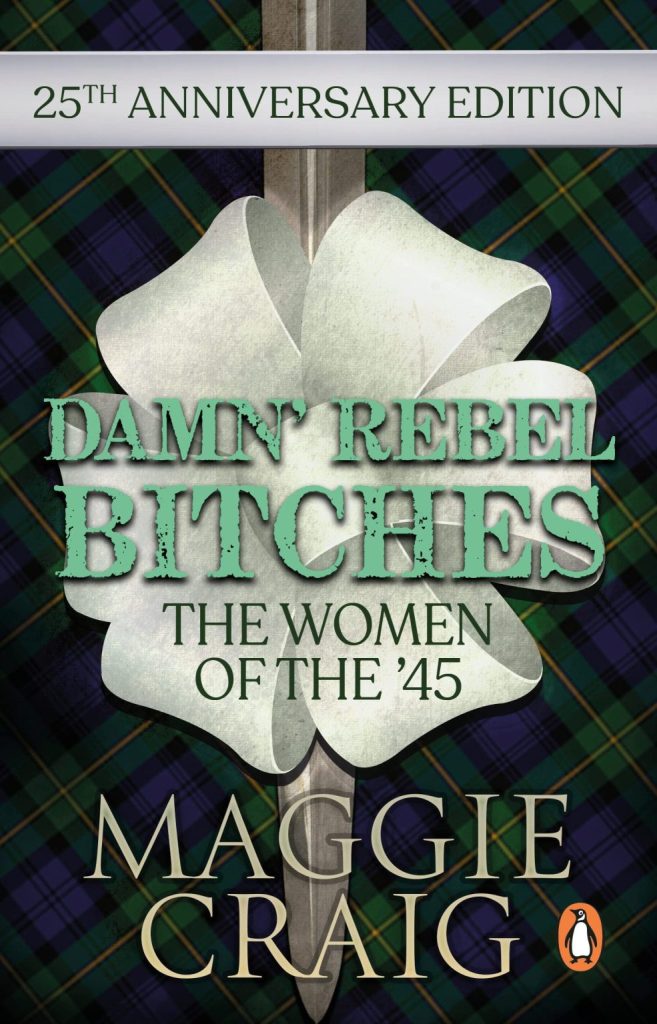
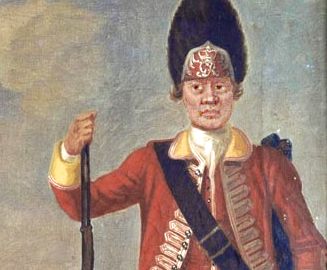
I’ve read outraged complaints from women whose houses were plundered by Redcoat soldiers during the vicious reprisals carried out in the Highlands and Islands in the brutal summer and autumn of 1746. I tell some of these stories in Damn’ Rebel Bitches: The Women of the ’45.
Contemporary documents written by and about men and women who lived 280 years ago are not dry and dusty. They chart the impact of the 45 and the long shadow still cast by the Battle of Culloden. The people in them jump off the page. Some have leapt into my novels.
The central lovers of my Storm over Scotland novels are fictional. On opposite sides of the conflict, the difficulties they have to contend with are all too real. He’s a cynical Redcoat captain, she’s a committed Jacobite. They’re also madly in love with each other.
In stolen hours and moments, they sometimes express this passion with their clothes off. In the fourth book in the series, they do so on the sunny banks of a Scottish river on a beautiful summer’s day.
Some in the wider – or perhaps that should be narrower – Scottish literary world sneer at genre fiction (although I’m told this is changing). This includes Tartan noir, hugely popular with readers. A woman I met on a train told me with relish how much she enjoyed Scottish crime novels: “The more gruesome the better!”
Scotland’s literati value only what they consider to be Real Writing. Challenging and unflinching. Holding a mirror up to society. Or so they fondly imagine. Yet let two people who have endured war, betrayal, political turmoil and the near-destruction of their very different worlds find joy and solace in each other’s arms and it’s all a bit bodice-ripperish or, inaccurately and totally unfairly, a bit Mills and Boon.
Romance is a very broad church, one of creative and wonderful variety. Some readers as well as writers, almost always those who wouldn’t be seen dead reading a romantic novel, insist on lumping it all together as pink and fluffy.

At a meet the author event, panel members were asked to name favourite Scottish authors. I chose Robert Louis Stevenson and John Buchan.
An older man came up to me afterwards. Surely I wasn’t comparing myself to either of those giants? An odd assumption. I replied, truthfully, no, how would I dare to?
“Well, quite”, he said, with that tell-tale curl of the lips. I asked if he’d read any of my books. His answer? Take a wild guess.
In a glorious moment which still keeps me warm at night, I observed he was therefore judging my work based on complete ignorance of it. He moved away. I had answered the supercilious twit back and I felt like a warrior queen.
I will admit to sometimes curling my own lip. I derive much innocent amusement from the covers of what we might call bare-chested highlander books. I also call them the “Aye, lassie!” books.
Their heroes with improbable names and equally improbable attempts at Scots dialect have shaved their chests and then, inexplicably, forgotten to put their shirts back on under their kilts and plaids. Oh, the midgies! Oh, the prickly thorns! Oh, the torrential rain! Each to their own.
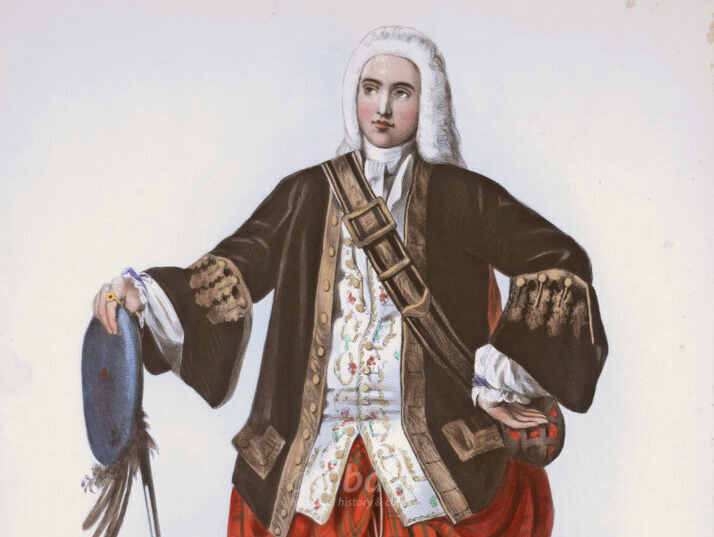
Personally, I find ruffled shirt cuffs sexier than an oiled and gleaming six-pack. The same goes for long hair that’s seen a brush or a comb and is tied back at the nape with a black satin ribbon in the classic Jacobite bow.
The people of the past fell in love as people throughout history have. Like my hero and heroine, sometimes with spectacularly bad timing. I enjoy reading historical fiction but I’m often disappointed when there is a love story but it feels rather anaemic and underdeveloped.
It’s as though the author has shied away from giving it a whole-hearted place in the story. Shy being perhaps the operative word.
There’s also a gendered element. Isn’t there always? Stories about emotional connection, domestic life and romantic attraction have long been considered female concerns, and therefore lesser.
Meanwhile, a novel in which a man trudges despairingly through a bleak urban landscape is considered a masterpiece.
A love story rooted in real historical conflict explores and illuminates the world in which it’s set. Love across enemy lines, love versus duty: these are not fluffy problems. They’re about courage and impossible choices.
When two people on opposite sides of a conflict fall in love, their relationship is not a decorative subplot. It’s a way of seeing huge, sweeping events tempered by the stubborn refusal to give up hope. The world might be falling apart and they might have met at the wrong time but why shouldn’t they reach for each other and for happiness together?
Full-blooded romance does not cheapen history. It gives it a beating heart.
So I’ll stick with the men with long hair and ruffled shirt cuffs, the brave and stubborn women they love and who love them in return, and kisses snatched in Edinburgh’s closes while armies march.

On the Wings of the Storm by Maggie Craig is published in paperback in March, 2026. It’s the fourth in her Storm over Scotland series. To read from the beginning of the story of Robert Catto and Christian Rankeillor, start with Gathering Storm.
Find out more about On the Wings of the Storm.
Maggie is a Glaswegian who lives in deepest Aberdeenshire. Before becoming a full-time writer, she worked as a translator and a Blue Badge Scottish Tourist Guide.
She’s written several features for Historia, including:
Damn’ Rebel Bitches: Research Then and Now
1719: the forgotten Jacobite rising
The Scottish Radical Rising of 1820
George IV’s visit to Edinburgh in 1822
The Protestant Wind
You may also enjoy these related features:
Raising the Jacobite standard: Glenfinnan, 1745,
Remembering Culloden and
Five surprising facts about Charles Edward Stuart, all by Frances Owen
Politics and the Grand Tour: the Jacobite threat by Jérémy Filet
Sagas: they’re not all trouble at t’mill by Jean Fullerton
The invention of masculine fashion by Carolyn Kirby
Images:
- The Declaration of Love by Jean François de Troy, c1724: The Met (public domain)
- Jacobite Prisoners on Trial in London: author’s collection
- Cover of Damn’ Rebel Bitches: The Women of the ’45.
- Jacobite lady, attrib Cosmo Alexander, c1740–-50: Culloden Visitor Centre via Wikimedia (public domain)
- Soldier of the 42nd Highland Regiment by David Morier, 1751: Royal Collection via Wikimedia (public domain)
- Mackintosh Chief: author’s collection


