

A pioneering library was set up at Endell Street Military Hospital during the First World War. There, the women who ran the hospital used reading as therapy for the damaged soldiers. Louise Morrish writes about the library, which inspired her latest novel, and asks: can books save lives?
If we could step back in time, to London during the First World War, and ask this question of the soldier patients at Endell Street Military Hospital, they would undoubtedly answer “yes”.
Endell Street was a ground-breaking, all-female-run hospital, and during the war over 26,000 injured soldiers were treated there. New, industrialised weapons were causing horrific wounds on the battlefield — both visible and invisible – and Endell Street was a site of pioneering medical practice and compassionate care.
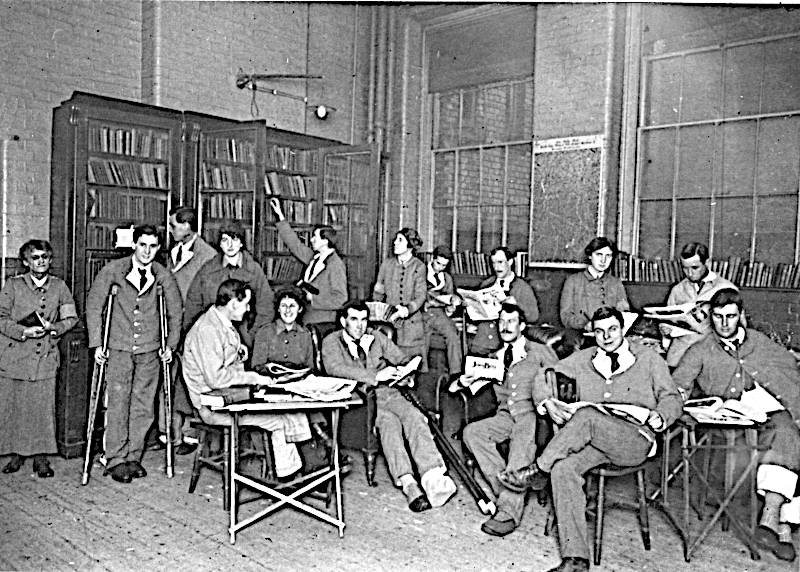
But what made the hospital truly extraordinary was its library, and the use of bibliotherapy as medicine for the mind.
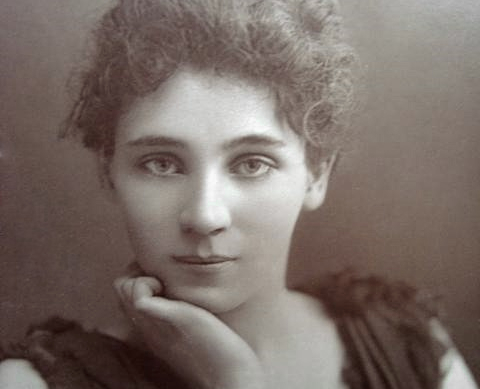
The library was run by two prominent members of the Women Writers’ Suffrage League, Elizabeth Robins and Beatrice Harraden. The WWSL had been founded in 1908, with the aim to obtain the franchise on the same terms as men, and its members sought to do this through writing.
Robins, an American actress and writer, was one of the first members of the WWSL, and its first president. Harraden, a British novelist, was another of the organisation’s members, and she served as librarian at Endell Street from 1915 until the hospital closed, joined by Elizabeth Robins for the first year or so.
The philosophy of Endell Street library was a reader-led one. The librarians catered for the patients’ requests when it came to their reading matter, rather than to impose their idea of what might be termed ‘improving’ books upon them.
Many men feared having their lack of education or complete illiteracy exposed, so the librarians would take the time to sit at their bedsides, talking to the wounded soldiers to find out more about their interests and background.

In this way, the librarians could make informed recommendations, as well as meet specific requests, and this became a unique opportunity to experience care based on books and reading.
The library was a huge success, and in many ways laid the groundwork for our modern bibliotherapy today.
The term bibliotherapy was first coined by American author and minister Samuel McChord Crothers, in 1914. His writings articulated an intuitive truth: that literature could heal minds just as medicines healed bodies.
As the First World War progressed, this idea was tested and expanded in military hospitals where literature worked as a form of care.
Parallel to this emerging concept was the British War Library, founded in 1914 by May Gaskell. Gaskell’s initiative sought to collect donated books from across Britain and distribute them to soldiers — initially in hospitals, and, later, in wider military contexts.
I’m an author and bookseller now, but for nearly 30 years I worked as a librarian. I’ve experienced public libraries, primary and secondary school libraries, privately owned libraries, and once an 18th-century haunted library (I only lasted a year there). Books are everything to me, and always have been.
During my time working in libraries, I’ve championed countless authors, advised thousands of customers on what they might like to read, and helped generations of children discover the life-changing joy of reading.
Unknown to me, all those years I was practising the art of bibliotherapy – using books to support mental health, personal growth, and emotional healing. Bibliotherapy wasn’t a skill I was taught as a librarian. It’s just something a good librarian does, as naturally as breathing.
To give you an example, when I managed a secondary school library my main job was to encourage teenagers to read for pleasure (imagine that for a moment!)

The only way to do this was to listen to the child, find out what made them ‘tick’, discover what they were interested in (outside of school), and gently discern what emotions or issues they perhaps needed help to navigate. And then find them a book that would unlock their hearts and minds.
I was practising what Elizabeth Robins and Beatrice Harraden and the other librarians had done over 100 years ago, only they were dealing with traumatised soldiers.
Bibliotherapy — a tricky trade to master, but the most rewarding.
The art of healing through reading books continues to be a powerful form of therapy, and libraries play a fundamental role in this.
My third novel, The Library of War and Peace, is my love letter to those incredible librarians of Endell Street.

The Library of War and Peace by Louise Morrish is published on 2 April, 2026.
See more about her book.
Louise is an author, bookseller, and creative writing tutor. She was a librarian for a very long time, and still misses the stacks. She lives in Hampshire with her family, and when she’s not writing books, or reading them, or selling them, she loves to trail run.
louisemorrish.com
Instagram
Facebook
Louise has written more about the inspiration for this book and her previous one at Women on the warpath in WWI.
And if you ever wonder how far a historical novelist will go to get the details in their books just right, here’s the answer: Extreme research: how far should a writer go?
You may enjoy these Historia features on related topics:
The hidden stories of the First World War by Lucy Steeds, about women nursing during WWI
Damned Souls: an aristocratic Victorian scandal by Jane Dismore (May Gaskell was one of the ‘Souls’ group)
The Guinea Pig Club – a WWII RAF pilot elite by LP Fergusson, about serious injuries in WWII
Licensed brothels in France during the First World War by Alec Marsh
The General who wept by Chris Moore
The window-smashing suffragettes of 1912 by Jennifer Godfrey
Images:
- Military Hospital Library, Endell Street, 1917–18: US National Archives and Records Administration via Wikimedia (public domain)
- Elizabeth Robins, albumen print by W&D Downey, 1890s: Wikimedia (public domain)
- Beatrice Harraden, before 1914: Wikimedia (public domain)
- Military Hospital Library, Endell Street, 1917–18: US National Archives and Records Administration via Wikimedia (public domain)
- Plaque marking the site of Endell Street Military Hospital (edited, cropped): Matt Brown for Wikimedia (CC BY 2.0)


