

Social historian and music writer Bruce Lindsay examines the ways in which different versions of the same song can tell a story of love, seduction, or rape. The song, The Maid of Australia, was in the repertoire of the two traditional singers who are the subject of his most recent book.
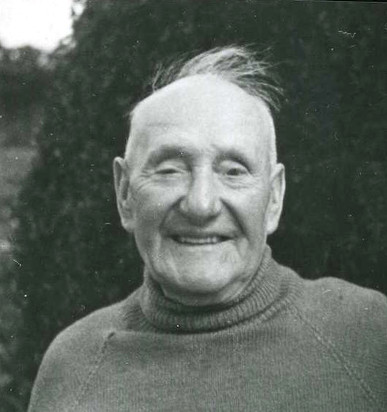
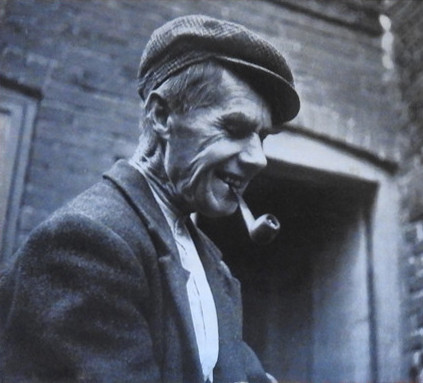
Sam Larner and Harry Cox were two of England’s finest singers of traditional songs. Sam, born in 1878, was a fisherman from east Norfolk. Harry, an agricultural worker born in 1885, spent his life in and around the Broads, barely 15 miles from Sam’s home. They inspired some of the finest folk revival performers, including Martin Carthy, Shirley Collins, and the Dubliners; they released albums, broadcast on radio and were the subjects of a BBC TV documentary, but they never met.
While researching for Two Bold Singermen and the English Folk Revival, my biography of Sam and Harry, I found many songs they have in common. One is The Maid of Australia, which illustrates the varied stories to be found in a single song as each singer hears, learns and re-interprets, deliberately or accidentally, a single underlying tale.
The song usually starts with the singer roving, or straying, along a riverbank. The location varies: the Roud Folksong Index lists over 40 versions of the song (under slightly different titles, but all with the Roud number of RN1872), with 16 different locations between them, mostly riverbanks but also banks of green moss, mulberries or raspberries.
In some versions the rover roves on the Hawksbury banks, taken by many to refer to the Hawksbury river near Sydney and thus identifying the song as Australian in origin. But in the English Midlands there’s a Hawkesbury Junction, which joins the Oxford and Coventry canals, so the song could have originated in England.
Neither Harry or Sam went near Hawkesbury or Hawksbury. Harry “walked out by the Oxborough banks” (Oxborough is a Norfolk village, but there is no river by that name), Sam “strayed near these Airoland banks” – possibly a reference to Loch Arioland in south-west Scotland, marked on one or two eighteenth-century maps but no longer identifiable.
However both Harry and Sam’s lyrics tell of the encounter taking place in Australia, while other versions make it clear that the maid has left the country. The term “native Australia” suggests that the maid is from one of the country’s Indigenous peoples, rather than a white European woman: a suggestion that adds ‘exoticism’ to the encounter while drawing on racial stereotypes that distance this maid’s behaviour from mainstream social norms.
Harry wasn’t sure about the song’s origins: “It must have come from foreign here,” he suggested to Alan Lomax. Reverend Sabine Baring-Gould, the lyricist of Onward Christian Soldiers, noted more accurately that it was “a recomposition by one Geo. Harris, abt. 1860 from ‘The Swimming Lady’.”
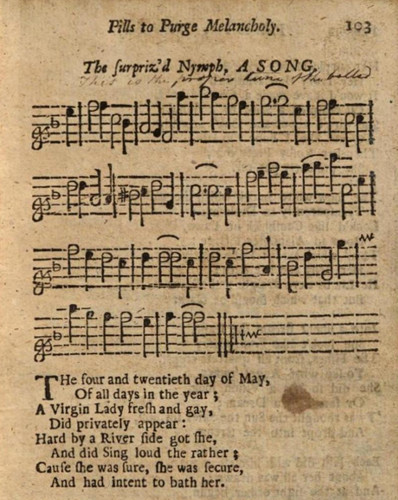
The Swimming Lady is an old song with no reference to Australia, appearing in Thomas D’Urfey’s 1719 publication Wit and Mirth: or Pills to Purge Melancholy, as The Surpriz’d Nymph. A young woman swims in a secluded river: the male fish are so charmed by her appearance that they wish they were human and at the sight of her they “spread abroad their spawn.”
An unwanted suitor creeps up undetected, drags her from the water and rapes her. As she recovers from the assault the young man, presented in the song as nothing more than an amusing rogue, agrees to marry her and ‘save’ her reputation.
The Maid of Australia tells a similar story. A young man spies on the maid as she swims naked in a river, she emerges, they meet, they have sex, they go their separate ways.

When the maid emerges from the river the singer gives her his hand to assist her in reaching the bank safely. In some cases the maid accidentally slips and falls down, in others it’s the singer who slips and falls, in others she falls deliberately suggesting that she not only consents to sex but initiates it, and in others the singer deliberately trips the maid and so they have sex against her will.
In almost every version of the song, the singer announces the sexual act with the phrase “I entered the bush of Australia” and never expresses regret even where he has forced the maid.
Sam, always fond of singing what he called “a rude ‘un,” sings of the maid asking for help before slipping and falling (accidentally, deliberately or because the singer makes her do so is unclear), then declares triumphantly that he “entered the bush.”
Walter Pardon, from the next generation of great Norfolk singers, “put out my foot” in a seemingly deliberate attempt to make her fall: he remembered his uncle Billy Gee cutting out this verse, because it was considered obscene and banned from many of the local pubs.
On Harry’s 1965 recording of The Maid of Australia for collector Leslie Shepard, he sings that his foot slipped and they fell on the sand, but then repeats a clumsy line about being “In the native the plains of Australia” rather than making the usual boast. In addition, he sings a final verse in which the young man slips away, leaving the girl with a fatherless son.
Harry’s usually a very confident singer, but on Shepard’s recording he’s nervous and hesitant, stumbling over the lyrics throughout the song – possibly concentrating too hard on censoring lyrics he felt were inappropriate to sing in such company.
Harry’s own transcript of the song includes lyrics that tell how the singer “gave her my foot, she fell down on the sand and I entered the bush of Australia,” suggesting that he felt the need to censor this more overt and coercive version when being recorded even if he would happily sing the uncensored version in the pub.
And so it goes: a boastful tale about the sexual assault of an Indigenous Australian woman, a love song set by an invented Norfolk river, a tale of a cunning young woman seducing a stranger on a Midlands canal bank, or a morality tale that blames the woman and lets the man disappear without criticism. The Maid of Australia can be altered easily to suit the singer’s viewpoint or the listener’s expectations. One song, many ways of singing, as Sam and Harry ably show.

Two Bold Singermen and the English Folk Revival: the Lives, Song Traditions and Legacies of Sam Larner and Harry Cox by Bruce Lindsay was published on 20 October, 2020. It’s available from Amazon, Waterstones, Hive and Wordery.
Bruce Lindsay is a social historian, music journalist and writer. He is also the author of Shellac and Swing! A Social History of the Gramophone in Britain (Fonthill Media, 2020). He is currently writing a biography of the humorist and poet Ivor Cutler, titled Ivor Cutler: A Life Outside the Sitting Room (Equinox Publishing, due 2023).
Images:
Great Yarmouth docks, c1900: author’s own
Sam Larner: via Discogs
The Surpriz’d Nymph from Wit and Mirth: or Pills to Purge Melancholy: via Google Books
The Maids of Australia, broadside ballad: via Broadside Ballads Online, the Bodleian Library
Harry Cox: via Discogs


