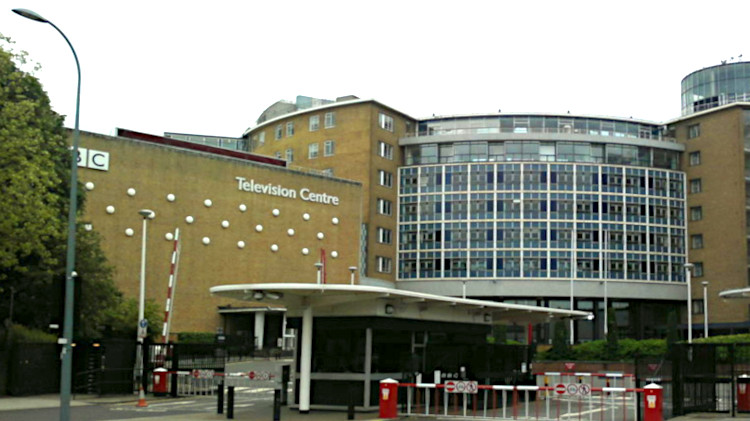
Television – especially BBC TV – used to be an integral part of a family Christmas, with the nation (theoretically) gathered round the telly to watch the big film or the Queen’s Speech. All that’s history now. But what about the history of the Beeb itself in this, its 100th year, we asked the former programme-maker James Burge? More specifically, what’s the state of history programmes on the BBC?
Amid all the fuss and (self-)congratulation that marked the centenary of the start of the British Broadcasting Company last month, something was missing. There was no mention of that genre which should most interest HWA members: history programmes – a sub-genre of what people in the business refer to as ‘factual programming’.
I must clarify here that I am not talking about historical drama, which was well represented, and rightly so. What I mean are programmes which attempt or purport to present historical fact.
I scanned the Radio Times for the week in question, just to see what of this genre was on offer after a century. Out of the 230 full-length programmes available across all BBC channels in that week there were three about history: an archive show about the origins of the BBC itself, a repeat of a series about the Nazis and another repeat of a presenter-led show about the treasures of Egypt.
The last two of these were on BBC4 which is, if you haven’t noticed, now a de facto repeats channel. A look at other issues of RT confirmed it: the genre of factual history television has all but died on the BBC. Neither is it showing many signs of life anywhere else.
A century ago now, Lord Reith himself effectively wrote the need for factual programming into the nascent Corporation’s constitution. The famous imperative to ‘inform, educate and entertain’ is surely no more than an instruction to make factual programmes in the way television does best.
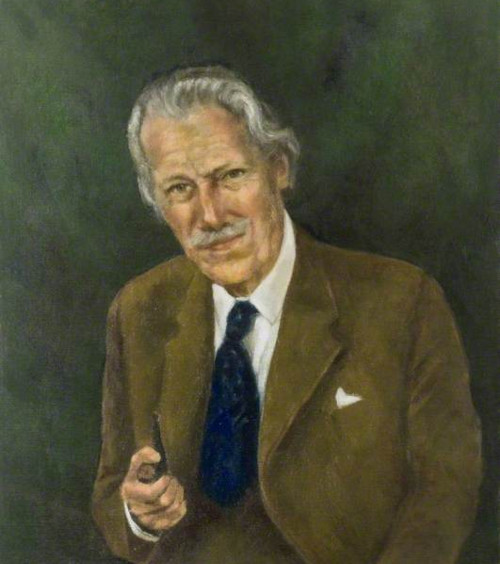
A typical history programme, in the early days of television, would feature a presenter with a slightly over-perky, artificial manner at some significant location, talking a great deal. Words would lead the pictures which were of relevant personages and artefacts in the main. Personalities dominated from the start. The one who seems most memorable is Sir Mortimer Wheeler, an affable cove with a distinguished career outside television and an extraordinary moustache.
Every historical narrative needs a milestone, a single event that turns the story around. This article is no exception: in 1965 David Attenborough was made controller of the new channel, BBC2. He tells us that, since colour was for a brief time a BBC2 monopoly, he wanted to make an outstanding series to showcase it. Kenneth Clark was commissioned to write it.

The title was Civilisation and a vast budget was allocated. That allowed Michael Gill, Peter Montagnon and their team to travel the world, examining and reconnoitring possible locations. Only after one year, did they sit down and decide exactly where to film. The result was more than just an ad for colour TV, it was a demonstration that great things could be done with good cinematography and intelligent scripting. The series is watchable still.
In Civilisation’s sibling series, The Ascent of Man, Jacob Bronowski and Adrian Malone expanded the use of location as metaphor in ways which were often delightfully eccentric and sometimes very challenging. Seeing the intense little scientist pick his was along the narrow ledge under the great flying buttresses of Rheims cathedral while explaining the structure of matter was hard to equal.
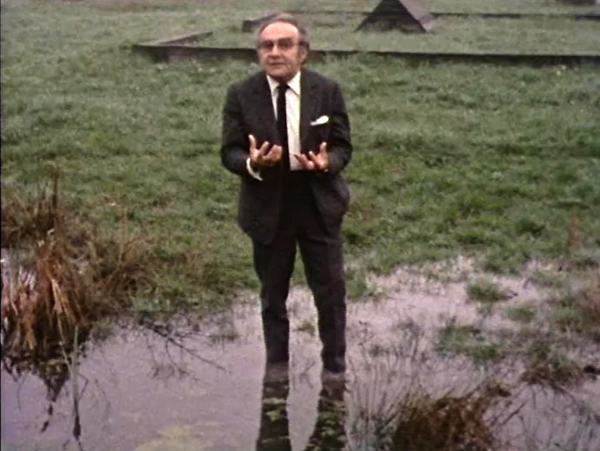
But, at end of the programme, to walk into that muddy pool at Auschwitz and bend down to scoop up some of the remains of countless victims of the death camp was brave and powerful. ‘We must learn to touch people,’ he said as he did so. Bronowski carried it off. This was no desperate gimmick to excite viewers. I had just graduated when I saw that sequence. It persuaded me that television could be made to do wonderful things, so I decided to make a career in it.
Many great practitioners of history on TV followed. There are too many to list here but I expect readers will have their own recollection of Chronicle, Timewatch and one-off series that informed, educated and entertained them.
So why are none of their successors in that week’s Radio Times? Over the last two decades or more, drama has soared to triumphant heights while factual has quietly lost its audience. It is dangerous to over-simplify but I would suggest one culprit is a systematic collapse of confidence among programme-makers. The people who make the programmes don’t believe in them any more.
In the past, I am told, young women used to be warned that Eau de Desperation was a bad fragrance to wear. Well, little by little, contemporary factual programmes have come to reek of it.
Desperate to hang on to the viewers’ attention before they all turn over to Bake Off, programme-makers and their executive warders resort to increasingly bizarre tricks. Here are some symptoms to look out for.
The first two minutes of a programme will frequently be larded with three or even four summaries of the content and its conclusion. This does not make the programme more interesting – it’s like beginning the Mousetrap by telling the audience ‘who done it’ four times over. Desperation also engenders the belief that if the presenter says, “I’m on a journey” frequently enough it will somehow provide the narrative impetus that the script so evidently lacks.
As the film progresses it is noticeable that every element – ancient manuscript, lost graveyard, aerial photograph, whatever – is manically hyped as incredible, fantastic and earth-shattering.

For fear of giving fickle audiences time to think, every frame has to be covered with words. Words are so much safer than pictures (executives in factual television all mistrust pictures). The result is a complete lack of pauses, moments of reflection and atmosphere. Thus, fundamental tools of cinematic narrative are denied to a film which probably had only the thinnest of narratives in the first place. Time for Bake Off.
As the films themselves degenerate, emphasis shifts to presenters. Some become bigger than their programmes and subjects are chosen on the basis of their own whims and fancies. Others are induced to adopt mannerisms, gurn at camera and imbue every line with frantic significance. I reflect that Kenneth Clark never felt the need to dress up in Elizabethan dress and simper at the camera. I’m just saying.
All the above things (and I could go on) act to kill interest in viewers. Audiences have voted with their remotes. It is true that the teeming jungle of media outside the broadcasters’ compound accounts for much of the missing audience. But drama is still healthy across the board while history, I’m sorry to say, has failed. Perhaps it will be reborn in the future but, for the moment, serious history programmes are not available.
This is potentially dangerous. History is the story we tell ourselves about ourselves. It changes and develops. Different interpretations of it underlay triumph and endeavour, conflict and destruction in our world. Without some ongoing serious discussion about history, people might come to believe ridiculous falsehoods and governments might act on the basis of patently fallacious narratives.
That would be awful.

James Burge is a retired maker of factual television programmes. Now he writes books about the middle ages.
His Dante’s Invention was published in paperback in May, 2013, and Heloise And Abelard in September, 2018.
Jim recently reviewed the Feminine Power and The World of Stonehenge exhibitions, both at the British Museum, for Historia.
He’s also reviewed a number of TV programmes and films for us, including:
The Windermere Children
The Crown, season 3
Charles I: Downfall of a King
Civilisations
Victoria and Abdul
British History’s Biggest Fibs With Lucy Worsley
Images:
- BBC Television Centre in 2008: Oxyman for Geograph (CC BY 2.0)
- Portrait of Sir Mortimer Wheeler: Art UK ©St Albans Museums
- Screenshot of episode 1 of the 1969 series of Civilisation, Skin of Our Teeth: Wikimedia (fair use)
- Jacob Bronowski at Auschwitz (fair use)
- Portrait of Lord Reith in the Council Chamber, BBC Broadcasting House, London: #iamabroadcaster for Flickr (CC BY 2.0)


