Alison Baxter writes about the tragedy in her own family history that inspired her first novel, A Fatal Choice. Her research uncovered a puzzling story of secrets and lies. She could have written it as non-fiction, but fiction gave her the opportunity to explore the inner lives of the women involved.
I came late to the study of history, despite being an enthusiastic reader of historical novels from an early age, and my entry point was my own family.
An interest in genealogy grew to include maritime and social history, as I traced how the Industrial Revolution changed the lives of my great-grandmother, Hester Dupen, and her siblings. The online newspaper archive soon became one of my favourite historical resources, allowing me to sit at my desk and research everything from concerts and weddings to wars and epidemics.
It was my good fortune that the name Dupen proved to be almost unique in Britain (unlike in France, where it’s as common as Smith). Finding articles related to the ships my great-grandmother’s brothers sailed on, or the schools kept by her sisters, added context to the dry facts of the census.
The result was my first history book, A Cornish Cargo: the untold history of a Victorian seafaring family. But there was one story that didn’t appear in the book because I simply didn’t know what to do with it:
Royal Cornwall Gazette 27 February, 1875
A MELANCHOLY END — A sad affair has occurred at Portishead, in Bristol. Miss Ada Ashley, a young lady aged 26, who was governess to the children of Mr Dupen, proprietor of the Royal Hotel, after denying her condition, was delivered on Saturday night last; and when called on Sunday it was discovered that she was in a dying state, and she shortly after expired. The body of the baby was found secreted in her box.
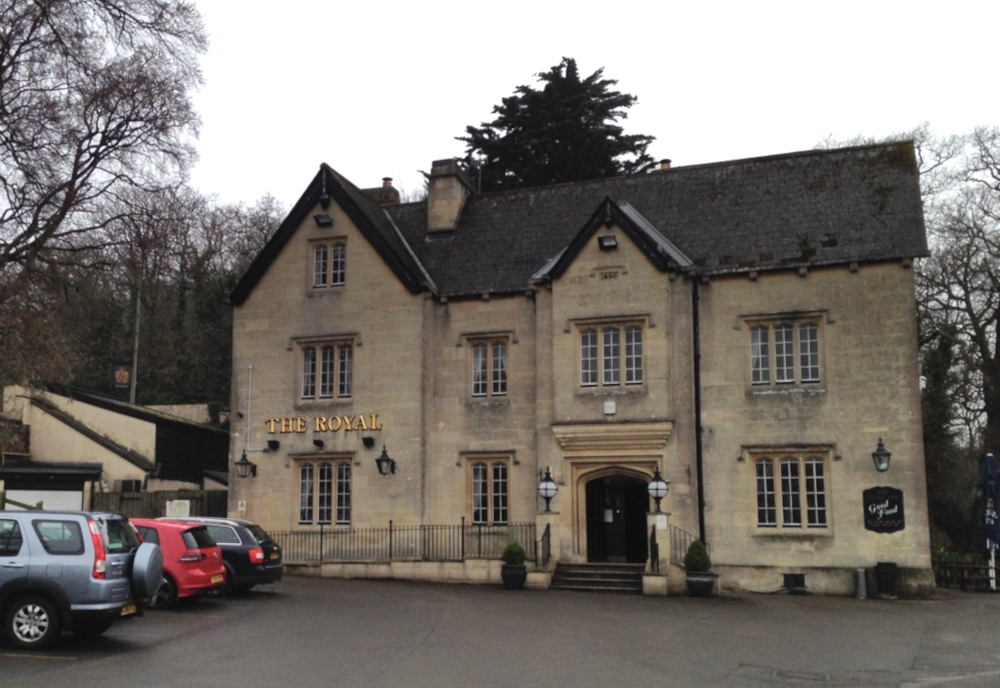
Mr Dupen was my great-grandmother’s oldest brother, Sharrock, who had given up the sea to become a hotelier, as I already knew from advertisements for the Royal Hotel, dated September 1870, extolling its “charmingly wooded grounds and excellent accommodation for families, dinner parties &c”. The short item about the death of the family governess was followed in later editions by detailed reports of the inquest, but the more I read, the more contradictory evidence I found.
It was surprising enough that this tragedy should happen to a “very well connected” lady rather than a vulnerable maidservant, but Ada Ashley was also engaged, and according to the unwritten rules of Victorian society, her fiancé should have married her. If, of course, he was the father of the child.
And in a society where a governess had no social life, who else was there to suspect – apart from Mr Sharrock Dupen. I knew from the census data that his next brother, George, had fathered an illegitimate baby on a housemaid, and I speculated that these were men who were not to be trusted around women.
A hidden pregnancy was not completely implausible. Ada Ashley could have concealed her condition with corsets and strategically draped shawls, or she could even have been unaware that she was pregnant. But Mrs Dupen, the mother of the seven children that the governess was employed to teach, stated that she had not had the slightest idea, despite the family doctor testifying that he had earlier “told Mrs Dupen of his belief as to Miss Ashley’s condition”.
_-_Richard_Redgrave.jpg)
He estimated that the baby was born about two o’clock on Saturday, yet Mrs Dupen claimed that when she took a bowl of soup to Miss Ashley that day, “She did not observe any unusual indications in the room which would lead to suspicions.” After the doctor arrived on Sunday morning, he was told “there was no child”, but when he searched the room he discovered the baby in a locked trunk full of clothes. The key was on a key-ring held by a maidservant, Ellen Fugill.
I consulted historian Dr Sophie Michell, a specialist in 19th-century inquests, and we agreed that the facts as reported did not make sense. It was a cover up.
More untruths were to follow. I looked for Ada Ashley in all the usual genealogical records, and no matter how often I queried my own arithmetic, she was born in 1839 and was therefore 10 years older than the age given in the newspaper.
In 1861 the census gave her age correctly as 21, but ten years later I found her, aged 25, employed as a governess in Cardiff. By the time she arrived in Portishead in 1872, she must have taken another couple of years off. I couldn’t understand why, since older governesses were generally preferred, being seen as less likely to attract the men of the household.
_-_Bristol_Harbour_-_K467_-_Bristol_City_Museum_%5E_Art_Gallery.jpg)
The life history of Mrs Julia Dupen turned out to be almost equally unreliable. Her father was from the minor Anglo-Irish aristocracy, the brother of General Sir John Lysaght Pennefather, who ended his distinguished military career as Governor of the Royal Hospital, Chelsea, and her mother belonged to a landowning family in Gloucestershire, where Julia lived with her uncle after her parents’ death.
However, she did not get married in her home parish but by special licence in Reading, 70 miles away. The ceremony, in October 1859, was witnessed only by an uncle by marriage.
Sharrock Dupen was at that time, like his father, serving as a ship’s steward on a passenger steamer based in Bristol, but on the marriage certificate he declared his profession to be ‘gentleman’, a manifest untruth. The marriage had the appearance of a hurried, hole-in-corner affair and I wondered if perhaps Julia too had fallen pregnant, but further counting on fingers told me her son was born a respectable nine months after the wedding.
However, like Ada Ashley, Julia was less than truthful about her age. In the census of 1861, she is recorded as being 28, although she was in fact 35 and eight years older than her husband. I was beginning to wonder if anyone in this story was being entirely honest. Then I discovered a newspaper article about another death in the Dupen household, in 1868. But I won’t go into details here for fear of spoilers.
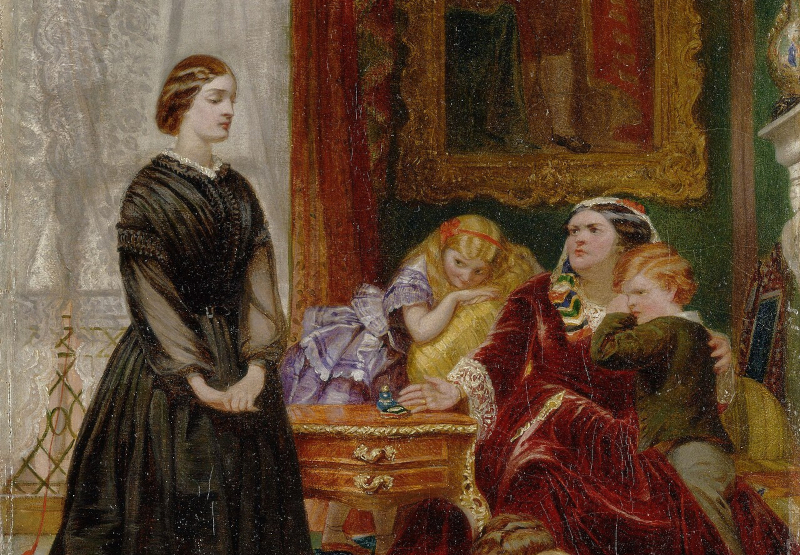
This was a story that could be told as a nonfiction investigation, like Kate Summerscale’s The Suspicions of Mr Whicher, but I was keen to explore the inner lives of the women involved: the governess with years missing from her past, the mother who insisted that her husband “did not know a word about the matter and he was away from home at the time”, and the maidservant, who had hidden the baby in the trunk.
In the end I decided to try writing a novel. I’m still not entirely sure about the ethics of my decision: these were, after all, real lives that I was reimagining. But I wanted to show how all three women were trapped by a toxic combination of Victorian convention and their own emotions.
The choices they made proved fatal, but I found myself unable to condemn them, and to anyone following the news about Jeffrey Epstein and his cronies, it is a story that still resonates today. A Fatal Choice is dedicated to Ada Ashley and all those women who through the ages have suffered at the hands of men.
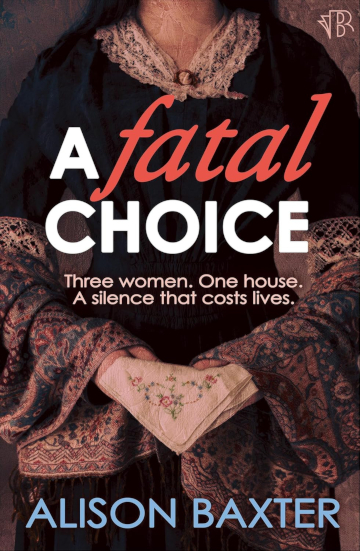
A Fatal Choice by Alison Baxter is published on 10 June, 2026.
Read more about this book.
Dr Alison Baxter, FRHistS, is a writer and historian with a particular interest in the lives of ordinary people. After a career in publishing and the charity sector, she became a full-time writer and published two nonfiction books before turning to fiction. A Fatal Choice is her first novel.
Substack: Writing Family History
Instagram
Facebook
You may be interested in these related features:
The ‘ordinary’ Victorian murderess by Lesley McDowell
A Guide to Victorian Sex by William Sutton
The stigma of illegitimacy: forced adoption by Mary Chamberlain
Nanny state: why the golden era of Edwardian childhood is ripe for fiction and
Tokens of love: the moving objects left by mothers at the Foundling Hospital by Stacey Halls
Top six Turns of the Screw by Kate Griffin
And on writing family history: Family memories of Italy in World War Two by Cristina Loggia
Some reasons why history gets lost by VB Grey
Images:
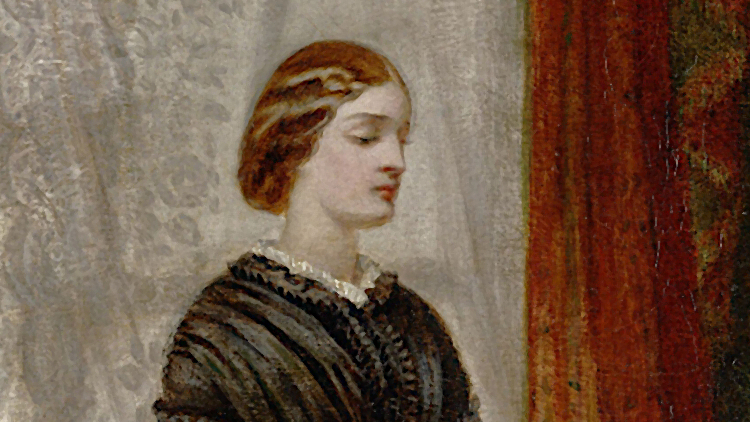
- The Governess by Emily Mary Osborn, 1860: Yale Center for British Art, Paul Mellon Fund (public domain)
- The Royal Hotel, now the Royal Inn, Portishead: author’s own
- The Outcast by Richard Redgrave, 1851: Royal Academy of Arts via Wikimedia (public domain)
- Bristol Harbour by Joseph Walter, 1837: Bristol City Museum and Art Gallery via Wikimedia (public domain)
- See 1


