
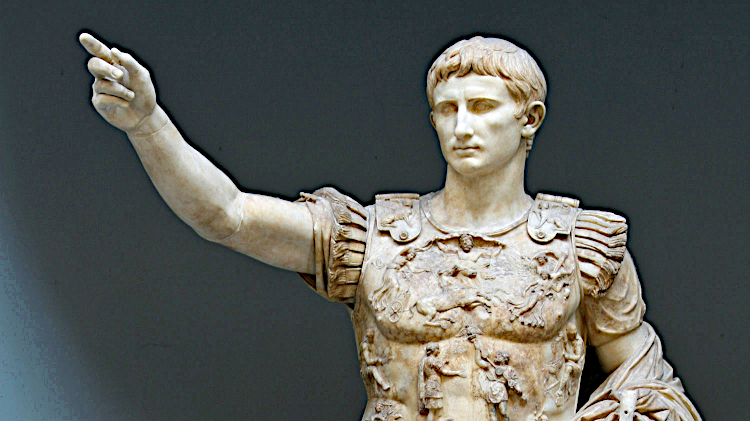
Exile was a very Roman punishment, Fiona Forsyth says. But under Augustus it got personal. Fiona looks at the fate of the lost Romans who lived — and often died — in exile, including members of the Emperor’s own family, and the poet Ovid, subject of her latest novels.
When Rome’s first emperor died, there was a small group of people especially interested in the consequences: those the late Augustus had exiled. Was there any hope that under the new regime of Tiberius, the Emperor’s stepson, their sentences could be revoked?
Exile was a very Roman punishment. In the Republic, a defendant on a capital charge could choose to go into exile if the verdict went the wrong way.
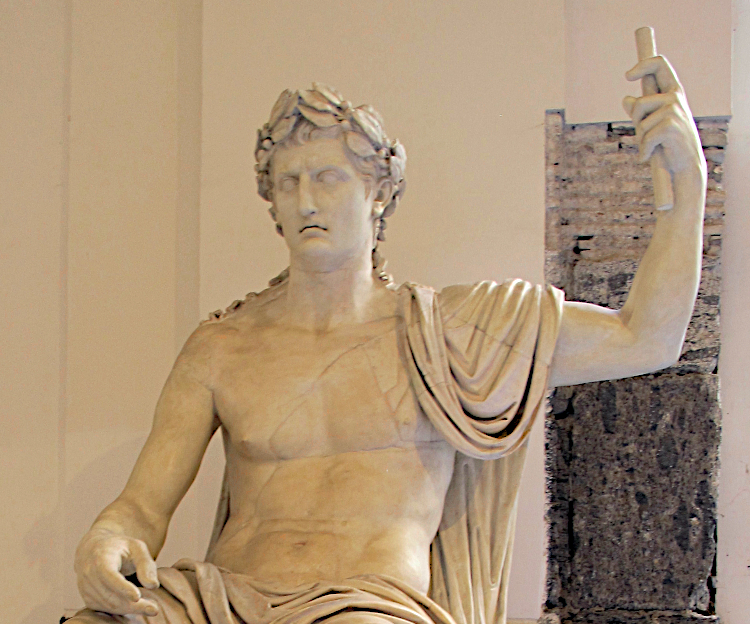
Famously the governor of Sicily, Gaius Verres, left Rome before his defence lawyer could speak, while later, Cicero, the lawyer and politician responsible for Verres’ downfall, took himself off into exile when he saw that his enemy Clodius was likely to push through legislation that would be Cicero’s ruin.
The first emperor, Augustus, began to use exile in a far more personal way.
When he found out about the scandalous lifestyle of his daughter Julia, he sent her to live on a small island he owned, something he had every right to do as Julia’s paterfamilias (head of the family).
But Julia and her lovers had broken Augustus’ own legislation about marriage, and were suspected of treasonous talk if not activity, and so one lover, Iullus Antonius, was executed (or committed suicide) while others, including Sempronius Gracchus, were exiled.
Ten years later Augustus’ granddaughter, also named Julia, was exiled to the island of Trimerus, and her lover, Silanus, was more informally sent to live in Athens.

Augustus also dispatched his grandson Postumus Agrippa to live under guard on the island of Planasia, and the poet Ovid was forced to live far from Rome in the town of Tomis on the shores of the Black Sea.
In the latter case, the poet makes it clear that it was Augustus himself who summoned him for a very unpleasant interview, and no Senate or lawcourt was involved.
Augustus died in August, AD14; by the end of the year, three of those exiles were dead. First Postumus Agrippa was executed in exile, then Sempronius Gracchus: Julia the Elder, according to the historian Tacitus, wasted away in despair, while Tiberius hoped her death went unnoticed.
For the poet Ovid, the furthest flung of this group of exiles, it must have made for a dispiriting autumn and winter as the news of these deaths filtered through. He might however have hoped for clemency from the new leader still, for he was not a member of the upper classes, he wasn’t related to Tiberius or Augustus, he (probably) hadn’t been the lover of anyone important.

A quick comparison between Ovid and the man who succeeded Augustus shows that they had a lot in common.
Tiberius and Ovid were born 18 months apart (Ovid in March 43 and Tiberius in November 42BC); they were children when Augustus fought Antony and Cleopatra at Actium, teenagers when he took his new and unprecedented powers in 27BC. They were highly educated and both wrote poetry. Surely Tiberius would have looked kindly on Ovid?
As it turned out, Tiberius was rarely inclined towards pardon for those exiled by his predecessor and Ovid was never forgiven. The only exile to return was Silanus, lover of the younger Julia. His brother was made consul in AD15 and took the opportunity to petition Tiberius, and the new Emperor relented.
Why Silanus was so favoured is anybody’s guess, but if we are feeling brutally cynical, he can’t have been particularly important. Augustus’ granddaughter Julia died unforgiven on the little island of Trimerus many years later in AD29; we don’t know if there were any suspicious circumstances to her death.
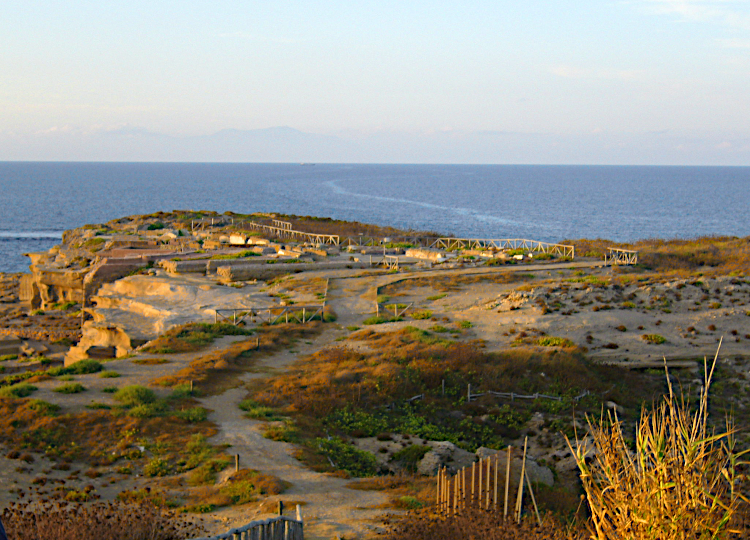
A great deal of sympathy has always gone out to Julia the Elder, Augustus’ daughter. An immensely popular lady, she had been exiled in 2BC in the fallout of a huge scandal that claimed she even cavorted with her lovers in the middle of the Forum itself, making a mockery of Augustus’ moral legislation.
She remained popular – there were attempts by the ordinary people of Rome to persuade Augustus to pardon her and by AD4 he had relented just a little, moving her from a strict imprisonment on the island of Pandateria to a more relaxed regime in the town of Regium, the modern town of Reggio Calabria on the ‘toe’ of Italy.
Her mother, Scribonia, accompanied her in all stages of her daughter’s disgrace and was admired for doing so.
But after Augustus’ death Julia was in the power of a man who had once been unhappily married to her, and Tiberius decided to clamp down on his ex-wife. The terms of Julia’s imprisonment were tightened up, and she was no longer allowed to walk around the town or have any visitors.
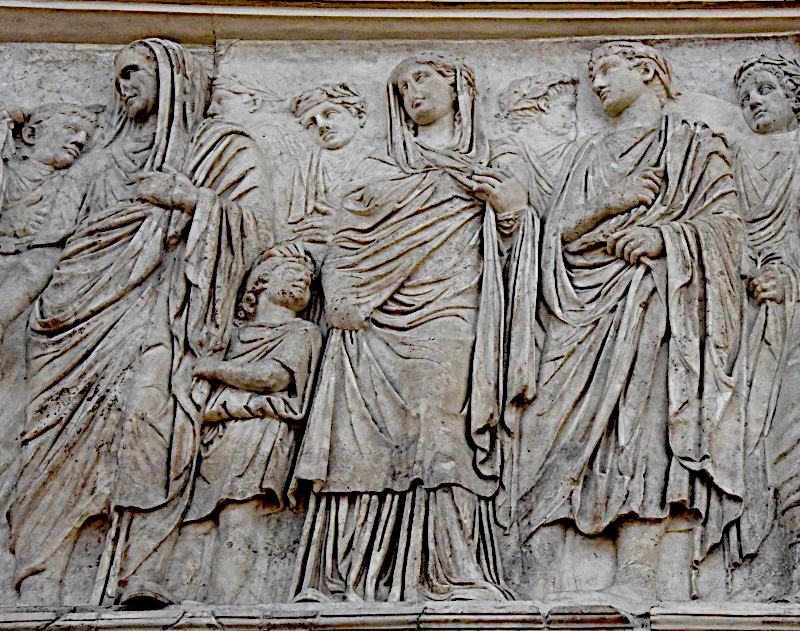
The sources hint that Tiberius was involved in her death, possibly starving her, though the hostility of historians such as Tacitus towards Tiberius make it difficult to draw any firm conclusion. Her ashes, according to the terms of Augustus’ will, could not be laid in the family’s Mausoleum in Rome.
In later years, disgraced members of the Imperial family were rehabilitated – Caligula made sure his mother and brothers were interred in the Mausoleum for example. But not Julia.
At some point after AD42, long after Tiberius’ death, a freedman called Celos put up an inscription in the town of Regium following the instructions of his deceased father, Thiasos. In the inscription, Celos states that he and his father were both freedmen – ex-slaves – of Julia, daughter of the deified emperor Augustus.
The inference – or maybe I am just an optimist – is that he and his father served Julia while she was in exile. Her ashes may not have made it to her family’s Mausoleum, but Julia’s household staff could at least declare their relationship to her, and the location of the inscription gives us hope that she had faithful servants as well as her mother with her when she died.
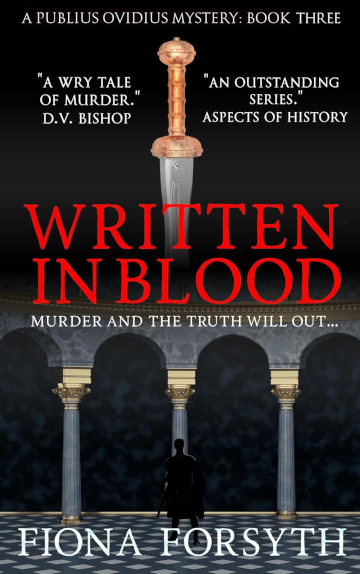
Written in Blood by Fiona Forsyth was published as an ebook on 13 February and in paperback on 18 February, 2026. It’s the third in her Publius Ovidius Mysteries.
Find out more about this book.
After reading Classics at Oxford, Fiona taught at a boys’ public school for 25 years. She is extremely proud of the fact that one of her ex-pupils is now in Bridgerton.
Further reading:
My main sources for this article were the accounts in Suetonius’ Lives of the Caesars and Tacitus’ Annals, book 1
For the inscription from Regium, I recommend Julia in Regium by J. Linderski, Zeitschrift für Papyrologie und Epigraphik, Bd. 72 (1988), pp 181–200, available through JSTOR
Lindsay Powell has just published an excellent biography of Rome’s second Emperor – Tiberius: from Masterly Commander to Masterful Emperor of Rome
While Robert Graves’s I, Claudius is fiction, it is still a riveting account of the imagined relations between the members of Rome’s early Imperial family. The BBC TV series is also great fun, with touches of gruesomeness
Discover more about Ovid — and Fiona’s novels set during his exile — in her Historia feature, Ovid the policeman.
You may also enjoy Fiona’s interview with Eleanor Swift-Hook.
Other related Historia features include:
Tiberius: 2,000 years of slander by Lindsay Powell
How (not) to become a Roman Emperor, Sex in Ancient Rome and Gladiator sweat and leech hair dye; how to survive in Ancient Rome, all by LJ Trafford
Why the Roman Empire grew so big by Harry Sidebottom
Images:
- Augustus of Prima Porta, 1st century AD, detail: Vatican Museums, by Till Niermann for Wikimedia (CC BY-SA 3.0)
- Statue of Augustus from Herculaneum, detail: Museo Archeologico in Naples, by Sailko for Wikimedia (CC BY-SA 3.0)
- Ancient Italy — Ovid Banished from Rome by JMW Turner, 1838: Charles Sedelmeyer collection via Wikimedia (public domain)
- The Lansdowne Tiberius, AD 14–37: J Paul Getty Museum via Wikimedia (CC0 1.0)
- Villa Giulia on Ventotene (Pandateria) where Julia was exiled: Marilena for Flickr (CC BY 2.0)
- South side of the Ara Pacis Augustae, Rome, showing members of the Imperial family; the woman in the middle may be Julia the Elder: supplied by the author


