
How did the daughters of Plantagenet Kings of England deal with the tumults of the late Middle Ages? Sharon Bennett Connolly, historian and author, explains how they responded to the challenges of plague, rebellion, war — and marriage into other royal dynasties.
Until writing Princesses of the Later Middle Ages: Royal Daughters of the Plantagenets, I had not realised how much upheaval had hit England in a relatively short space of time; rebellion, the Black Death, the deposition of kings, with the Wars of the Roses rounding it off. And royal women were just as affected by these events as their fathers, brothers and sons.
I loved looking deeper into their stories.
Rebellion

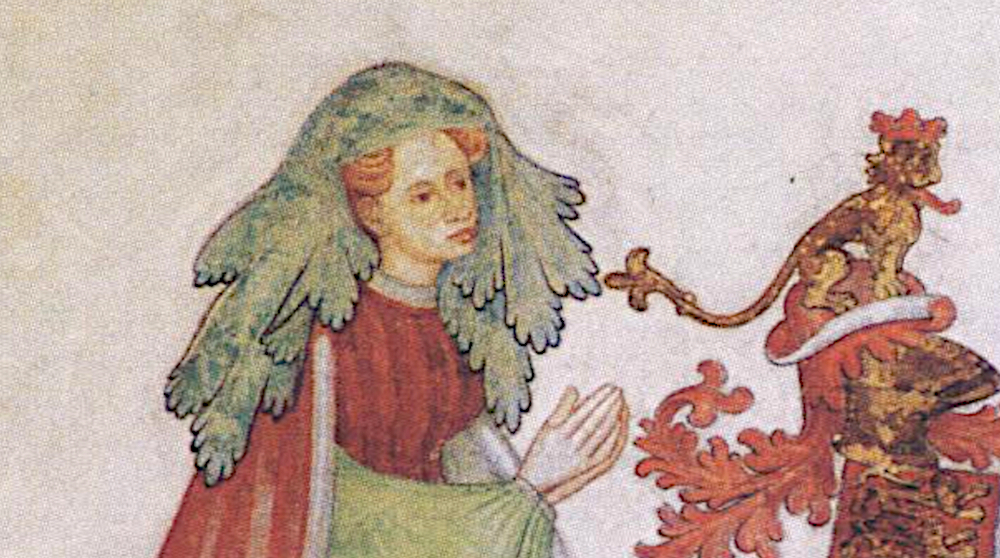
Princesses of the Later Middle Ages opens with the reign of Henry III. A rather tumultuous period in English history, it was dominated by the Second Barons’ War, the rebellion led by Simon de Montfort. With the marriage of Henry’s eldest daughter, Margaret, to Alexander III, it also heralded an unprecedented period of peace and cooperation between England and Scotland.
Henry III and Eleanor of Provence had three daughters; all were cherished and close to their parents their whole lives. Margaret, who had initially been unhappy in Scotland, surrounded by strangers, visited her parents as often as she could and gave birth to her first child, a daughter also named Margaret, at Windsor Castle during one such visit.
Queen Margaret was safely in Scotland at the time Simon de Montfort dragged England into civil war, but that did not stop her worrying about her parents and family. She even sent an abbot to England to meet with her brother, Edward, while he was being held captive by de Montfort. Though Simon remained in the room as Abbot Oliver and Edward talked, one cannot help wondering if the venerable churchman managed to pass secret messages of encouragement from his queen to her brother?
The Black Death
In the 1340s a devastating plague swept through Europe, striking down rich and poor alike. And the English royal family was not immune to its ravages. As Edward III was celebrating his victories against the French, with great shows of pomp and pageantry, Europe was being gripped by this terrible disease.

The Black Death was inexorably making its way across the Continent. Despite the reports, Edward had decided to keep the ports open. Trade was the lifeblood of England and ships were needed to maintain communication with the king’s continental possessions. And in the midst of the disease spreading across mainland Europe, King Edward was preparing to send his daughter, Joan, to Spain, for her wedding to Pedro, the heir to Castile.
As a parting gift, when she was about to embark on the sea voyage that would take her to her new husband, the king gave Joan a brooch of rubies, diamonds, emeralds and pearls. Noblemen, churchmen, 130 archers and 40 ships accompanied Joan on her journey. Sadly, she was never to reach her new homeland, nor meet her husband. Having left England, her ship broke its journey in Gascony, at Bordeaux.
The Black Death was at its height in the city and Baron Bourchier was the royal party’s first victim. The 14-year-old princess was taken to Lormont, outside of the city, but succumbed to the disease on 2 September 1348. Remembered as ‘beautiful in body, and abundant in moral virtues and grace’, she was buried in Bordeaux Cathedral.
The deposition of kings
The 14th century saw the deposition of two kings of England, Edward II in 1327 and Richard II in 1399. Henry of Bolingbroke’s seizure of the throne in 1399 created two new princesses of England, Blanche and Philippa. Their mother, Mary de Bohun, had died giving birth to Philippa in 1394 and, in 1398, their father had been sent into exile; only to return the following year and force Richard II’s abdication.

Their father’s accession as Henry IV saw the two girls’ marriage prospects improve dramatically. As the daughters of a duke, they would have expected to marry a rich heir to English lands. As the daughters of a king, they were now bargaining chips in international relations.
Marriage would see Philippa become queen of Denmark, Norway and Sweden, while Blanche would travel to Germany to become Countess Palatine, taking with her a magnificent, jewel-encrusted crown that has survived to this day. Blanche fulfilled her duties by producing a son and heir, in what appears to have been a happy and loving marriage.
Philippa never realised the joy of motherhood but ably attended to her duties as queen in other ways, as a protector and patron of her people, even leading the defence of Copenhagen, and a trusted consort and regent for her husband, King Eric.
The Wars of the Roses
As a usurpation can make princesses, so Richard III’s seizure of the throne unmade princesses. The daughters of Edward IV went from being the pampered darlings of England, with glittering futures ahead of them, to the bastardised daughters of a bigamous dead king. What a change in fortunes!
As events unfolded in the summer of 1483, and the two princes were held in the Tower of London, gradually seen less and less within the precincts of the fortress, until they were no longer seen at all, Elizabeth of York and her sisters remained in sanctuary with their mother. A focus for political disaffection and an embarrassment to the new regime, it was a situation that Richard III could not allow to continue.

Rumours abounded that ‘”some of the king’s daughters should leave Westminster, and go in disguise to the parts beyond sea; in order that, if any fatal mishap should befall the said male children of the late king in the Tower, the kingdom might still, in consequence of the safety of the daughters, someday fall again into the hands of the right heirs”.
Richard eventually decided to open negotiations with Elizabeth Woodville to persuade her to allow her daughters to leave sanctuary. Agreement was reached in March 1484, whereby Elizabeth of York and her sisters would be treated as befitted the king’s kinswomen.
After almost a year within the confines of Westminster Abbey, the daughters of Edward IV emerged from their sanctuary and were given lodgings at court. They had lost the prospect of dazzling futures as queens and duchesses and their status was now forever tainted by the questions over their legitimacy.
The experiences of the royal daughters throughout the latter part of the of the medieval era are disparate, not just in their futures but even in their family lives as they were growing up. Not all princesses were made in the same mould and each one found her own way to deal with her life and the cards that she was dealt. Events in England would surely have taught them to weather the storms of married life – and international relations.
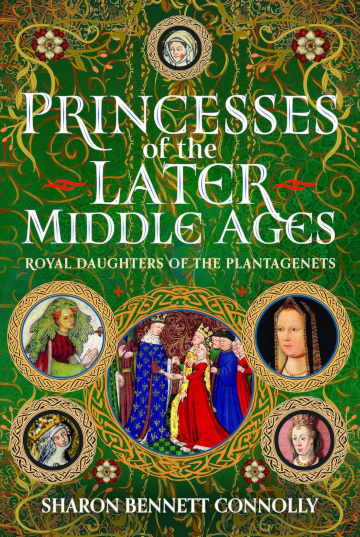
Princesses of the Later Middle Ages: Royal Daughters of the Plantagenets by Sharon Bennett Connolly is published on 30 August, 2026.
Sharon is a Fellow of the Royal Historical Society and best-selling author of eight historical non-fiction books. As well as writing her popular history blog, Sharon co-hosts the podcast A Slice of Medieval with historical novelist Derek Birks. Sharon’s a feature writer for All About History, Tudor Places and Living Medieval magazines and her radio and TV work includes the BBC’s and Australian Who Do You Think You Are?
Facebook
Twitter/X
BlueSky
Instagram
You may be interested in other features Sharon’s written for Historia:
Inspired by Scotland’s medieval queens
The Anarchy: a true cousins’ war
At the heart of English history: the Warenne Earls of Surrey
Magna Carta’s inspirational women
The many marriages of Bess of Hardwick
Read more related features:
The personal and the political in the Middle Ages and
Joanna Plantagenet, the lionhearted woman, both by Catherine Hanley
To have and to hold: pawns in the medieval marriage game by Anne O’Brien
Female networks of power in the Middle Ages by JF Andrews
The enduring mystery of the Princes in the Tower by Ethan Bale
A Plague on your Business, a short story by Michael Jecks, set during the Black Death
Images:
- Blanche of England, Neustadt an der Weinstraße, Germany, 1430: Wikimedia (public domain)
- Margaret, Queen of Scotland, from the Genealogical roll of the Kings of England, BL Royal 14 B V: Wikimedia (public domain)
- Joan of England, tomb of Edward III, Westminster Abbey (cropped): Oren Rozen for Wikimedia (CC BY-SA 4.0)
- Crown of Princess Blanche, Schatzkammer der Münchner Residenz (cropped): DALIBRI for Wikimedia (CC BY-SA 3.0)
- The five daughters of Edward IV and Elizabeth Woodville, (L–R) Elizabeth, Cecily, Anne, Catherine, and Mary, Royal Window, north-west transept, Canterbury Cathedral: Wikimedia (public domain)


