

Mary Chamberlain writes about the Partisan Coffee House, the socialist cafe which, in its four-year existence, became a creative centre which transformed the political, intellectual and cultural scene in the 1960s.
At a time when espresso bars were the rage, and a new, young clientele had cash to spare, the Partisan Coffee House opened its doors in 7 Carlisle Street, Soho, London in autumn 1958. It was to be a new kind of cafe, a socialist cafe, a refuge against the commercialisation and politics of post-war Britain.
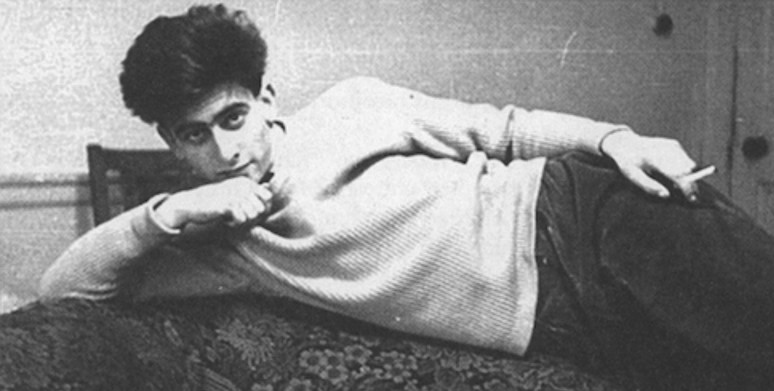
The Partisan was the brain child of my dear friend, the late Raphael Samuel. Recently graduated from Oxford, he had been one of the co-founders of the Universities and Left Review, along with Stuart Hall, Gabriel Pearson and Charles Taylor, started in the wake of the Soviet invasion of Hungary in 1956 which had devastated and disillusioned many on the Left.
It was designed to fill, as the editorial in the first issue of ULR put it, “the arid waste… between the high citadel of Stalinist Russia and the ‘welfare state'”, to offer a space where post-war and post-Suez Britain could re-think socialism in its widest sense, embracing art and popular culture along the way.

The journal’s success spawned Left Review Clubs attracting audiences in their hundreds, and inspired Raphael to conceive of the idea of the coffee house which could generate an income for the ULR and serve as a London meeting place. Its name – the Partisan – was a nod towards to the anti-fascist resistance of the 1930s and 1940s, its dream to emerge as London’s answer to Flore or Deux Magots in Paris as a melting pot of socialist and progressive ideas and intellectual experimentation.
Raphael was energetic and charismatic, a tornado of creative energy and persuasiveness and, though he had no commercial experience, he raised sufficient money to purchase, and refurbish, the four-storey building. The ground floor became the coffee bar, decorated in slick, modernist style with hand-crafted tubular chairs and adorned with original, figurative art.
The basement was given over to chess players and to drama and music – skiffle, jazz, blues. Long John Baldry cut his teeth there, Bob Dylan was reputed to have played there. The first English debut of Brecht’s The Ginger Jar was staged there and Beat poets like Michael Horovitz performed. The first floor housed a library and meeting room, the top floor the offices of the ULR.
The Partisan, self-consciously an ‘anti-coffee bar’, boasted no Gaggia machine, but a humble coffee filter which, by all accounts, made the worst coffee in London. It also offered an eccentric menu – exotic, cosmopolitan fare for a generation brought up on rationing and an unimaginative British diet. Inedible, it was nevertheless, “cheap grub”, as Richard Rathbone recalled, and “much appreciated”.
Another regular, Nigel Young, remembers that it was always packed, mostly with students, would-be students, or worker-intellectuals; more men than women perhaps, but a welcome haven for gays and the occasional colonial student. It was, as he recalled, a great leveller, everyone united by the same moral and intellectual concerns. Lively, crowded and noisy; there were often no seats except on the floor, or “bunched together on uncomfortable benches, with bad coffee. What we left radicals put up with in the cause of revolution…”
It was the sort of place, Young suggested, where you took off your duffel coat and immersed yourself in informal and boisterous discussions. A single cup of coffee could last the whole day. “Chat in the Partisan built a bibliography for me much of which I still possess,” as Rathbone recalled. Many took the opportunity to sleep, in a chair, under a bench.
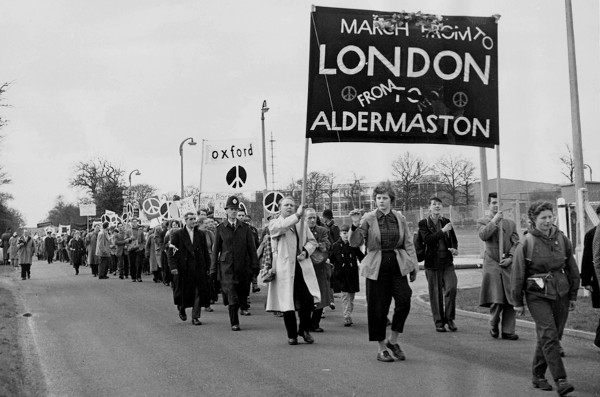
Upstairs in the library there were debates and talks. The first Aldermarston march was planned there, the Committee of 100 reputedly named there. Indeed, from its inception, the ULR had been associated with pacifism and nuclear disarmament, and the Partisan offered a welcome home to CND activists.
Its list of speakers is a catalogue of left wing luminaries such as the novelist Doris Lessing, the playwright Christopher Logue or the critic Ken Tynan, the historians EP Thompson or Eric Hobsbawm, cultural theories such as Stuart Hall or John Berger, politicians such as Richard Crossman or Barbara Castle, trade unionists and activists such as Lawrence Daly or Eric Heffer and, famously, Isaac Deutscher – to name but a very few.
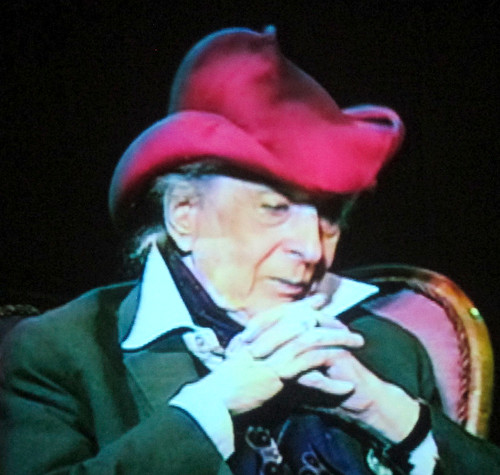
The Free Cinema documentary movement was nurtured there with the legendary directors Karel Reisz and Lindsay Anderson, arts and design were represented not only in the paintings adorning the coffee bar, but on the covers of the ULR, designed by the young Italian Germano Facetti (who became the art director of Penguin), or typeset by the renowned typographer, Desmond Jeffery. There was an artists’ group, and a photographers’ group, seemingly no end to the creativity, catching the attention of the Observer, even Vogue, and Panorama. And, inevitably, Special Branch, who lingered along with the rest of them, ears pinned back, playing chess in the basement, alongside, or possibly with, Quentin Crisp, another regular.
Raphael, who was to emerge as one of the key figures in the ‘history from below’ revolution of the 1960s, a founder of History Workshop (the name borrowed from Joan Littlewood’s Theatre Workshop in Stratford) and an intellectual entrepreneur (though I’m not sure he’d relish that description) was no businessman.
The high turnover of the commercial coffee houses ensured a steady profit. Turnover at the Partisan was low. No one was turned away. All were encouraged to linger, to talk all day, imbibing the atmosphere of vibrant socialist repartee and smoke filled air. The Partisan’s open door policy attracted undoubtedly rough sleepers who took advantage of the warmth and hospitality.
For all its concern for high design, there was little attention to cleaning up or clearing away. The place was often grubby, the staffing slovenly and the organisation chaotic. The Partisan never made a profit. Its business plan, if there ever was one, was flawed. In 1962 it folded, the building sold, the debts paid off.
Yet the Partisan Coffee House had become an influential creative hub, of new wave films and literature, of radical history and politics, of poetry and art criticism, which transformed the political, intellectual and cultural topography of the 1960s and beyond.
It was an extraordinary, irresistible venue – and has a guest appearance in my new novel, The Forgotten, a living backdrop to the post-war Cold War world of my two protagonists, John and Betty, passionate about nuclear disarmament, who engage, though in different ways, with its unique atmosphere.
With thanks to Nigel Young and Richard Rathbone for their memories, to Mike Berlin, The Partisan, Four Corners, 2017 and Nicholas Faith, ‘The Partisan Coffee House,’ London Review of Books, 31 May 2017.

The Forgotten by Mary Chamberlain is published on 2 September, 2021.
See more about Mary’s latest novel. Or read Sarah Day’s review of The Forgotten, which she finds “a compelling mystery, full of twists and puzzles”.
Read Mary’s Memories of Virago. She was the first author to be published by the pioneering woman’s press.
Duncan Barrett has reviewed her previous book, The Hidden.
Images:
The Partisan Coffee House, with Stuart Hall in the middle: Bishopsgate Institute New Left Archive
Detail from the first edition of Universities and Left Review: Barry Amiel & Norman Melburn Trust
Raphael Samuel: Bishopsgate Institute New Left Archive
Aldermaston march, 1959: Carl Guderian at Flickr


