
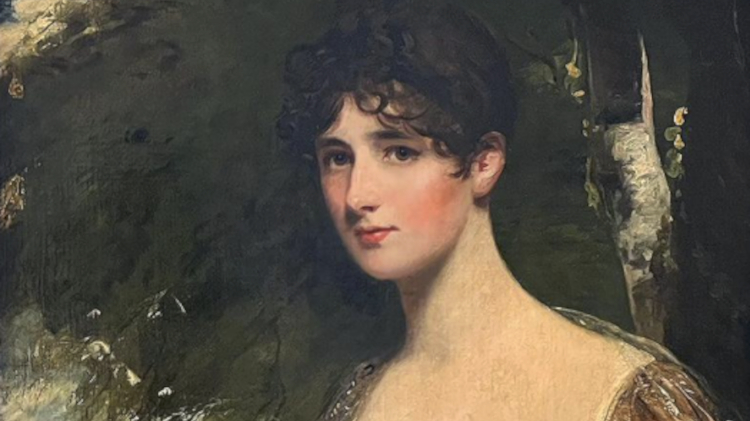
Geraldine Roberts considers her experience of researching her new book, The Rebel and the Peacemaker, and the joys and challenges that go with writing historical non-fiction.
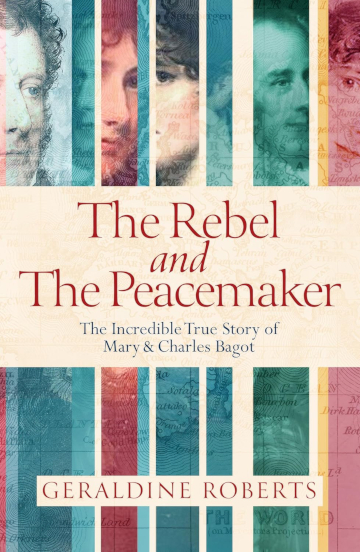
The Rebel and the Peacemaker is about the Regency power couple Mary and Charles Bagot, who were trailblazers on the diplomatic circuit and documented the highs and lows of their public and private lives.
Mary was bold and beautiful, and her status as the Duke of Wellington’s niece gave her real currency as an informal ambassador. Charles was the amiable second son of Baron Bagot, with a burning ambition to do “good in the world”. Together they made an intriguing pair who would forever change the art of diplomacy.
,_by_Francis_William_Wilkin_(1791-1842).jpg)
As an avid reader of historical novels, I am in awe of writers who can create characters and conjure stories that provide an utterly believable window into the past. There is the added freedom as a novelist to splice up timelines, adapt historical figures or craft something fantastical like Matt Haig’s How to Stop Time.
Writing a compelling non-fiction book is a different kind of balancing act. It is grounded in fact, and writers have the responsibility to represent real-world events without colouring outside the lines. This requires tireless research and verification, which was the biggest challenge I faced during the five years I spent researching my latest book.
There was no need for me to invent storylines or engineer meetings with historical figures, because the Bagots really did become intimately acquainted with kings and revolutionaries, politicians and presidents.
I was privileged to be granted access to the Bagot family archive at Levens Hall, Cumbria, where I had a wealth of wonderful material to work with. Charles Bagot’s diplomatic despatches alone could fill an entire room from floor to ceiling.
Historians always face the dilemma of deciding what to include and what to disregard, which was particularly pertinent for me as I sifted through mountains of papers. Early on, I decided to focus my attention on the private correspondence, where the Bagots talk about the issues closest to their hearts.
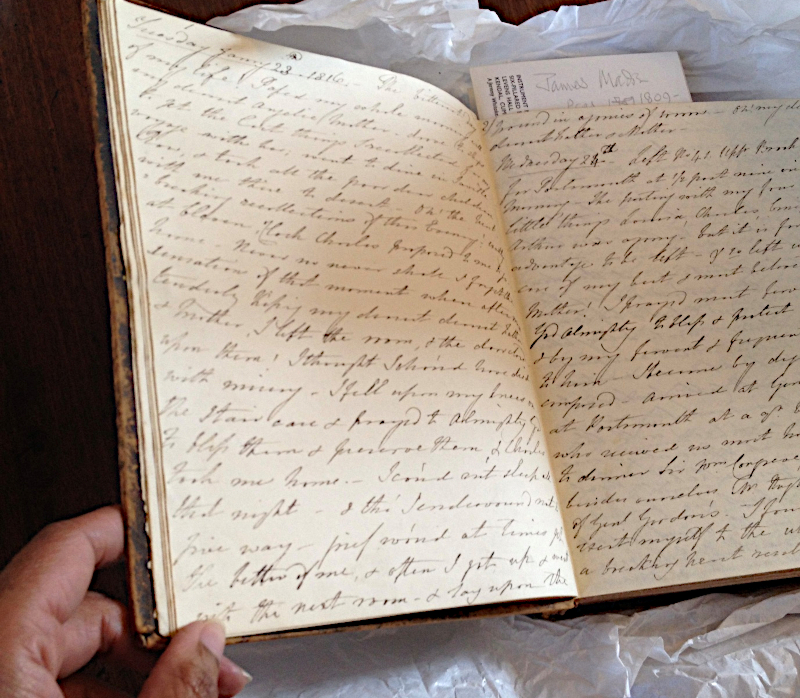
Charles was emotionally astute and poured out his fears and dreams in heartfelt letters to his family that spanned more than 50 years. He chronicled everything from early schooldays to his deathbed, when he wrote to his son: “my dearest lad may God bless, & protect, & guide you through life”.
Mary had a satirical eye and wrote amusing anecdotes about life on the diplomatic circuit, which breathed life and fun into my pages. Mary’s diary from their American mission (1815–1820) constitutes a unique and fascinating record of the new nation emerging from centuries of colonial rule to forge its own identity.
Extensive research is certainly a labour of love, but there is something very exciting about lifting the lid on a box of letters and uncovering remarkable stories from the past. It helped that the Bagots lived in glamorous times of pleasure and intrigue. Besides, the content got really juicy, revealing infidelities, STIs and baby farms.
Another pleasure of writing historical non-fiction is that it is a journey of discovery with unexpected twists and turns. I had a rough narrative arc mapped out from key events, but no idea where my research would take me, or how the story would end. I was guided by the Bagots’ own words.
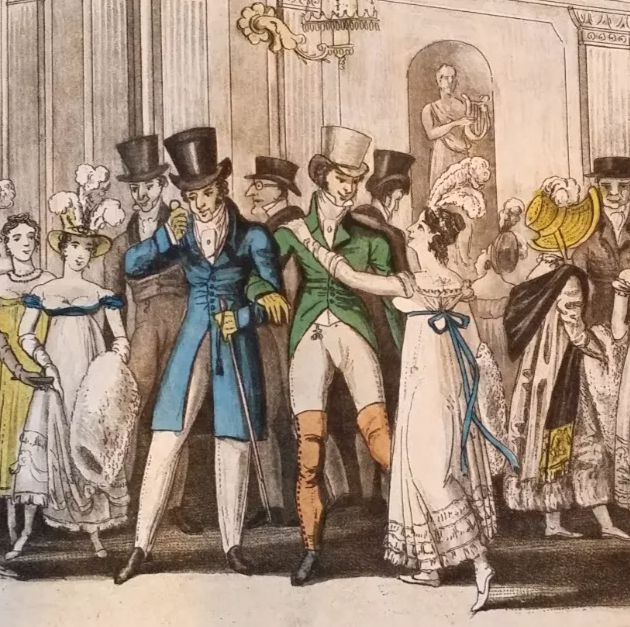
The courtship was familiar territory for me, unfolding like the plot of a Jane Austen novel, revealing Charles was a true romantic, intent on marrying for love rather than status. It wasn’t all glitz and posh parties, though. Beyond the gossip, I feel we can learn lessons from history – and I am drawn to stories with a powerful message.
Researching the American section was like an odyssey, as I uncovered scenarios I could not have dreamt up in my own imaginings. First-hand accounts transported me to the desolate landscape of Washington City and fascinatingly intimate moments with Presidents James Madison and John Quincy Adams.
I began to uncover sombre stories of slavery and slaughter as my research intensified. Two chapters were particularly hard for me to write, leaving me deeply moved – ‘Black Lives’ and ‘Chiefs and Warriors’.
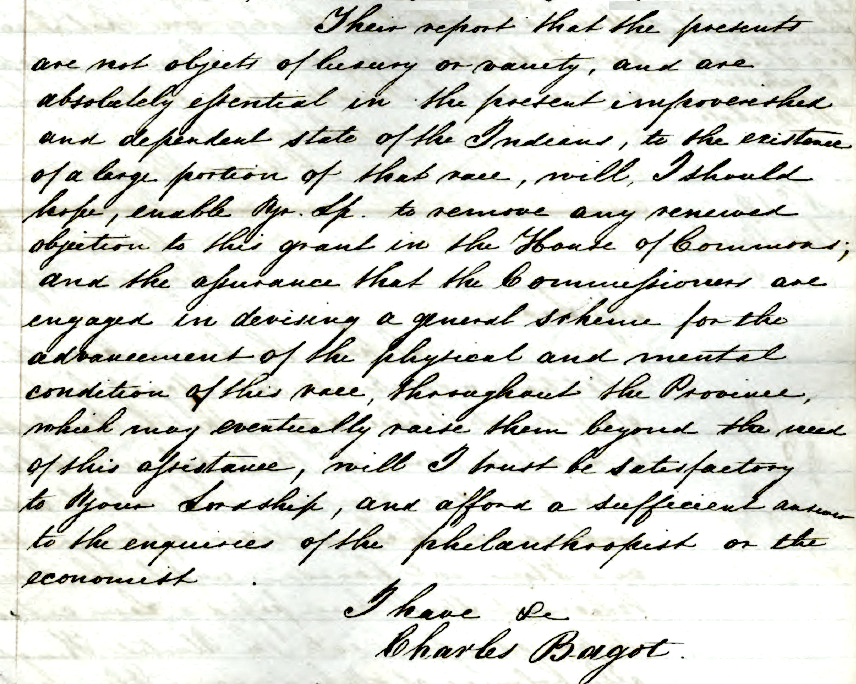
In his capacity as British ambassador, Charles received impassioned pleas from indigenous people being driven from their land and left with no means to survive. Little Corbeau, First War Chief of the Sioux, asked for his help stating “without your assistance we cannot exist long”. Charles was unable to help, and this would haunt him for the rest of his life.
In glittering St Petersburg, my research took on the flavour of a Russian spy-thriller. The Bagots were reluctant to put pen to paper because “the fear of Siberia had a wonderful effect in restraining the tongue”.
Their mission was characterised by espionage and intrigue as the Russians intercepted their diplomatic bag and American secret services infiltrated their home. Charles took delight in all the subterfuge, employing his own secret agents and assuring the Foreign Office “it is my business to find out”.
For the grand finale, the Bagots returned to North America, when 60-year-old Charles was appointed Governor General of Canada. Researching this section was extremely satisfying on many levels, and I was fascinated by how my characters had developed over the course of their lives. Relationships, identity and self-development are key themes of the book, and their letters revealed how they had grown older and found new perspectives.
Charles was no longer the starry-eyed young man who had joined the Foreign Office hoping to do “good in the world”.
Although he had certainly achieved his goal, he had grown much grittier in the process, having witnessed the worst in humanity – slavery, wars, greed, exploitation, starvation and slaughter.
Mary too was changed by the losses she had endured, and the people who had touched her life, altering her in undiscernible ways.
Despite their achievements, Mary and Charles Bagot are largely forgotten today. Non-fiction books are crucial for preserving stories like theirs, about women and men who make ground-breaking changes in the world. This is what inspires me to keep rifling through archives, in the hope that I can uncover another powerful message from the past.
In their own lifetime, Mary and Charles Bagot’s lessons in conciliation were far reaching. I hope that their story will resonate with modern readers, sending out a message of peace into our war-torn world, demonstrating that diplomatic solutions can be found.
The Rebel and the Peacemaker: The Incredible Story of Charles and Mary Bagot by Geraldine Roberts is published on 4 June, 2026.
Read more about this book.
You may also be interested in these related features:
The War of 1812: unexpectedly relevant by Tom Williams
Black Elk, Lakota Sioux holy man, warrior, survivor by Alec Marsh
Cherokee Chieftains at the British Court by Hunter S Jones
The Private Life of a Regency Poppet by Andrew Taylor
Revisiting St Petersburg? by RN Morris
Images:
- Mary Bagot by John Hoppner, 1807: Wikimedia (public domain)
- Portrait of Charles Bagot wearing the Order of the Bath breast star by Francis William Wilkin,1825: Wikimedia (public domain)
- Photograph of Mary Bagot’s diary (author’s collection)
- Real Life in London – Drury Lane Theatre by Tom Dashall, 1821 (author’s collection)
- Photolitograph of Trinity-Izmailovsky Cathedral, St Petersburg, 1835: Wikimedia (public domain)
- Governor General of Canada Charles Bagot to Colonial Secretary Lord Stanley, letter dated 27 January 1843, appealing for aid for indigenous Americans (author’s collection)


