
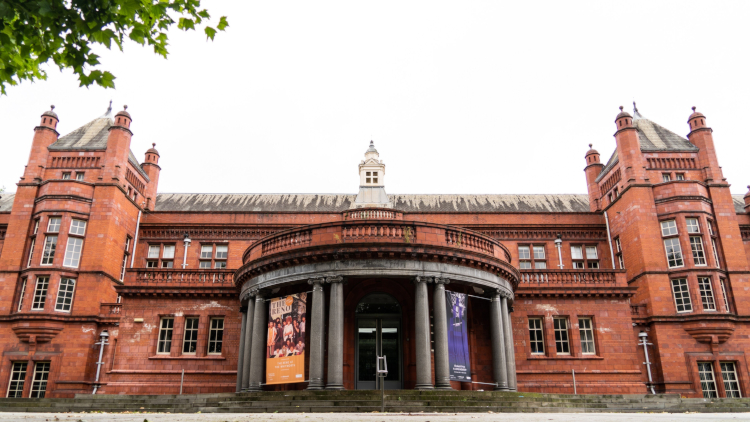
Carolyn O’Brien’s new novel Rose & Renzo is set in 1930s Manchester and is deeply entwined with the radical politics of the time, the backdrop to a passionate coming-of-age story. Carolyn O’Brien talks to fellow novelist Carolyn Kirby about the inspirations for her book.
CK: Rose & Renzo is a wonderful read! Tell us about the story.
CO’B: Thank you! The novel is set in Manchester in 1936, just as Rose Irvine and her much older sister find themselves having to vacate their comfortable suburban vicarage to live and work in Ancoats, the city’s industrial heart.
Here Rose discovers she must fight to achieve her ambitions as an artist, though she soon finds consolation in the vibrant Italian community around her, and especially in Renzo, an enigmatic visitor from Mussolini’s Italy.
CK: I really love Rose. She encapsulates the bold rebelliousness of youth mixed with a self-consciousness that tugs at your heart. Where did the character come from?
CO’B: I knew I wanted to write about art, which has been a central part of my life, particularly through my sister, Stephanie Smith, who has enjoyed a successful career as a visual artist. Even though I took a more conventional route into law, I’ve always admired the single-mindedness with which she’s pursued her art, and been grateful for her example of self-belief and of the freedom to follow an alternative path.
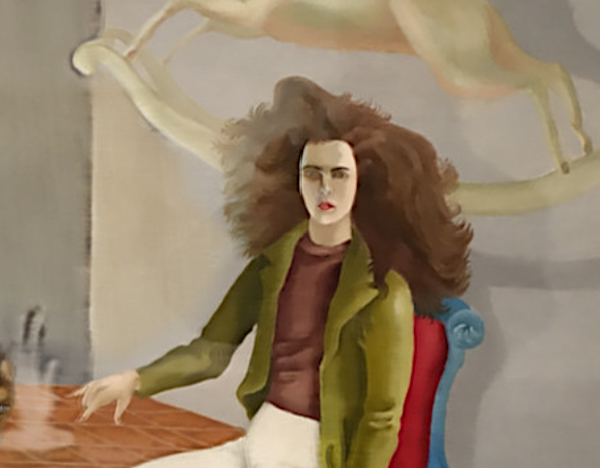
While thinking about a protagonist for my ‘art novel,’ it was Steph and her partner, Eddie Stewart who suggested I look into the life of the Lancashire-born surrealist artist, Leonora Carrington, whose privileged family regarded her as a rebel and a wild child. Expelled from school, she found her calling in the experimental art of the 1930s and enjoyed an intense love affair with Max Ernst who was much older.
After the war, Leonora spent the remainder of her long life in Mexico where she became a celebrated artist and a pioneer of women’s rights. Having read Joanna Moorhead’s brilliant biography, I was so inspired by Leonora’s amazing life that I wanted something of her character to be reflected in Rose.
CK: How did you research the type of artistic life that was open to women in the 1930s?
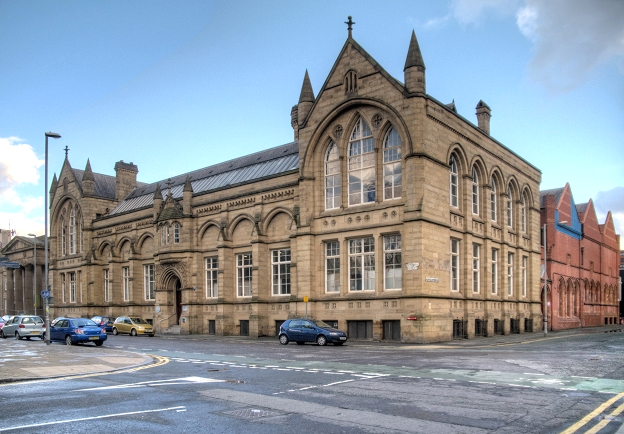
CO’B: As well as reading about Leonora Carrington and her peers, I spent a fascinating day at Manchester Metropolitan University, where the archivist pointed me to some incredibly helpful documents, including the prospectus for the School of Art at the time, together with a wonderful portfolio of work by a female student who later became a tutor at the school. All of which thrust me into the day-to-day reality of art student life in 1930s Manchester.
CK: Politics is another strong theme in Rose & Renzo, in particular the clashes of right and left between Oswald Mosley’s Blackshirts and the Young Communist League. This conflict famously culminated at the Battle of Cable Street in London in 1936, which features in the book. Your first novel, The Song of Peterloo, also has a political struggle at its heart. Is politics something that drives you to write?
CO’B: Yes, I can’t help myself! I find the struggle for freedom, equality and social justice compelling themes for fiction, and draw so much inspiration from Manchester and its history of radical politics. However, in the case of Rose & Renzo, a writing friend, Anita Frank, had challenged me to write a ‘straight-up love story’.

While I didn’t really feel ‘romance’ was my thing, it occurred to me that the ‘Little Italy’ district of Manchester ,with its fascinating immigrant community, could provide a wonderful backdrop. I knew about this side of the city from my mother-in-law, who also wrote fiction, including a novel set in 19th-century Ancoats.
Taking these ideas together – art, radical politics and Italy – I realised that setting the story during the 1930s would allow me to introduce the struggle against fascism, a theme which has become increasingly timely. To me, fascism is the antithesis of artistic freedom, and this ideological conflict intensified the drama, providing a context of intrigue and jeopardy, perfect for the passionate love story I’d committed to write.
CK: I love the way that the characters’ passions about politics heighten their romantic involvement. It’s so evocative of stories about the Spanish Civil War and other political struggles of this era. Tell me about how you found a back story for Renzo in Mussolini’s Italy.
CO’B: The plot is led by Rose’s uncertainty about Renzo’s political allegiances and so I needed to find some real events to anchor his world view. Thankfully, I read Blood and Power by John Foot, an amazingly powerful history of the rise and fall of Italian fascism.

When I sent John Foot a message over social media to let him know how helpful the book had been to me, he very generously replied and was supportive of my ideas for the character of Renzo, and his involvement in an incident at Empoli, near Florence, in 1921. This was an attack by nervous anti-fascists on military conscripts, who they’d mistaken for Mussolini’s brutal squadristi; nine people, most of them very young men, lost their lives.
This event really fired my imagination because it felt so morally messy and highlighted the dilemmas that people face when embroiled in political unrest and civil war. I later visited Empoli when I was editing the book and found no-one locally knew anything about the incident, which has perhaps been seen as too shameful to commemorate.
CK: You evoke Manchester’s industrial past so well in the book that it made me quite nostalgic for the busy, grimy northern towns of my childhood. How did you bring that lost world to life?
CO’B: As a child growing up in a southern suburb of Manchester, we visited my grandparents in Oldham most weekends; I vividly remember driving home through Manchester city centre after dark, all the factories and lights, and catching a glimpse of the newspaper presses working away through the gleaming windows of the fabulous art deco Express building in Ancoats.
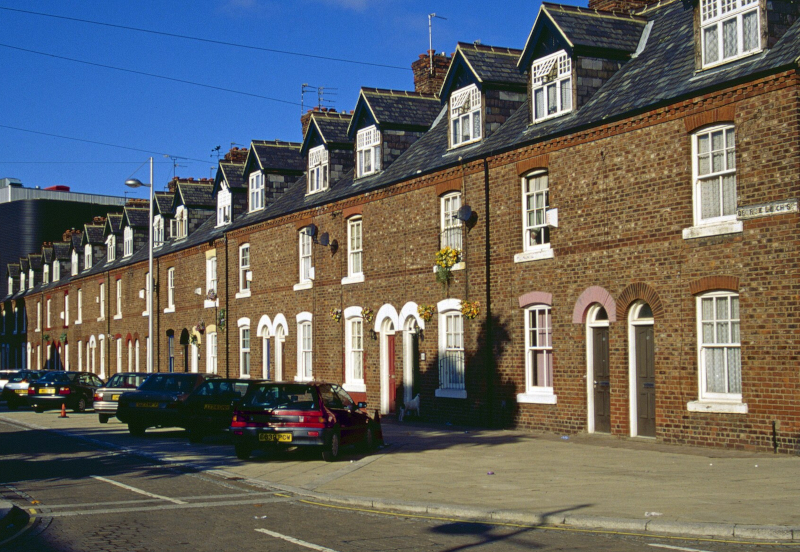
The identity of those areas and the warmth of the working-class communities was so strong, I wanted to recreate that atmosphere in my fiction. The city has always felt like home to me, even more so when I was a student. Coming back from Cambridge, I would experience a wave of homecoming relief as soon as Stockport Viaduct came into view!
CK: I love the details of 1930s life in your novel, like the women on their hands and knees in unison to polish their front steps with a donkey stone. How did you find those details?
CO’B: I read lots from the period – novels like Love on the Dole by Walter Greenwood and The Prime of Miss Jean Brodie by Muriel Spark – as well as delving into the rich resource of Manchester’s libraries and museums.
Manchester City Council’s Archive has a wealth of evocative images of Ancoats through the years, while the Manchester Jewish Museum provided lots of information about German Jewish refugees to the city, and the anti-fascist Young Communist League, whose members engaged in regular skirmishes with the Blackshirts.
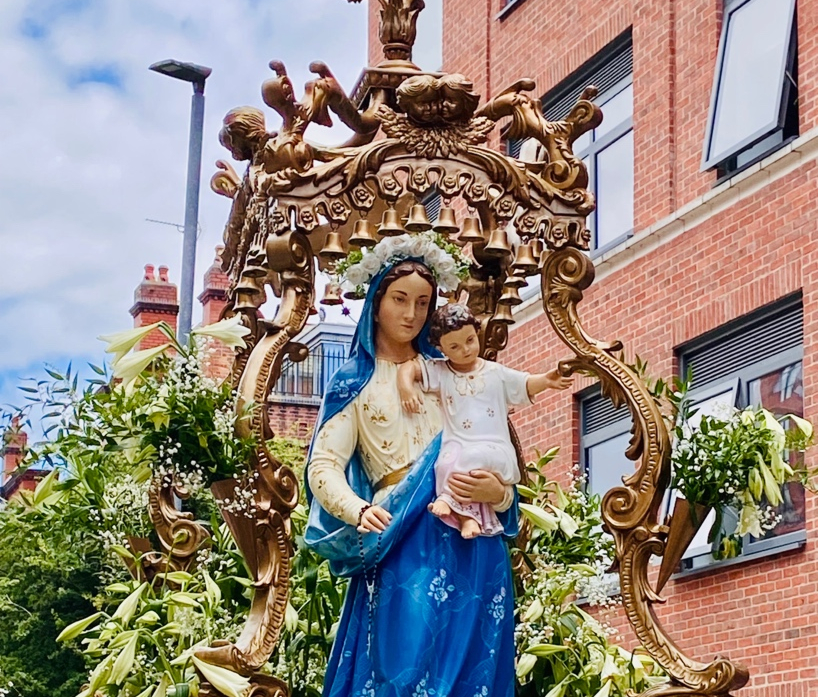
Another fantastic source of information was a website about Manchester’s ‘Little Italy’ created by local Anglo-Italian, Tony Rea. I was lucky enough to meet the man himself at the Madonna del Rosario procession, which features in the novel and still takes place every year.
CK: Did you always aim to write fiction set in the past?
CO’B: No, even though I loved History at school, I started out writing short stories with contemporary settings and themes. My first success was with a short story about a mother and daughter on a city break in Rome, which won the Rome Short Story Competition. Another modern-day story was listed for the Bridport Prize.
These successes gave me the confidence to embark on a novel, though I was still wary of writing historical fiction because of the time involved in research. Even when I decided to write about the Peterloo Massacre, the project began as a short story with three characters who would get caught up in the event. However, it wasn’t long before I realised the subject was too great in scope for anything but a novel.
As soon as I started writing in earnest, I began to hear a broad Lancastrian voice in my ear, just like my grandma’s, and I knew I’d found the right subject! In the end, I found that having a real historical event – the Peterloo Massacre of 1819 – to anchor the story really helped me to adapt my writing to the longer form of a novel.
I learned to embrace historical material and that it’s possible, even preferable, to write and research in parallel. Now I think I find a short story hardest to write!
CK: Thank you so much for your insights, Carolyn. Long or short, I’m keen to read whatever story you write next!
Rose & Renzo by Carolyn O’Brien is published on 14 May, 2026.
Read more about this book.
Carolyn O’Brien was born in Manchester. She read English at Cambridge University before qualifying as a solicitor. Her writing has a strong sense of the north-west of England and its radical past, as illustrated by her first novel, The Song of Peterloo, which was published to coincide with the bicentenary of the Peterloo Massacre. She lives near Manchester with her family.
Find her on Instagram and Twitter/X
Carolyn Kirby has written three novels. The Conviction of Cora Burns was listed for the Crimefest/Specsavers Award and longlisted for the 2019 HWA Debut Crown Award, and When We Fall was chosen by The Times and the Sunday Times as one of the best novels of the year. Her latest novel, Ravenglass, is an 18th-century family mystery and an adventure into identity. She was a judge for the 2025 HWA Gold Crown Award and she also helps to run St Hilda’s Crime Fiction Weekend.
Find her on her website and on Instagram and Twitter/X
Have a look at these related Historia features:
Writing historical fiction to an anniversary: some tips by Carolyn O’Brien, about The Song of Peterloo
The fall and rise of fascism by Catherine Hokin
Family memories of Italy in World War Two by Cristina Loggia
Mussolini meets the World’s Fair by Anika Scott
And some of Carolyn Kirby’s features and interviews:
The invention of masculine fashion
Fifty years of fake news; the cover-up of the Katyn Massacre
‘Paedo Hunter Turns Prey!’ The ironic fate of the father of tabloid journalism
Historia interview: Clare Mulley
Historia interview: AD Bergin
Images:
- Whitworth Art Gallery, Manchester (slightly cropped): City Suites for Flickr (CC BY 2.0)
- Self portrait by Leonora Carrington (cropped): Kathleen Maher for Flickr (CC BY 2.0)
- Manchester School of Art, Grosvenor Building (cropped): David Dixon for Geograph (CC BY-SA 2.0)
- British Union of Fascists rally at Trafalgar Square, January, 1938: Wikimedia (public domain)
- Fontana delle Naiadi, Empoli (an event which took place here in 1921 forms the major part of Renzo’s backstory) (slightly cropped): Walter Maiuri for Wikimedia (CC BY-SA 3.0)
- George Leigh Street, Ancoats (the street in the novel is loosely based on George Leigh Street) (slightly cropped): Stephen McKay for Geograph (CC BY-SA 2.0)
- Photograph of the Madonna del Rosario: supplied by Carolyn O’Brien


