

Laura Shepherd-Robinson’s acclaimed second novel, Daughters of Night, is shortlisted for the 2022 Goldsboro Books Glass Bell Award. To celebrate this, Historia dragged her away from editing her next book to talk about the award and her writing.
Congratulations on being shortlisted! For anyone who hasn’t yet read Daughters of Night, can you sum it up in a sentence?
Georgian London, a murdered prostitute, a sex club, Greek myth, secrets, blackmail, politics, revenge – and a woman who will stop at nothing in pursuit of justice.
The shortlist this year is dominated by historical fiction written by women. What significance would you attach to this?
I think historical fiction is having a bit of a moment. I’m particularly pleased that periods of history that have long been overlooked are getting their time in the sun – obviously I’d include the 18th century in that!

While all the books on the shortlist sit within the historical genre, they are six very different stories, coming at their different periods from different angles – which is a testament to how rich and varied historical fiction can be.
Just as historical non-fiction excluded the experience of women for a long time, so historical fiction excluded their stories. I think we are seeing a resetting of that balance across the board.
My book explores the lives of three very different women in Georgian England: a wealthy society lady, a poor maidservant on the verge of entering a life of prostitution, and a celebrated courtesan.
What these women have in common is that their lives and their choices are shaped by men – and yet each of these women find ways to challenge that authority, often at great personal cost to themselves.
The award “celebrates the best storytelling across contemporary fiction”. What makes a compelling story?
I love the fact that this prize celebrates great stories regardless of genre. The books I love don’t fit easily into categories, although they do have three things in common: great characters, great plots, and beautiful prose. The idea that books have to be either ‘character-led’ or ‘plot-led’ is such nonsense. The best literary fiction has brilliant plots, and the best genre fiction has compelling characters.
I also love a story that teaches me about something, whether it be a place or a time or an issue. And all my favourite stories have a powerful emotional pull. I do love a book that makes me cry.
How did the idea of Daughters of Night come about?
My main character, Caro, was the wife of the protagonist in my first novel, Blood & Sugar. I fell in love with her as a character and decided to give her a book of her own. Caro and her husband, Harry, are in a very difficult 18th-century marriage where much has gone wrong between them.

In Blood & Sugar you saw the marriage from Harry’s perspective, but as we all know, there is more than one side to a broken relationship, and in this book I wanted to redress the balance.
I wanted to write about women’s lives in Georgian England, and the sex trade seemed a natural fit in terms of subject. The differences between Caro and the prostitute whose murder she investigates are outweighed by their shared experiences as women, subject to the oppression of men.
When I discovered that many 18th-century sex clubs used their studies of classical Greece and Rome to justify and intellectualise sex with prostitutes, a lot of the sub-plots flowed from there. I have a love of Ancient Greek myth from when I was a child, and I wove these themes into the book.
A plot that mirrors the events in the Oresteia; a tortured artist who paints society women and prostitutes as Greek goddesses; and a collector of antiquities who also collects other men’s secrets. I love weaving characters and plot and theme together into a satisfying whole.
Caro Corsham, your protagonist, is a well-rounded, relatable character; I was captivated by her. But how do you approach writing believable 18th-century women for 21st-century readers?
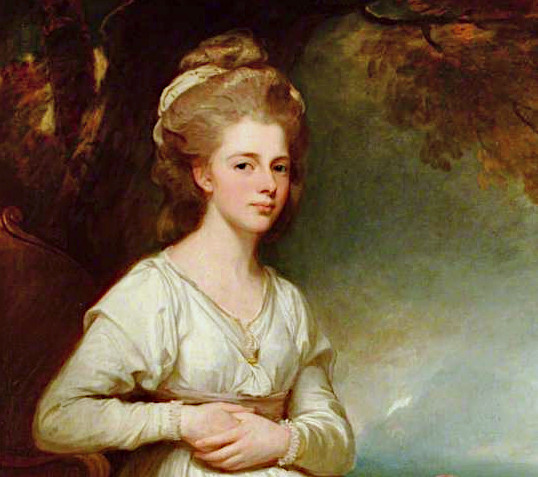
The rules of 18th-century society were shaped by men, often with the intention of constraining women. But that didn’t mean that all women meekly accepted those constraints. History is full of women who bent and broke the rules meant to govern their lives, finding little bits of space in which to assert their agency.
Even where my female characters are ‘modern-minded’ for the time, I try not to impose 21st-century views and values upon them, or have them going to places where women just wouldn’t go. In Daughters of Night, I introduced a second point-of-view character, Peregrine Child (another character who originally appeared in Blood & Sugar) partly for this reason.
It wouldn’t have been realistic to have Caro turning up to brothels and gin-shops questioning the customers, but she is perfectly placed to investigate the prime suspects, all gentlemen of her acquaintance, in the ballrooms and drawing-rooms of London society.
Finally, I think it is important to show the consequences for women who were seen to have transgressed the boundaries of polite society. Freedom was obtainable for women, but it often came at a heavy price, and that risk hangs over Caro throughout my book.
What do you hope people will take with them after reading your book?
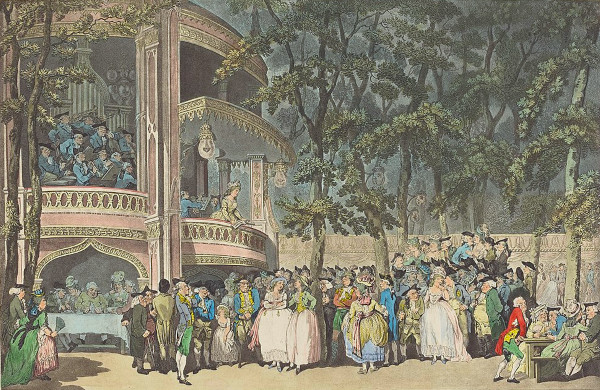
Most of all, I hope they have enjoyed a really good story. Maybe they’ll have learned something about history along the way: what life was like in Georgian London, the good and the bad and the fascinating oddities like pineapples as designer accessories.
Hopefully they’ll have thought a bit about the issues I have explored, the injustices that have got better and the injustices that are still very much with us today. If they have also laughed a bit and cried a bit, then I will consider it a job well done.
You’re working on a third book. Can you give us an idea about what to expect?
I am just finishing a stand-alone historical mystery set about 40 years earlier than my previous books. It’s about an orphaned fortune-teller who sets out to find her mother’s family, taking her from Cornwall to Bath to Mayfair to the Bartholomew Fair and to an old country house in Devon.
A disputed inheritance, family secrets, a love story, and much more. I won’t say anything else as I’ll get into trouble with my editor, but I’m very excited for people to read it.
Thank you, Laura. And the best of luck!

Daughters of Night by Laura Shepherd-Robinson is shortlisted for the 2022 Goldsboro Books Glass Bell Award. The winner will be announced on Thursday 8 September, 2022.
It was first published on 18 February, 2021, and came out in paperback on 3 March, 2022.
Laura won the 2019 HWA Debut Crown Award for her first novel, Blood & Sugar. Read our 2019 interview with her. She also wrote a feature about the background to her novel for us, A respectable trade in brutality.
And Laura’s just announced that she’s finished editing her next novel. To which we can only say: Huzzah!
Images:
- Photo of Laura: supplied by FMcM
- Goldsboro Books 2021 Glass Bell Award shortlist: Goldsboro Books
- Emma, Lady Hamilton, as Cassandra by George Romney, 1780s: Wikimedia (public domain)
- The Honourable Anne Louisa Bertie, Lady Stuart, by George Romney, 1780: WikiArt (public domain)
- Vauxhall Gardens by Thomas Rowlandson, 1780s: Yale Center for British Art via Look and Learn (public domain)


