
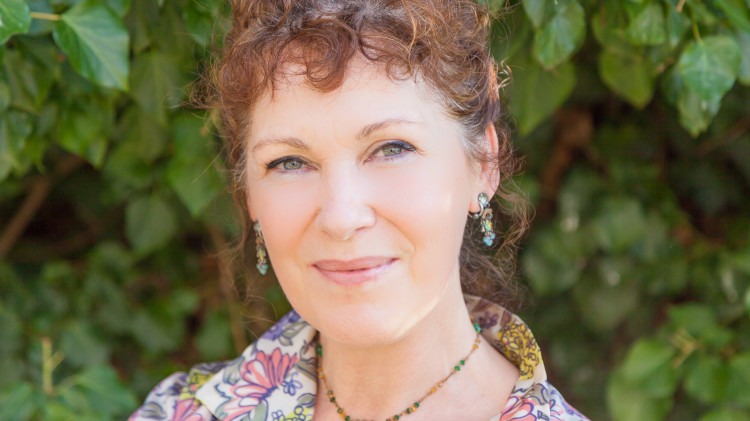
Rebecca Stott’s novel Dark Earth was shortlisted for the HWA Gold Crown Award in 2023. The judges described it as “spellbinding… Filled with folklore and myth and evocative world-building, an immersive and endlessly vivid novel.” It follows two sisters’ fight for survival in post-Roman ruined London: a place filled with violence and superstition.
Congratulations on being shortlisted for the HWA Gold Crown Award! What does it mean for you?
Thank you. I taught a historical fiction course on the UEA Creative Writing programme for 12 years. I worked with talented, emerging international writers trying their hand at writing historical fiction for the first time. Many of them went on to publish bestselling and award-winning historical fiction.
We’d often begin our discussions by looking at the HWA website to see what novelists had written in particular periods, what angles and new perspectives those writers were taking on the history of that period and what kinds of questions their novels were asking. It was — and is — such a valuable resource for writers and readers.
So to have Dark Earth on this shortlist, alongside such other fine books, is a great honour.
What gave you the idea for Dark Earth?
I have written historical fiction set in the 19th century (The Coral Thief is set in Paris just after the fall of Napoleon in 1822) and set in the 17th century (Ghostwalk is set partly in 17th-century Cambridge in the world of Isaac Newton’s alchemy). Although I am a historian and feel confident about how to uncover the past, I thought I had gone back as far as I could — and wanted — to reach with the skills and knowledge that I had at my disposal.
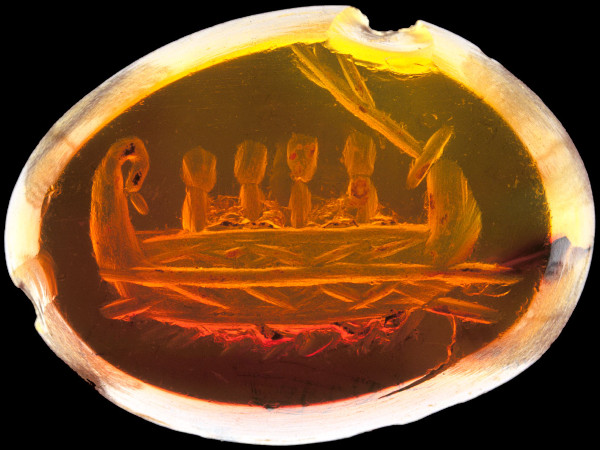
Then one day I found myself in the Roman London galleries in the Museum of London. I was completely mesmerised by glass cabinets stuffed full of objects dropped in London streets during the occupation of the Romans.
The museum then takes you out of the Roman galleries and into a long white empty corridor. The white corridor is designed to illustrate the absence of objects dropped in London during the 400 years after the Romans withdrew from London in AD420. In other words, no one went inside the ruined walls for 400 years. The extraordinary stone city lay empty, gradually deteriorating, plants and animals taking over the stone walls and trees pushing up through tiled roofs.
I was astonished. Why did none of the local people living and farming around the ruins decades — centuries — after the Romans abandoned their city go inside the ruined walls? What kept them out? Weren’t they curious?
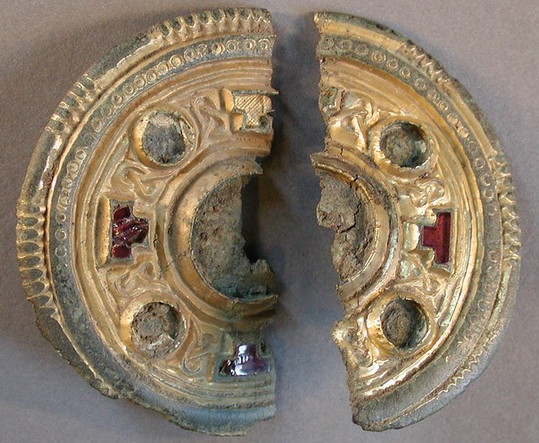
Then I saw a single object hanging inside a frame on the wall of that white corridor. It was a brooch, a single rusty brooch about two inches wide. The caption underneath explained that this was one of a tiny number of objects dropped inside the city walls that could be dated to the city’s 400 years of abandonment.
This brooch was remarkable, the caption explained, because archaeologists could tell from the design that it almost certainly belonged to an Anglo-Saxon woman who had walked across the broken roof tiles of a private bathhouse on the north bank of the Thames around 450–500.
Now I was hooked. What took her there? Was she running? Was she curious? Was she seeking refuge? Did she have anyone with her?
Your book’s set in and around the abandoned Roman city of Londinium in AD500. Would it have been possible to write such a story without incorporating elements of myth, of ‘magic’?
No. And that was part of the challenge of writing Dark Earth. I have always believed that if we want to enter the past we have to try to see the world through our ancestors’ eyes, believe what they believed, feel the things that they feared, their superstitions and their religious beliefs, their relationships with their dead.
The two sisters I conjured from the past were ‘Anglo-Saxon’ women, second-generation migrants, whose parents probably came to Britain fleeing a version of climate change which caused flooding in the lands North of the Rhine.
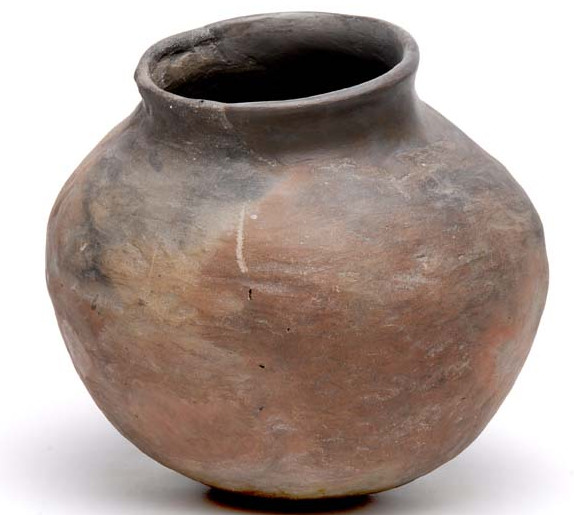
We know very little about what the so-called ‘Anglo-Saxons’ believed because different tribes would have believed in slightly different gods and myths, but we know a little about the names of their gods and the kinds of objects they ‘sacrificed’. And that became interesting to me.
What would it be like to be living among a group of female migrants all struggling to survive, women who believed in different gods and had different ways of farming and weaving and making pots and smithing and even cooking? How would they talk about the world that they saw around them? The dangers they saw coming? How would they find a common ground against the men who threatened their safety?
And of course this has an interesting bearing on today when so many people are being forced to find sanctuary in countries that are very culturally different from their own.
While researching, did you come across anything that would surprise 21st-century people thinking about 6th-century Britain?
So many things. One of the pleasures of researching this book was not only reading academic articles and books about this period but also my correspondence with archaeologists and historians who knew this period intimately and asking them specific questions.
What would the ruined city of Londinium have looked like eighty years after the Romans abandoned the city? Was the single Roman bridge from the south bank to the north bank still standing? What were women’s lives like? Anglo Saxon women? Local women? What did they believe? Could a woman have worked in a forge?
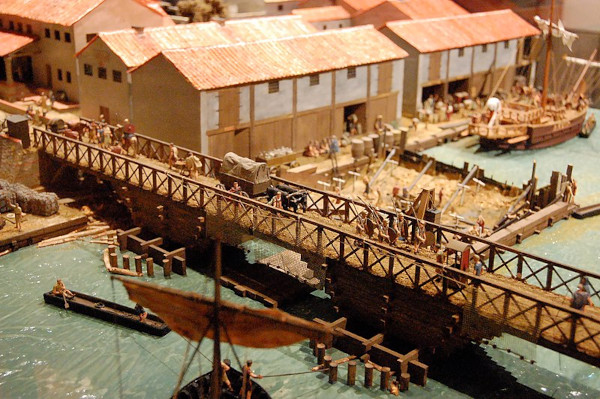
So I came to depend on those generous experts: curators of the Museum of London, academics who worked as far afield as Boston, like the amazing historian Robin Fleming (a female professor) who has spent much of her career looking at how women lived in this period after the Romans left.
I asked questions constantly and these generous experts gave me their answers, as far as they could allow themselves to speculate beyond the scanty evidence.
When I had finished the first draft I ran it past the three experts. They recognised that I had done all the research I should have done, but also pointed out new things. Rats for instance. I had rats in my ruined city. It made sense to me. Robin Fleming pointed out that rats disappeared from the archaeological record for 200 years after the Romans left Britain. Why would rats have disappeared? Because people in Britain after the Romans left were living hand to mouth. They had no grain stores, no warehouses full of stored food. So the rats disappeared.
The second thing was seats. I had my characters leaning back on their chairs. Robin reminded me that seats with backs didn’t come about for another 200 years. They had stools and they squatted. I had to go back into the MS and take out the chair backs. But mostly I was gratified to see that I had done enough research to satisfy the experts.
What did you find most difficult when writing your book? And most enjoyable?
I was shocked to discover how few historians and archaeologists and historical novelists that I read were interested in the lives of women. In fact I could read for weeks and weeks — books and articles and historical novels about post Roman Britain — and fail to find any references to women.
.png)
I wanted to know about women’s lives in this period because a small group of men were rising up to create oligarchies and form armies and strip the poor of their surplus by taxing them. How did the women live? How did they make sense of things? How did they resist the status quo if they needed to?
Frustrated by reading the mostly-male historians and the archaeologists who did not seem interested in women’s lives, I read the historical novels set in this period. But so many of these books too were preoccupied with men on horses with swords. I wanted to reach something else.
The most enjoyable aspect of the research was gradually creating the characters and their worlds in my mind — eventually it felt like it existed outside of me, not just in my mind. I miss it.
You’re a historian as well as a novelist; how do you approach writing in both genres?
Well, there are some obvious absolute differences: generally historians don’t write dialogue, for instance, and novelists don’t write footnotes. But on the whole I have come to see the two ‘genres’ as a spectrum.
I like to move up and down that spectrum in such a way as to put pressure on the rules and conventions. In my first novel Ghostwalk — that’s the ghost story and historical thriller about Isaac Newton — I inserted chapters from an imaginary history book into my story. I had footnotes, 99 per cent of them absolutely accurate and referring to real books and sources, and one per cent referring to made up sources that I called The Vogelsang Papers, which served as a kind of game for the reader. It was fun.
On the whole I have a rule that I can’t change the historical facts when I am writing historical fiction. This rule helps me as it gives me constraints, a shell, and when you have constraints (like a sonnet has 14 lines for instance) you have to work inside them and that can be very creative.
What can historical novelists add to our understanding of the past?
Historical novels can help us see the past through particular pairs of eyes and that seems so important to me — because in the past so much of history has been told by a small number of people, mostly men, and presented as if it is the only truth or way of seeing, as opposed to showing us that the truth depends at least to some extent on where you are standing, whether you are male or female, powerful or powerless.
_(43208506210).jpg)
I also found when I was writing history as non-fiction that I was seeing the past as if from a bird’s-eye view, and I was frustrated by that. I didn’t want to look down on the past. I wanted to move through it, imagine it, imagine them, and to do so with nuance, not clumsy stereotypes.
I wanted to find my way back into 17th-century Cambridge, or into 19th-century Paris, and smell it, see it, hear it, but I wanted to do that with my feet on the ground, and in the half light, and to see and feel everything through a particular sensibility – someone who did not yet understand about gravity, for instance, or someone who believed in spirits and so on.
Writing Dark Earth helped me to understand this period of migration and cultural intermingling, it helped me to imagine female friendship in the face of a very particular male threat, and what magical and mythical devices the women might have used to protect themselves.
What advice would you give someone starting to write historical fiction?
Given we have to spend a long time in the past that we chose to write about — historical fiction after all takes a long time to research — make sure you choose a period that you are really curious about! And also a period where there are enough gaps in the historical record for you to ‘write into’ (17th century Cambridge was perfect, for instance, because there was so much rich detail in the records but also lots of gaps in the records), but not a period in which there are so many gaps you can’t get a grip on anything!
And what are your plans for future books?
I am working on something rather complicated so I don’t want to say too much about it. I will say that it is set in an imagined near future but could easily be set in the distant past. I am still feeling my way with it. At the same time I have started writing historical material for TV and film and that has been fascinating because it requires different skills altogether, but still requires strong storytelling.
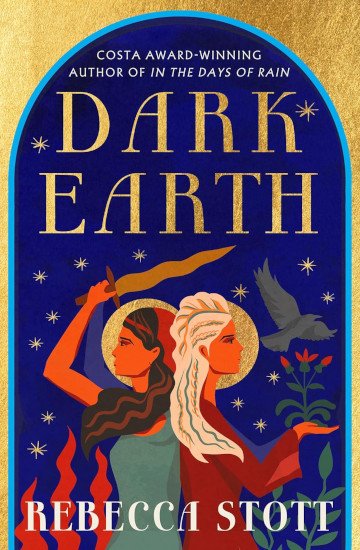
Dark Earth by Rebecca Stott was published on 23 June, 2022, and in paperback on 8 June, 2023.
Rebecca is the author of 14 books. Her first novel, the historical thriller Ghostwalk, was a New York Times bestseller, translated into 14 languages and shortlisted for several prizes.
She taught literature and creative writing courses at the Universities of York, Leeds and Anglia Ruskin. In 2007 she was appointed Professor of Literature and Creative Writing at the University of East Anglia, where she taught courses on feminist writing, gothic fiction, and ran workshops and historical fiction classes on the UEA Creative Writing programme for 14 years. She lives in Lewes.
See more about the books shortlisted for the 2023 HWA Crown Awards, and about which books won in the three categories.
Images:
- Rebecca Stott: photograph supplied by the author
- Carved Roman gemstone showing a warship: © Museum of London (fair use)
- Early Anglo-Saxon disc brooch: Portable Antiquities Scheme via Flickr (CC BY 2.0)
- Anglo-Saxon storage pot, 6th century: © Museum of London (fair use)
- Model of Londinium’s bridge: © Museum of London (fair use)
- Two women, detail from the Luttrell Psalter, Additional 42130 f.163v: Wikimedia (public domain)
- Billingsgate Roman bath house: Carla Brain for Wikimedia (CC BY-SA 2.0)


