
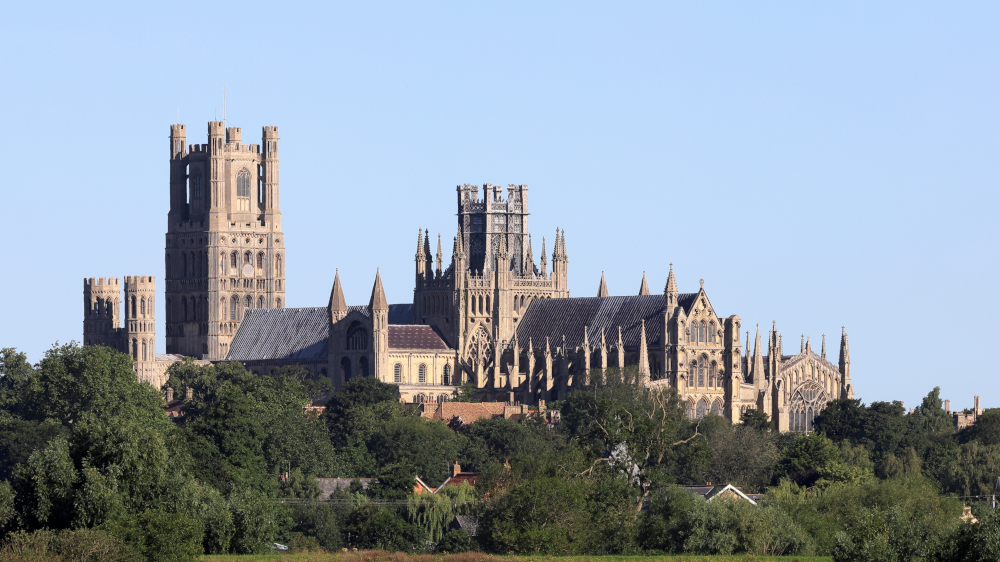
Who was Hereward the Wake? The author and historian Charles Moseley, whose book about the Fenland rebel has just been published, says the records are sparse. For Historia he writes about his quest for Hereward, appropriately for October – with the anniversary of the Battle of Hastings and St Etheldreda’s saint’s day just past.
I recently wrote a timely (and, I might say, successful) short book to mark the 1,350th anniversary (in 2023) of St Etheldreda’s founding of the great Abbey of Ely. One of my friends, custodian at Ely Museum, said, “When are you going to write a book on Hereward the Wake?” – not “Are you?’” but “When?”.
I protested, quoting Jane Austen’s subtitle to her History of England (1791), that it would be work of “a partial, prejudiced, & ignorant Historian.” ‘Nonsense! You know your way round the Middle Ages and it would only mean a little research.” Well, eventually, two books later, I took the bait. For good or ill. But as far as I am concerned, it has been fun.
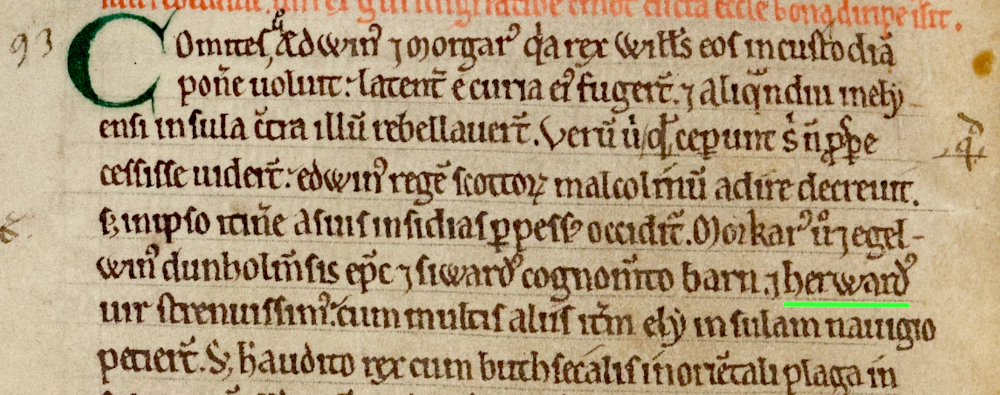
Why – how, indeed? – write about Hereward? He was an obscure man of middle rank whom circumstances forced into dramatic and prominent action. Records of him are very sparse: we do not even know for sure where precisely he lived, when he was born, to whom, and when he died.
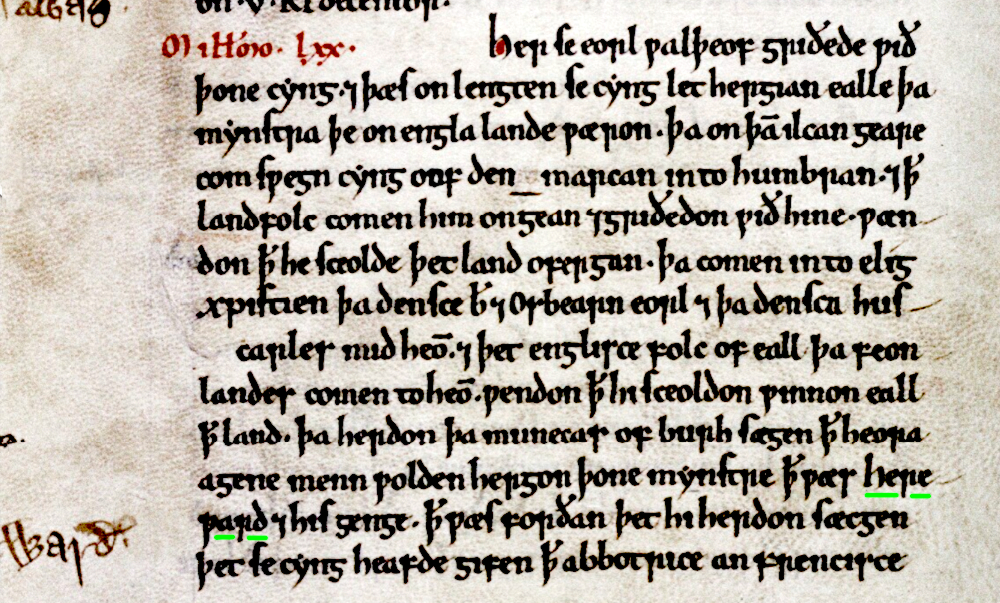
The records of his burst of very visible activity in the years just after the Conquest are annoyingly oblique, patchy. They boil down to a few references in the Liber Eliensis and the Peterborough Chronicle – and those long books are more interested in their abbeys’ fortunes than the exploits of a man who gave William the Bastard quite a few sleepless nights in those years when he was far from secure in England.
Yet quite soon after he must have died, he had become something of a local hero, and, 10 centuries and more after he disappeared from any record, he became, and remains, a useful myth for discussing all sorts of things. Sometimes the very sparsity of real information – as for example with Arthur – allows, encourages even, the luxuriation of detail of no relevance to the man but lots to the storyteller and the intended audience.
The first discernible account of Hereward we only have as a ghost: somewhere behind a Latin account of him which originates in the earlyish 12th century, there is an Old English account; probably a poem in the newly fashionable chanson de geste genre.
That there was an Old English account tells us quite a lot about its audience: the language of a cruelly conquered people, and, like most poems then, designed for hearing in company rather than quiet reading alone.
Does this suggest community bonding, an idea of ‘Englishness’ as opposed to those damned Normans? Possibly – though we must be cautious as ideas of nationhood then were very different from what they became in later centuries and circumstances. We do know – again from a rather unreliable chronicle that isn’t especially interested in Hereward – that by the 14th century the women and girls of the Fens are singing songs about him as they dance or go about their unremitting daily work.
And he gets a wholly new, still hugely influential, makeover as a romantic hero, the champion of a Lost Cause, in Charles Kingsley’s 1865 novel about him. Lots of derring-do, lots of adventures at home and abroad, plenty of love interest, wonderfully detailed settings – all just waiting for the television producer (and the BBC obliged).
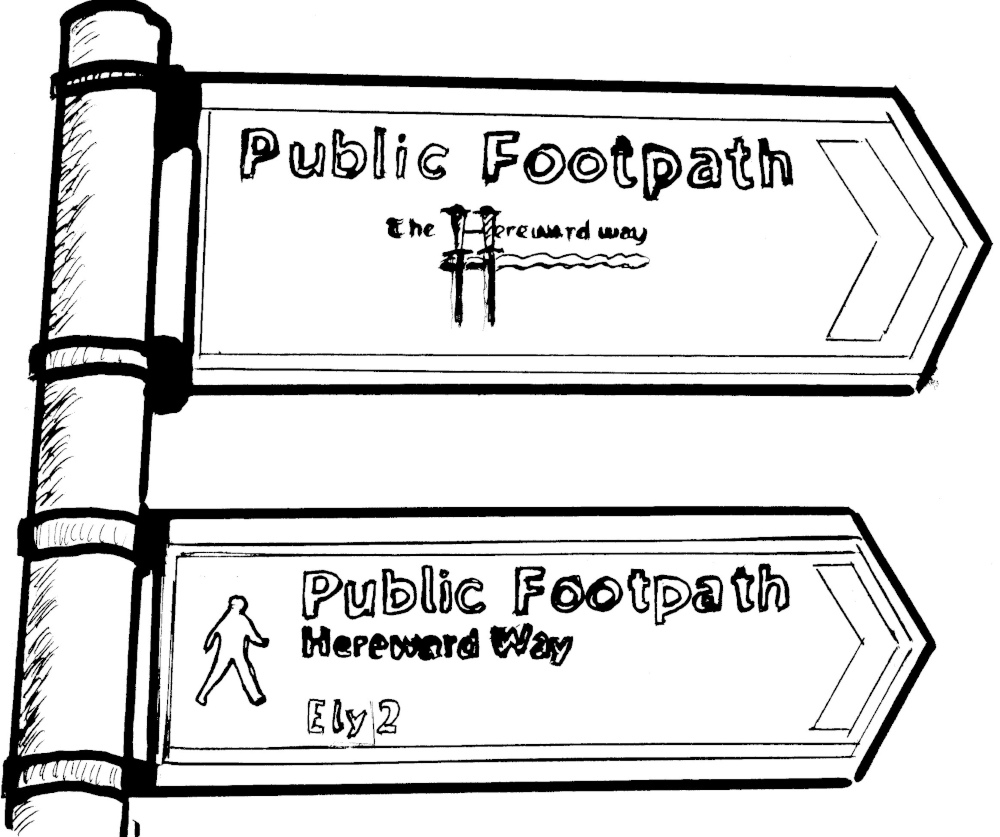
And now this man of whom we know virtually nothing has named after him: a long-distance footpath, a housing association, several pubs, care homes, and schools. One proudly claims to be “a pioneering provider of further education programmes for young people aged 16 to 25 with a wide range of complex disabilities and learning difficulties.”
So what is there that one can say about him? Actually, quite a lot: what sort of world he lived in, what the undrained fenland he knew and used was like; how he did become the local hero he still is.
How and why the tangled situation of 1066–1070 had developed as it did over the previous decades is not without interest and is certainly relevant to understanding not only the radical instability of Hereward’s world but also why his resistance was serious for William the Conqueror.
Looking at the family interrelationships reminds one of how much mediaeval European history was a bloody series of family quarrels. Almost every major player in the events of 1066 was cousin to other major players.

Harold, half Danish himself, was cousin to Harald Hardrada, defeated and killed at Stamford Bridge. Swein II could be argued to have had a better claim than anyone to the throne of England (setting to one side, as his uncle Edward the Confessor did, the unfortunate Edgar Ætheling).
We can marvel at William’s extraordinary luck (and conversely, the unquestionably able Harold Godwinson’s rotten luck), which leads on to the recognition of the profound importance of mere accident –‘for want of a nail the shoe was lost, for want a shoe the horse was lost…’ – in the history we see, with hindsight, as inevitable: it did not ‘have to’ happen like that. A change of wind in 1066, another in 1688, changed world history.
Alas, some people do unthinkingly regard the past as full of people just like ourselves but in funny clothes, and smelly. I have met them. (You could even be rude about how, for example, the magazine of English Heritage, that utterly indispensable body, presents everything as if it were a nice day out for clean and smiling children to a theme park. It wasn’t like that…what about the stink, for a start?)

Hereward, and William, and Harald Hardrada, and Harold Godwinson, and all the others in this turbulent century, lived in a world where most of the things we take for granted, from rabbits in the countryside to potatoes on our tables, from loo paper to hard soap, are simply not there.
We can glimpse how differently people thought about their world, their past and present, and themselves – but knowing that, and many other things, even in great detail, is not the same as feeling it, for you cannot un-be the centuries that have made us what we are. Literally, they saw things differently.
Against the sort of background I wanted to try to colour in, those patchy, annoyingly indirect, early records did begin to become tuppence-coloured rather than penny-plain. Our hero could begin to be thought of a bit more in the round, as a man who got colds, went hungry, made mistakes and suffered for them, had loyalties, loved, died. But we still – I still – cannot know him.
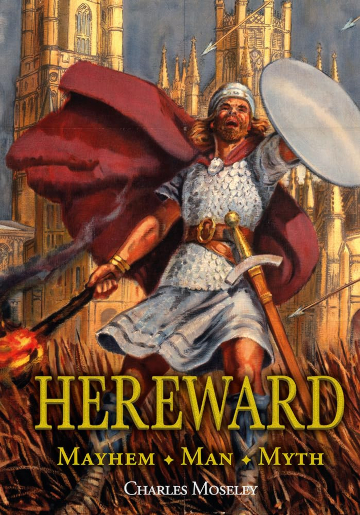
Hereward: Mayhem, Man, Myth by Charles Moseley was published on 10 September, 2026.
Related features in Historia include:
After Hastings and The Norman Conquest in Numbers by James Aitcheson
King Harold Godwinson’s death – did the Bayeux Tapestry embroider the truth? by Paul Bernardi
Writing about 1066: a male club? by Ellen Alpsten
The Normans: Conquest Through Adaptation by Ruadh Butler
Murder and the law in Anglo-Saxon England and
Anglo-Saxon women with power and influence by Annie Whitehead
The Protestant Wind by Maggie Craig
Images:
- Ely Cathedral from the south-east (cropped): Verbcatcher for Wikimedia (CC BY-SA 4.0)
- Beginning of the entry about Hereward (underlined in green) from the Liber Eliensis( cropped, underlined): Cambridge, Trinity College, MS O.2.1, fol 82v (CC BY-SA 4.0)
- Beginning of the entry about Hereward (underlined in green) from the Peterborough Chronicle (cropped, underlined): Bodleian Library MS Laud Misc 636, fol 058v, © Bodleian Libraries, University of Oxford (CC BY-SA 4.0)
- Drawing of signposts for the Hereward Way: supplied by the publisher
- King Edward the Confessor and Harold Godwinson at Winchester, Bayeux Tapestry, scene 1:: Myrabella for Wikimedia (public domain)
- William boards his invasion fleet, Bayeux Tapestry, scene 38: Bayeux Museum via Wikimedia (public domain)


