
Catherine Hokin discovers the extraordinary women soldiers of the American Civil War.
In 2010I found myself stranded in Chicago for a week following the volcanic eruption in Iceland. It was an odd experience, coming as it did at the end of a holiday: we were mentally adjusting to returning to everyday life (and physically adjusting – we were actually airborne on a plane that was sent back) and no longer felt like tourists. I was teaching at the time and had touched on the origins of photo-journalism with a class – the American Civil War (which I have always been obsessed with) was the birthplace of this so I decided to use my time to do some research, which was when I discovered the wonderful Pritzker Military Museum and Library.
Once the staff recovered from their hilarity at my pronunciation of Antietam they fell over themselves to help me; once they realised I had an interest in women’s history, they pulled out a whole new set of photos and began to tell me about the women who had fought in the conflict disguised as male soldiers. These women were astonishing.
Not all cases could be documented but estimates suggest 400-750 ordinary American women actively participated, fighting as men. Writing in 1888, Mary Livermore of the US Sanitary Commission wrote:
“Someone has stated the number of women soldiers known to the service as little less than 400. I cannot vouch for the correctness of this estimate, but I am convinced a large number of women disguised themselves and enlisted in the service, for one cause or another, than was dreamed of. Entrenched in secrecy, and regarded as men, they were sometimes revealed as women, by accident or casualty. Some startling histories of these military women were current in the gossip of army life.”
 Choosing this active, masculine role was a step outside the social boundaries of the period which rigidly fixed the female role. The American Civil War lasted from 1861-65 and was fought to determine what kind of a nation it would be: the war’s coming challenged most of the attitudes that held sway across the country, including the ideology of domesticity that shaped the lives of men and women in both the North and South. In the antebellum period, life for women was shaped by a set of ideals American historians often refer to as The Cult of True Womanhood. As men’s work moved more into the external sphere of offices and factories, the household became more feminized and private, a haven in which ‘true women’ were encouraged to strive and build their husbands a comfortable home. Under this world-view, women were perceived as frail, subordinate and passive creatures with no interest in the outside world. The war changed all this and is seen by many as the first step towards emancipation.
From 1861 women were actively involved in the war effort on both sides, engaged in domestically-based work such as knitting, baking and fund-raising galas as well as the horrors of front-line nursing such as experienced by author Louisa May Alcott. For some women, however, even nursing, which remained strictly socially-controlled, was too small a step beyond the domestic sphere. The reasons they became soldiers were as different as the women themselves: for some it was freedom, for others it was patriotism, or more money than they could hope to earn in their narrow worlds, to follow their husbands or, simply, to have an adventure. One of the few women very open about what she was doing was Sarah Rosetta Wakeman, who served with the 153rd Regiment out of New York and wrote to her strict family about her choice saying she was “as independent as a hog on ice.” The reasons differed but all broke the stereotype of how women should think and live.
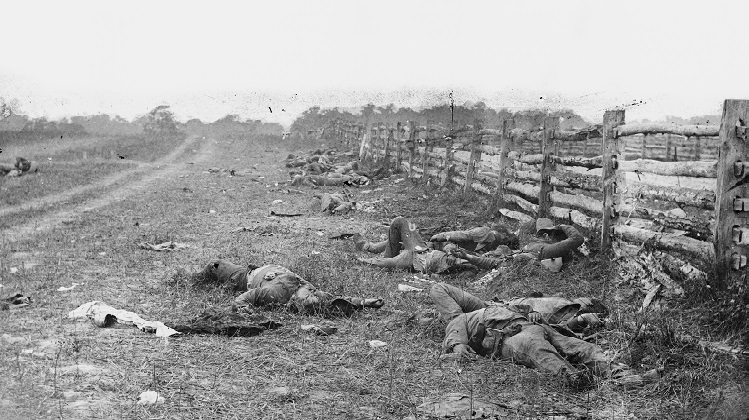
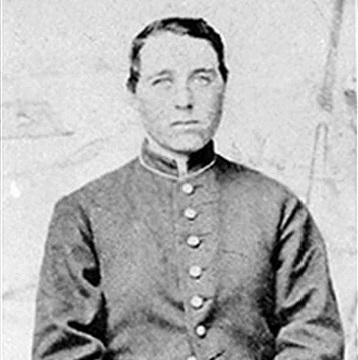
These women did everything the men did, including working as spies and fighting in some of the worst combat: at least four women were known to have fought at Antietam on 17 September 1862 which, with its 30,000 casualties, was the single bloodiest day in the conflict. They were rarely discovered: physical examinations were scant, uniforms were baggy and so many young boys volunteered that the lack of a beard was nothing remarkable. Jennie Hodgers fought the whole war undiscovered as Albert Cashier and then lived the rest of her life as a man. Sarah Edmonds, who served for two years as Franklin Flint Thompson and whose career only ended when she contracted malaria, was described by comrades as a “frank and fearless” soldier and was awarded a military pension for her services.
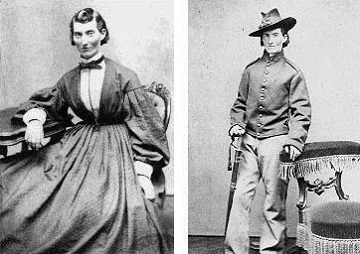 After the war ended the existence of these soldier-women became widely known, at least among the reading public. An 1866 publication, The Women of the War by Frank Moore, included a chapter on female military heroines and some women, including Loreta Valazquez who fought as Harry Buford, published their memoirs. The US Army, however, denied women had played any role. In 1909, in response to a query about women who had served, Adjutant General Ainsworth responded: “I have the honor to inform you that no official record has been found in the War Department showing specifically that any woman was ever enlisted…at any time during the period of the civil war. It is possible, however, that there may have been a few instances of women having served as soldiers for a short time without their sex having been detected, but no record of such cases is known to exist in the official files.” This was despite the detailed records that existed, including examples of discharge on the grounds of ‘sexual incompatibility’. A poorly timed attempt to put women back in the doll’s house.
The women who fought were ordinary soldiers, they did not change the course of battles. They were not ordinary women: they displayed revolutionary attitudes by refusing to stay in their socially-delineated place. It is heartening how many of their stories are now being uncovered after too long a period in which their role was denied or reduced to the activities of a few oddities and eccentrics. For anyone who wants to find out more, can I recommend She Went to the Field: Women Soldiers of the Civil War by Bonnie Tsui. And, if you are in Chicago, go to the Pritzker and lose yourself: they’ll welcome you with open arms.
Catherine Hokin is a Glasgow-based author with a degree in History from Manchester University. Her debut novel, Blood and Roses, was published in 2016. She regularly blogs as Heroine Chic, casting a historical, and often hysterical, eye over women in history and popular culture.
Photos:
- Bodies on the battlefield, Battle of Antietam, September-October 1862.
- Jennie Hodgers, fought as Albert Cashier
- Frances Louisa Clayton, fought as Jack Williams


