
Tracy Cook’s debut novel was inspired by the women who plotted aircraft battles during the Siege of Malta – the only civilians to do such work during the Second World War. Though they’re largely forgotten now, their highly-skilled work helped the RAF to defend the island against German and Italian forces in the early 1940s.
The women who ran the plotting room at the nerve centre of Malta’s World War Two defences are among the unsung heroes of the war.
They were the only civilian women in the war to plot aircraft battles at a Fighter Command and are still little known about. They performed a vital role in supporting Malta’s defences and helped to change the course of the war in the Mediterranean. Their important work has now inspired my debut historical novel, Wings Over Valletta.
The Lascaris War Rooms
The first time I set foot in the No 8 Sector Operations Room at the Lascaris War Rooms in Valletta, a shiver ran through me. I could feel the closeness of the walls, the fug of the air, imagine their fear as bombs rained down outside.

As the guide described how the women of Lascaris used to plot the battles and missions during the long siege of Malta, I just knew I had to bring to life these brave women whose daily work, under terrible conditions, being bombed, shot at and starved as they struggled to get to work, played such a pivotal role in the course of the war in the Mediterranean.
While many millions of women contributed to the war effort worldwide, what made these women unusual was that they were not part of the military. They were civilians, local women trusted with a crucial role that in Britain and other theatres of war were done by WAAFs. I wanted to give some insight into just how extraordinary that was.
Inside the Operations Room
The Operations Room was based deep underground in a system of tunnels beneath the old Crusader bastions built by the Knights of St John. Four hundred feet below ground, this gloomy sunless network of rooms also included other military functions, such as listening and intelligence monitoring rooms and the anti-aircraft artillery control room. It became the nerve centre of Malta’s defence and was one of the best kept secrets of the Second World War.
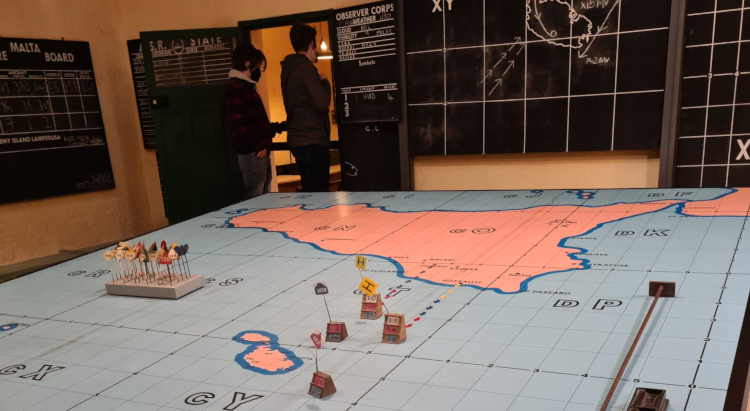
Inside the Number 8 Sector Operations Room was a large table, covered with a gridded map of Malta and the surrounding area, including Sicily, so the senior controllers watching from a gallery above the room, called the ‘Shelf’, could look down, see the positions of incoming enemy aircraft, and direct fighters to attack.
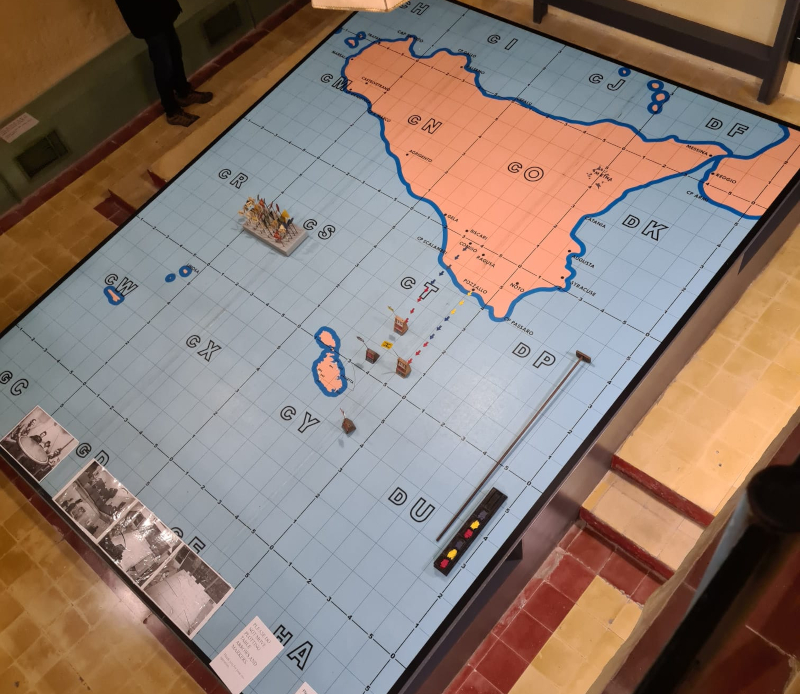
The movements of all aircraft and convoys were marked by arrow shaped plots, detailing their height, number of aircraft and whether hostile or friendly.
The women used wooden sticks, like billiard cues, to push ‘plots’ across the table as the enemy approached, listening through headsets to female colleagues in the Filter Room, who in turn were receiving aircraft positions from radar and listening and watching stations across the island.
Accuracy, calm under pressure and attention to detail were critical as they plotted the exact positions of approaching enemy aircraft so controllers could scramble squadrons to attack them.
The plotters could often hear the pilots’ voices as they flew into battle over their radio transmitters, shouting over the engine noise to the controllers and broadcast in the Ops Room. Heavy raids of a hundred enemy bombers and fighters were frequent and the atmosphere in the Operations Room could be tense and highly charged, particularly when it was clear their own vastly outnumbered Hurricane fighters were being shot down and pilots killed.
Why were they civilians?
It was highly unusual that these women, both Maltese and British, were civilians. In other theatres of war WAAFs performed the role, but since the Italians had declared war in May 1940, Malta had been under siege. There was no chance of shipping in WAAFs to do the job, with Malta surrounded by mines, and the Luftwaffe and Italy’s Regia Aeronautica attacking daily. It was a constant struggle for even essential convoys of aircraft, ammunition and fuel to make it through.
Over 50 local women, many with brothers or fathers in the services or the Royal Malta Artillery, worked in the Operations Room throughout the war and they all had to swear an oath of secrecy about what they did. Some never spoke about it again until long after the war was over.
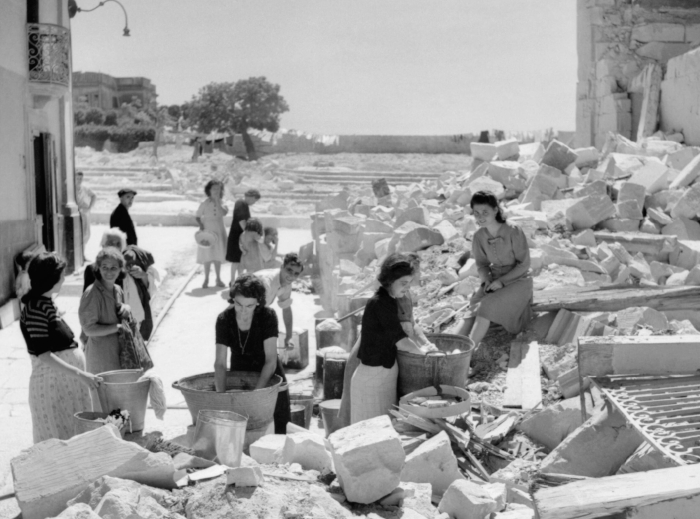
They varied in age, from the youngest at 14, and included a mother and daughter team and five pairs of sisters. Divided into four watches, A, B, C and D, the Ops Room never closed: the enemy attacked day and night. At that time Malta was the most bombed place in the world, suffering more than London during the Blitz. Over 75 per cent of homes and buildings on the island were destroyed.
As bombing intensified and no transport was available, the women were still expected to walk to work on time, no matter if there was an air raid on, but they made sure they knew the location of every shelter by heart.
There are accounts of women diving into slit trenches during an air raid, or shell shrapnel falling from the sky as they rowed across Marsamxett Harbour. At night the roads were pitch dark and striking a match forbidden, but they still made it to Lascaris on time.
No wonder that six of the women plotters were awarded British Empire Medals.
Malta’s strategic position
The islands of Malta were at a vital strategic position in the Mediterranean and in the early years of the war were largely surrounded by Axis forces. Malta played an essential role in keeping Allied supplies and troops being sent to North Africa, and at keeping the Suez Canal in Allied hands. Equally they battled to stop enemy supplies and troopships reaching Rommel and the Nazis.
Today, the Lascaris War Rooms have been restored as a museum by the Malta Heritage Trust, everything preserved just as it was in the Second World War. You can stand underground in the Operations Room, look at the map on the table and imagine the tension as women plotted air battles that were being fought literally overhead, fighting to save pilots’ lives.
Winston Churchill referred to Malta as “the unsinkable aircraft carrier”, and if Malta had fallen, it is likely that the war would have been lost. Malta’s people were awarded the George Cross in 1942 and it is a testament to the struggles of Malta’s resourceful and determined people, including the women plotters, that led to the Allies ultimately winning the war.
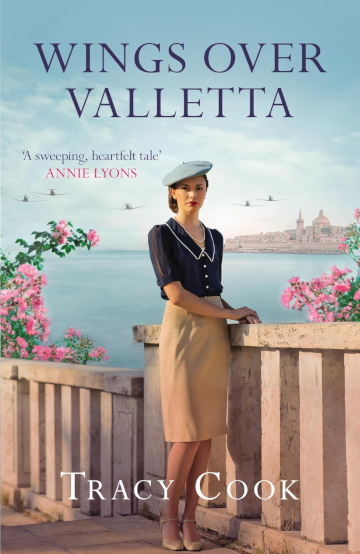
Wings Over Valletta by Tracy Cook is published on 21 May, 2026.
Read more about her book.
After reading History at Oxford University, Tracy Cook produced and directed documentary series for the BBC. She moved into freelance journalism and PR, but her lifelong dream was to write. After graduating from the Faber Academy Writing a Novel Course, she was longlisted for the Bridport Novel Prize in 2021. Wings Over Valletta is her first published novel. She lives in Surrey with her husband.
tracycookauthor.com
Tracy’s on Facebook and Instagram as @tracycookwriter
Further reading:
Ladies of Lascaris by Paul McDonald
Fortress Malta by James Holland
Carve Malta on my Heart by Frederick Galea
Related features you may enjoy include:
The women agents behind the D-Day invasion by Mara Timon
The Remarkable Women of WW2 by Clare Harvey
From Taranto to Pearl Harbor – spies and inspiration by Alan Bardos
The Guinea Pig Club – a WWII RAF pilot elite by LP Fergusson
Ten fascinating facts about the Knights Templar by Boyd and Beth Morrison
Images:
- The No 8 Sector Operations Room, Lascaris War Rooms, showing the plotting table: supplied by author with permission of Fondazzjoni Wirt Artna, (the Malta Heritage Trust) and the Lascaris War Rooms
- Entrance to the Lascaris War Rooms, St James Ditch in Valletta: Frank Vincentz for Wikimedia (CC BY-SA 3.0)
- See 1
- Maltese women washing clothes in the ruins of their homes in Floriana, Malta, 4 June 1942 by HE Cook: War Office Second World War Official Collection, IWM (GM 904) (IWM Non-Commercial Licence)
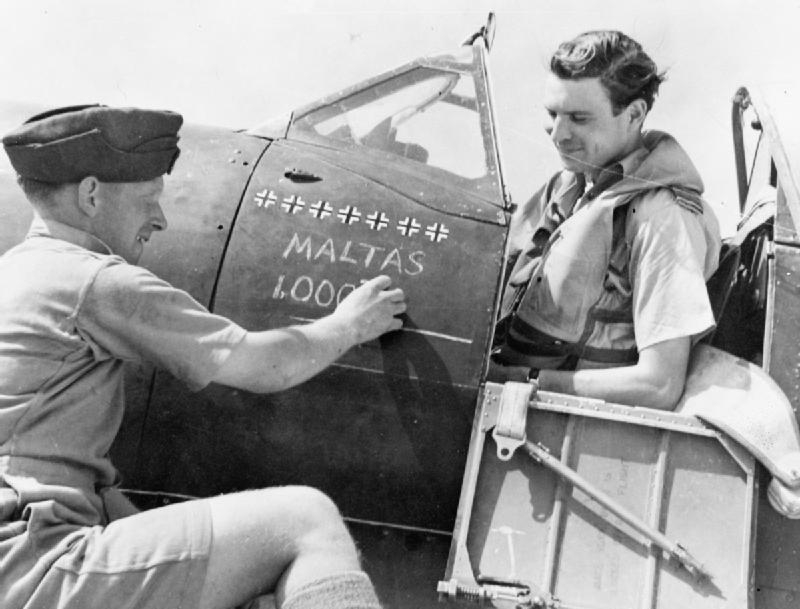
- Squadron Leader J J Lynch, Commanding Officer of No. 249 Squadron RAF, sits in the cockpit of his Supermarine Spitfire Mark VC at Krendi, Malta, as an airman chalks “Malta’s 1,000th” below his victory tally: War Office Second World War Official Collection, IWM (CM 5096) (IWM Non-Commercial Licence)


