
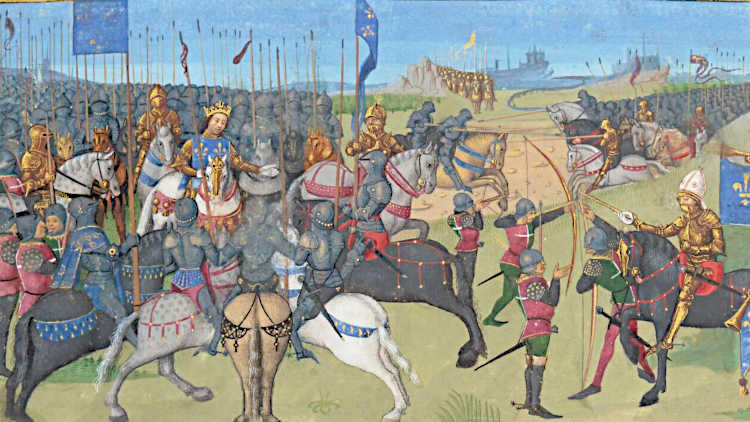
England’s greatest enemy during the medieval period was (of course!) French: King Philip II, also called Philip Augustus. Astute and cunning, he played his Plantagenet rivals against one another and, as the historian Catherine Hanley says, became Europe’s most powerful monarch.
France was one of the great power-houses of medieval Europe, and much of the credit for this can be attributed to Philip II, its king during the late 12th and early 13th centuries.
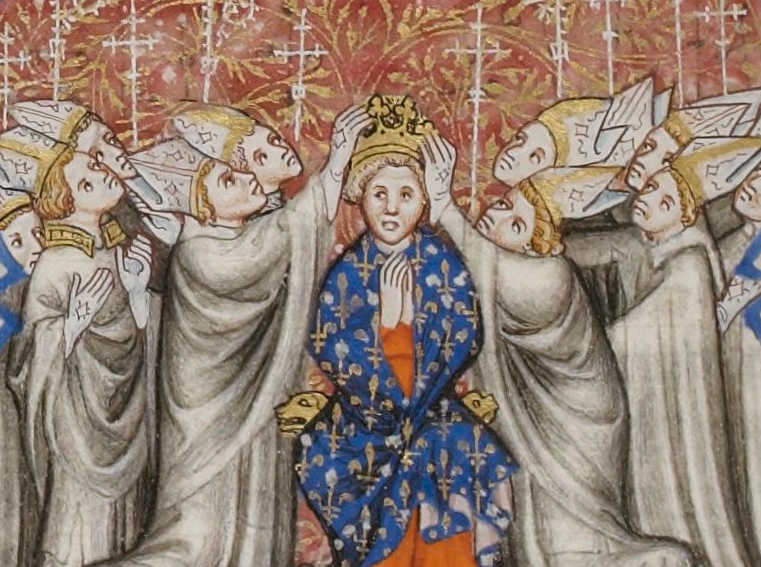
Philip was crowned in 1179 during the lifetime of his father, Louis VII, and he became sole king upon Louis’s death less than a year later. Philip had only just turned 15 at the time, and the sight of a mere boy on the throne made France’s ambitious lords and overseas rivals lick their lips.
If they believed that the pickings would be easy, however, they were wrong: Philip was already in possession of a sharp political acumen, plenty of martial skill and energy, and a single-minded, ruthless determination to do whatever was best for France.
Within five years he had subdued his rebellious vassals, bringing the powerful counties of Flanders, Hainaut, Champagne and Blois to heel. That left him free to concentrate on the family whose members would be his primary antagonists for the rest of his life: the Plantagenets.
Philip’s opposite number on the throne of England was Henry II, a formidable figure who, thanks to his additional holdings in Normandy, Anjou and Aquitaine, actually ruled more of France than Philip did. Henry was vastly more experienced than the young French king, having worn the English crown for more than a quarter of a century, and he had four sons – three of whom were grown men older than Philip – to train for future leadership and domination.
Philip was not intimidated, and he recognised that the best way to start undermining Henry’s power was to use those very sons against him. Philip courted them one after the other, and would outwit the whole family by various methods, identifying their individual weaknesses and using them to best effect. His general strategy was to play off whomever was the head of the family against his heir and nearest rival, and in this he was spectacularly successful.
To begin with Philip encouraged Henry the Young King and the third son, Geoffrey, to rebel against Henry II, and after their deaths he switched his attention to the new heir, Richard, causing a fresh rift by whispering in his ear that it was highly suspicious that Henry II would not publicly name his eldest surviving son as his successor.
After Henry II’s own death and Richard’s accession to the throne, in 1189, Philip smoothly repositioned once more, aiding and abetting the young John in his rebellions against his brother. Then, when Richard himself died only 10 years into his reign, Philip played a pivotal role in stirring the conflict over the English crown between John and his nephew Arthur of Brittany (son of the late Geoffrey).
Even after John succeeded and had Arthur murdered, Philip was not finished. There might not be any further junior members of the Plantagenet family to play off against each other, but he was happy to take advantage of John’s ineptitude by conquering Normandy piece by piece between 1202 and 1204, severing the duchy’s long-standing link with the English crown and adding it to his own royal domain.
The coup de grâce came in 1214, when John made alliances with the Holy Roman Emperor and the counts of Boulogne and Flanders to attack Philip from multiple directions, but Philip won a glorious victory against the coalition at the Battle of Bouvines while John himself was simultaneously seen off by Philip’s adult son and heir (the future Louis VIII) at La-Roche-aux-Moines.
For the remainder of his life Philip reigned supreme in France and was the pre-eminent monarch in all of western Europe. Every single one of his strategies had paid off – and, indeed, if John had not died unexpectedly in 1216, leaving as his heir an innocent child whom Philip was reluctant to attack, the crown of England itself might have fallen into Capetian hands.
The final decade of Philip’s reign was a golden one. His crushing victory at Bouvines meant that he had nothing to fear either at home or abroad, and that he could enjoy a luxury that Henry II never had: the leisure to retire from active campaigning and plan for a peaceful future.
Philip had no need to be constantly in the saddle, criss-crossing his domains and fighting to stamp out rebellions, as Henry had been forced to do right up until his death in 1223. Instead he was able to become a benevolent father-figure to his subjects, many of whom could, after 40 years, remember no other king.
“The whole kingdom enjoyed peace,” wrote a contemporary French chronicler, “which was very agreeable to the people. The king governed his kingdom and his people with a paternal affection, caring for all of them and beloved by all.” The people of France could feel a strong pride in their king and in a kingdom that was now a real nation.
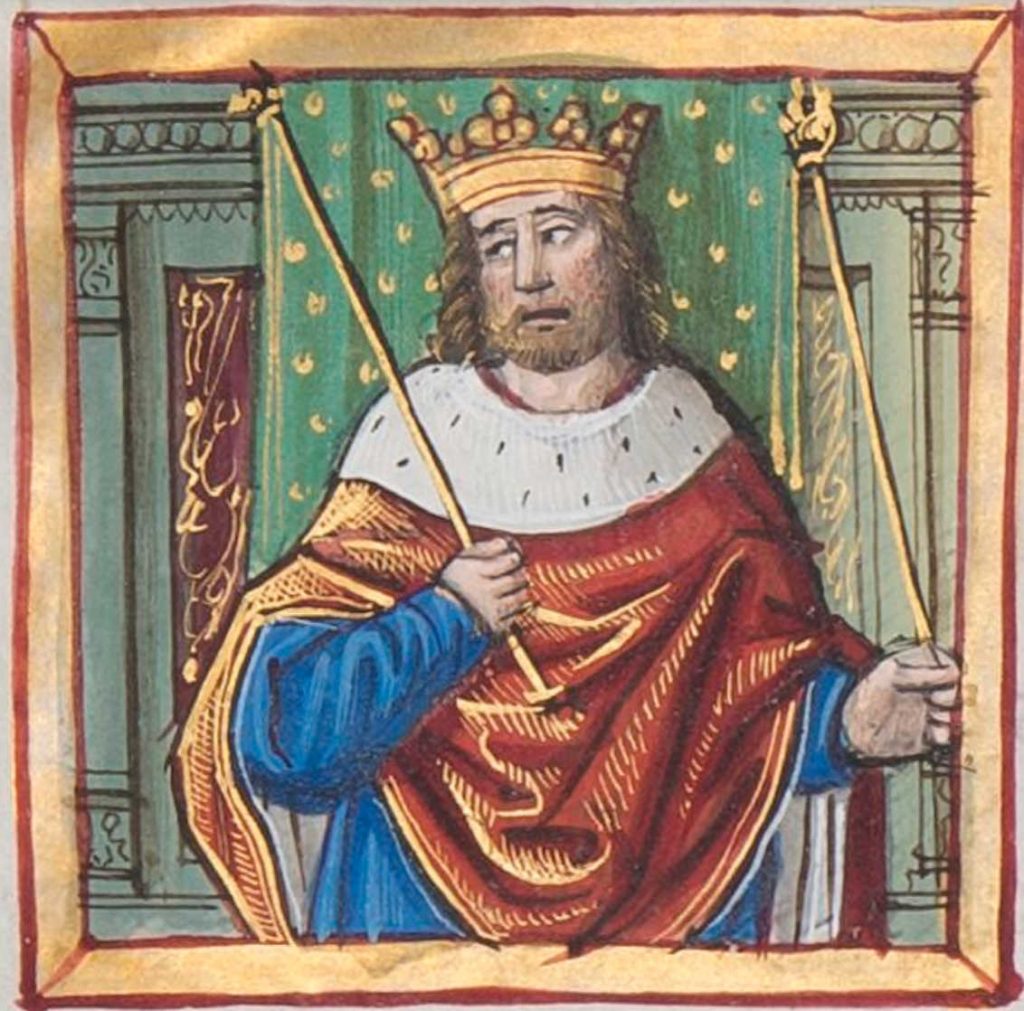
The history of France would have been very different without Philip Augustus’s contribution to it. He inherited a small kingdom that was in a precarious position, with over-mighty vassals jostling for power and the looming threat of Henry II and his family casting a forbidding shadow. Philip not only survived this, but thrived and improved his position with every year that passed, demonstrating an immense talent for politics as well as no small degree of martial skill.
In the traditional historical narrative, Philip has suffered in comparison with the glamorous and attention-hogging family of Henry II. He has been characterised partly as a Machiavellian schemer but also as a non-military, almost cowardly man; a mere background antagonist who was lucky that the Plantagenets fought against themselves so often.
But few medieval kings were as successful as Philip, and his collection of epithets tells us something about how he was perceived and appreciated during and after his lifetime: Philip the God-Given, Philip Augustus, Philip the Magnanimous, Philip the Conqueror.
Unlike many contemporaries he died peacefully in his bed, his enlarged kingdom firmly under his control, his vassals compliant, his enemies cold in their graves and his family succession secure in the hands of a trusted son and grandson (the future St Louis), who were both at his side. His legacy was to leave England in dire straits and France as the unified and pre-eminent realm in Europe.
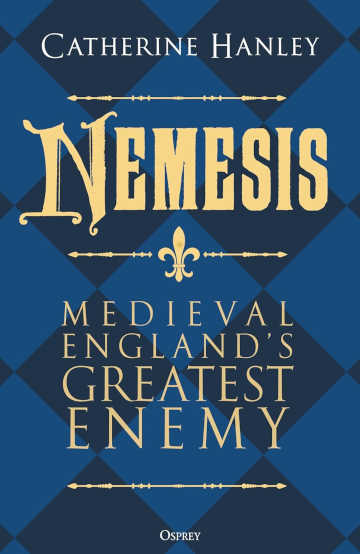
Nemesis: Medieval England’s Greatest Enemy by Catherine Hanley was published on 11 September, 2025.
Dr Catherine Hanley is the author of a number of books exploring medieval history, including Nemesis, 1217 (about Prince Louis of France’s attempt to take the throne of England), and Lionessheart, the biography of Richard I’s sister Joanna, which has been longlisted for the 2025 HWA Non-fiction Crown Award.
You may enjoy Catherine’s other features about the history behind her books:
1217 and the ideals of chivalry
The Battle That Saved England (the end of the 1217 campaign)
England’s Forgotten King (Louis of France)
Joanna Plantagenet, the lionhearted woman
The personal and the political in the Middle Ages
Matilda: The greatest king England never had
England’s First Great Naval Victory (the Battle of Sandwich in 1217)
We also interviewed her for Historia
Magna Carta
Other related features include:
Lost and found: remembering William Marshal, the Greatest Knight by Elizabeth Chadwick looks at England’s champion during the wars with Philip
The Hundred Years’ War – a novel approach by David Gilman
Magna Carta’s inspirational women by Sharon Bennett Connolly
Reinventing Thomas Becket by Jemahl Evans — another thorn in Henry II’s side
Images:
- Philip II at the Battle of Bouvines from the Grandes Chroniques de France by Robinet Testard, 1471: © Bibliothèque nationale de France, Français 2609 (free re-use, Source gallica.bnf.fr / BnF)
- Coronation of Philip II from the Grandes Chroniques de France, c1375–80: © Bibliothèque nationale de France, Département des manuscrits, Français 2813, folio 223 verso (free, open access via Gallica)
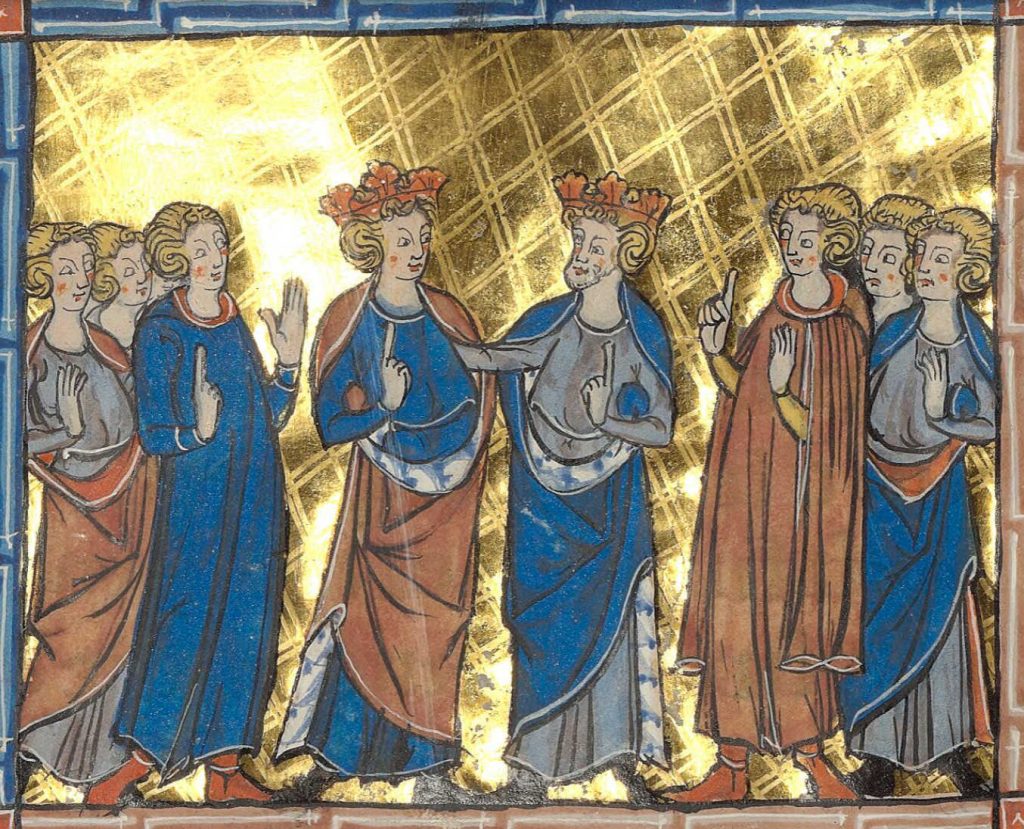
- Philip and Richard in the Holy Land from the Historia by Guillaume de Tyr, 13th–14th centuries: © Bibliothèque nationale de France, Français 2754 (free re-use, Source gallica.bnf.fr / BnF)
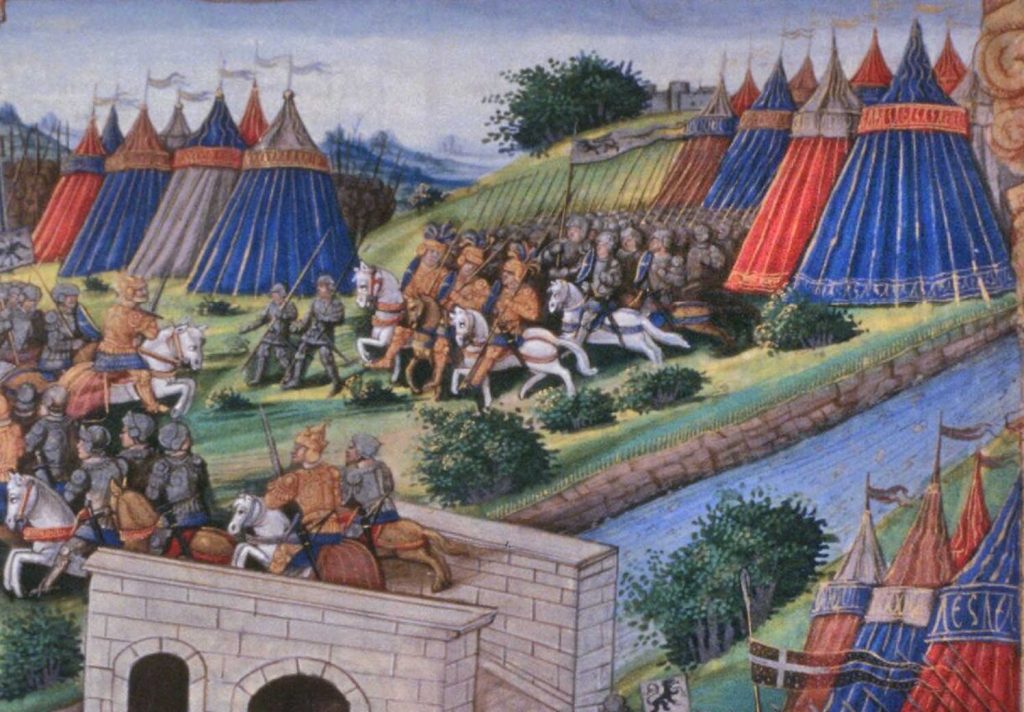
- The Battle of Bouvines from Toison d’Or by Guillaume Fillastre, : © Bibliothèque nationale de France, Français 138 (free re-use, Source gallica.bnf.fr / BnF)
- Philip Augustus from Chronique de Saint-Denis et des rois de France, 16th century: © Bibliothèque nationale de France, Français 24948 folio 175 recto (free re-use, Source gallica.bnf.fr / BnF)


